

Local SEO is one of the highest-ROI moves you can make for your business.
Here’s why: 76% of people who search for something “near me” visit a business within a day. That’s a customer ready to buy, not someone browsing. And industry data puts local SEO ROI at around 700%.
I don’t just teach this — I do it. My own site, Expert SEO, is under a year old and already pulling around $3,500 a month in traffic value.
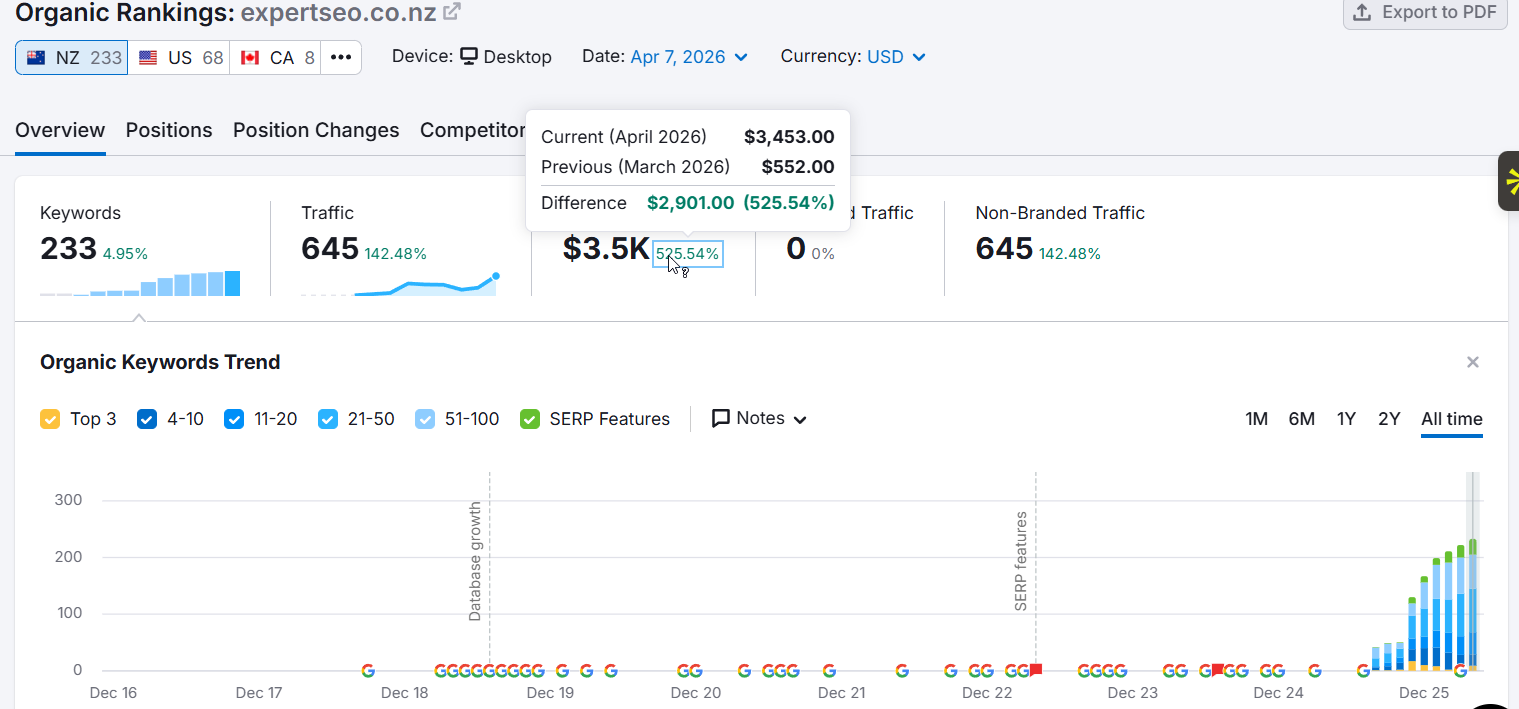
So let’s break down what local SEO ROI is, how to calculate it, and how to tell if yours is paying — with a real NZ example you can run your own numbers against.
Key Takeaways
- What it is: Local SEO ROI is the return you get from money spent ranking in local search — the revenue it brings in, minus the cost, divided by the cost.
- The formula: (Revenue from local search − Cost of local SEO) ÷ Cost of local SEO × 100. Simple. The hard part is the revenue number.
- Why it’s so high: Local searchers are ready to buy. 76% of people who search “near me” visit a business within a day. Pair that intent with a high-value service and the return is enormous.
- How to get the revenue number: Leads × close rate × average customer value. Count calls and form leads properly or the whole sum falls apart.
- A real example: An Auckland plastic surgeon paying $2,000/mo would need just one tummy tuck in eight months to nearly pay it back. That’s the floor, not the ceiling.
- The catch nobody mentions: Your ROI is negative for the first few months. Cost comes first, returns lag, then it compounds. Judge it over a year, not a month.
- The real risk isn’t the channel — it’s the operator. Done by a proper team, local SEO is one of the best returns in marketing. Done by a cheap one, it’s money set on fire.
What Is Local SEO ROI?
Local SEO ROI is what you get back for every dollar you put into ranking in Google’s map pack and local search results. Put simply: the revenue local search brings in, minus what it costs you, divided by that cost.
That’s the whole idea. It measures whether showing up when someone searches “dentist near me” or “plumber Hamilton” is making you money — and how much.
Local SEO itself is the work of getting your business found in those location-based searches: your Google Business Profile, your reviews, your local pages. If you want the full breakdown of what local SEO is and how it works, start there.
This guide is about the number that matters most once you’re paying for it — the return.
And that’s the mindset shift. Rankings aren’t the goal. Traffic isn’t the goal. The return is.
A number one ranking that brings no customers is worthless. A number three ranking that fills your calendar is gold. Keep your eye on the money, not the position.
Why Local SEO Is One of the Highest-ROI Moves You Can Make
Local SEO has some of the best ROI in all of marketing for one reason: intent.
When someone searches “plastic surgeon Auckland” or “emergency plumber near me,” they’re not browsing. They’re not killing time. They’ve got a problem and a credit card, and they’re looking for someone to solve it right now.
You’re not interrupting them. You’re showing up at the exact moment they’ve decided to spend.
Compare that to almost every other channel. A billboard hits people who weren’t thinking about you. A social ad interrupts someone scrolling photos of their mates.
You’re paying to catch attention that wasn’t there. Local search is the opposite — the demand already exists, and you’re just meeting it.
The numbers back this up. 76% of people who search for something “near me” visit a business within a day. That’s not idle curiosity. That’s someone about to walk through a door or pick up the phone.

Now here’s where the ROI gets serious: intent times value.
One ready-to-buy searcher is worth a little to a business selling $30 products. But to a business selling a $15,000 service? That single searcher can be worth more than a month of any other marketing you run.
High intent multiplied by a high-value customer is the whole game — and it’s exactly where local SEO leaves paid ads behind. With ads, you stop paying and the leads stop. With SEO, you build the ranking once and the leads keep coming.
“But hasn’t AI killed search?” No. People still Google local services every single day, and AI results pull from the same local signals you’re optimising anyway. Local SEO still pays. If anything, being the source AI trusts is the next edge.
And this isn’t theory. My own site ranks number one in New Zealand for “local seo” — above tools like Ahrefs and Semrush. Proof the method ranks for the exact local terms buyers use.

The short version: if your customers are worth real money, local SEO is hard to beat.
The Local SEO ROI Formula (in Plain English)
Here’s the formula every online calculator uses but won’t show you:
(Revenue from local search − Cost of local SEO) ÷ Cost of local SEO × 100
That gives you your ROI as a percentage. If you spend $16,000 over a period and local search brings in $48,000, your ROI is (48,000 − 16,000) ÷ 16,000 × 100 = 200%. For every dollar in, three dollars back.
You can also flip it into plain “return per dollar.” A 200% ROI means $3 back for every $1 spent (your dollar plus two more). A lot of people find that easier to picture.
The formula is the easy part. Anyone can divide two numbers.
The trap is the first number — “revenue from local search.” Get that wrong and the whole calculation is fiction. That’s exactly why the online calculators feel so dodgy: they let you punch in a dreamy revenue figure and hand you back a 700% ROI that means nothing.
So let’s do the bit they skip — working out the real revenue.
How to Work Out What Local SEO Brings In
Your revenue from local search comes down to three numbers: how many leads it sends you, how many of those you close, and what a customer is worth. Multiply them together and you’ve got the revenue side of the formula.
Leads × close rate × average customer value = revenue.
Let me break each one down.
Count the leads — properly. This is where most people go wrong. A lead from local SEO is rarely a neat form submission. It’s a phone call. It’s someone tapping “directions” on your Google Business Profile. It’s a click through to your site.
To count them, you need three things watching: call tracking (so you know which calls came from Google), form tracking, and your Google Business Profile insights, which show calls, direction requests, and website clicks straight from your listing.
Apply your close rate. Not every lead becomes a customer. If ten people enquire and you win three, that’s a 30% close rate. Use your real number, not a hopeful one.
If you don’t know it, that’s the first thing to fix — you can’t measure ROI on any channel without it.
Multiply by what a customer is worth. And be honest about lifetime value, not just the first sale. A dentist doesn’t just earn one check-up — they earn years of visits from that patient. A plumber earns the emergency call and every job after it.
The true customer value is usually much bigger than the first transaction, and it’s what makes the ROI maths sing.
Put simply: 10 leads a month, closing 3, at a customer worth $2,000, is $6,000 in monthly revenue from local search. Now you’ve got a real number to drop into the formula.
A Real Example: An Auckland Plastic Surgeon
Let’s make this concrete, because a real example beats any formula.
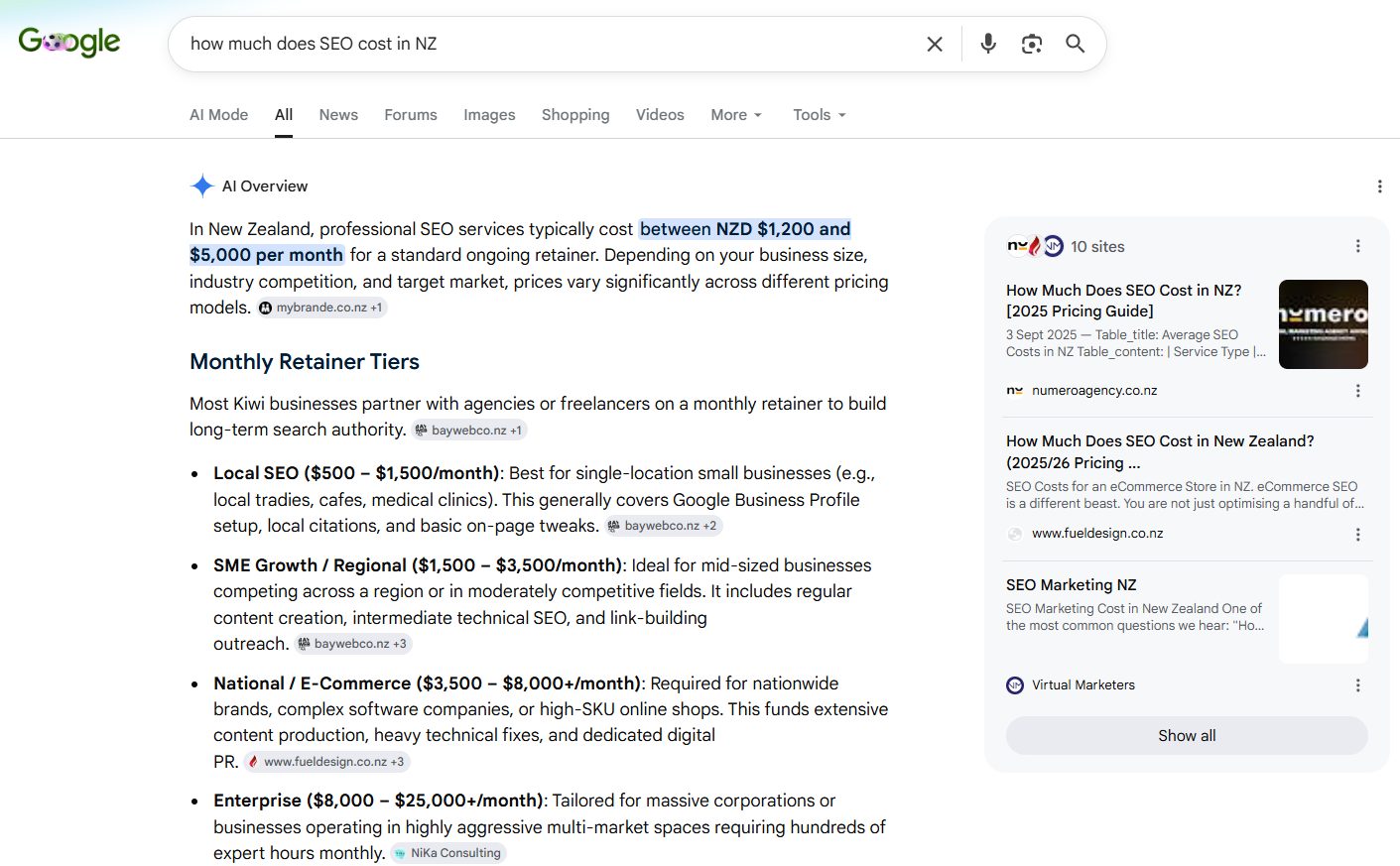
Say an Auckland plastic surgeon pays $2,000 a month for local SEO. Over eight months, that’s $16,000 spent. (That’s a normal spend, by the way — Google’s own AI Overview pegs local SEO in NZ at $1,200 to $5,000 a month.)
Now, what’s one procedure worth? A full tummy tuck in Auckland runs between $16,000 and $22,000. So here’s the striking part: that surgeon would need to land just one procedure in eight months to pay back the entire cost of the SEO.
One client. Eight months. Break-even.
And that’s the bare minimum — the worst realistic case. Because local SEO done right doesn’t deliver one lead every eight months. It delivers qualified enquiries every week, from people in Auckland searching for exactly what that surgeon does.
Two procedures and they’ve doubled their money. Five and the return is enormous. On a service that valuable, you don’t need volume. You need to show up.
This is the intent-times-value idea made real. A tummy tuck searcher isn’t browsing. They’ve made the decision — they’re choosing who does it. Being the name they find is worth a fortune.
Run your own numbers on it:
| Your inputs | Example (surgeon) |
|---|---|
| Monthly local SEO cost | $2,000 |
| Leads per month | 8 |
| Close rate | 25% |
| Average customer value | $16,000 |
| Monthly revenue from local search | $32,000 |
| Monthly ROI | 1,500% |
Swap in your own cost, leads, close rate, and customer value. Even halve every figure and the return is still one most business owners would take in a heartbeat.
That’s the point — with a high-value service, the maths barely has to go your way for local SEO to win. Curious what that spend looks like in practice? Here’s how local SEO in Auckland works.
The Same Formula, Different Businesses
The surgeon is the easy example — huge customer value, barely any volume needed. But local SEO ROI works across the whole value spectrum, not only for high-ticket services. It just gets there a different way.
Take a Hamilton plumber. No single job is worth $16,000. But “emergency plumber Hamilton” and “plumber near me” fire off a steady stream of leads, and plumbing work repeats.
Say local SEO costs $1,500 a month and brings in 20 leads. Close half at an average job value of $500 — blended across small fixes and bigger installs — and that’s $5,000 a month against a $1,500 spend.
Here the return comes from volume, not ticket size. That’s the engine behind SEO for a Hamilton business: steady local demand, converted.
Now a Christchurch law firm. One family-law or conveyancing client is worth a few thousand dollars, and often refers more.
At $1,800 a month for local SEO, landing even two new clients off searches like “family lawyer Christchurch” turns $1,800 into $6,000-plus — before the referrals.
Mid-value businesses like this sit between the surgeon and the plumber: fewer leads than a tradie, more value in each one. It’s the same maths every time, which is what local SEO in Christchurch is built on.
The takeaway: whether your customer is worth $500 or $15,000, the formula holds. High value means you need almost no volume. Lower value means you lean on volume. Either way, local SEO’s job is the same — send you people who are already looking to buy.
Why Your First Few Months Look Like a Loss (and Why That’s Normal)
Here’s the part the calculators never show you: for the first few months, your local SEO ROI is negative.
You’re paying before the results arrive. Month one, you spend $2,000 and you’ve got no new rankings, no new leads, nothing to show.
That’s not failure. That’s how SEO works. The cost comes first and the return lags behind.
Think of it as a curve that dips before it climbs. Roughly, you’ll see early movement in three to six months, and solid, compounding results from six to twelve. Anyone promising a flood of leads in week two is selling something.
But here’s why it’s worth the wait. Once you rank, the leads keep arriving at almost no extra cost. You’re not paying per click like ads. The asset you built keeps working.
That’s when the return outruns every paid channel — and keeps outrunning it for years.
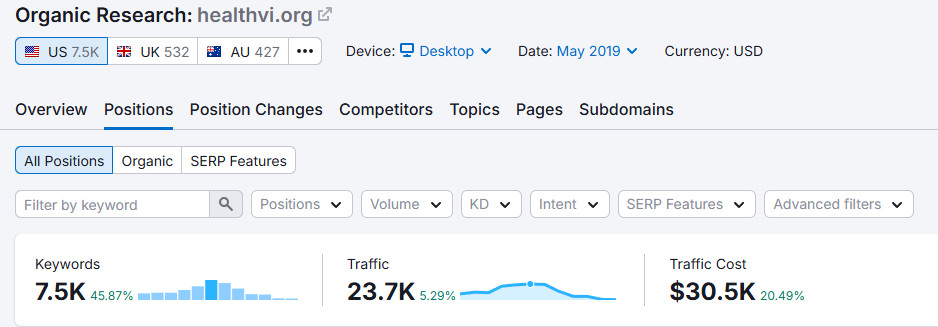
I’ve watched this curve play out over and over. I grew a health site, HealthVI, from zero to over 20,000 monthly organic visitors — slow at first, then a steep climb once the content compounded.
A sleep-niche site I worked on took the same shape and eventually peaked at 911,624 visits a month.
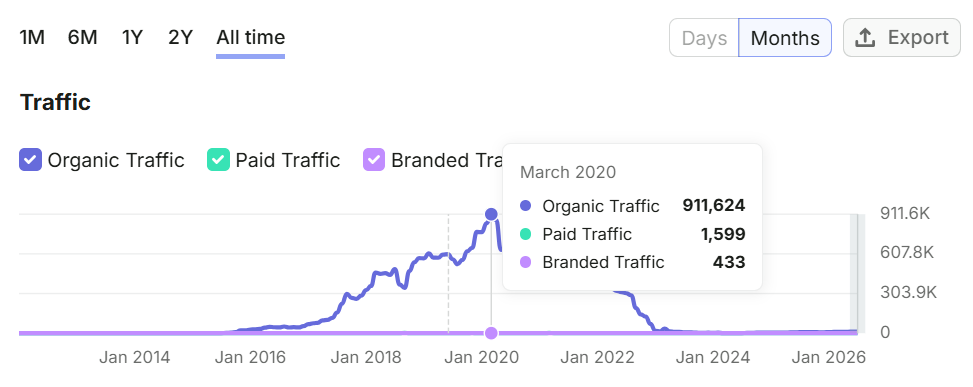
Neither happened overnight. Both looked like a loss at the start. That early dip is the price of admission — and the compounding on the other side is why the ROI ends up so high.
The Honest Part: Why Local SEO ROI Is Hard to Track Perfectly
Anyone who tells you they can track every dollar of local SEO ROI to the decimal is lying to you.
A lot of the return is messy. Someone finds you on Google, doesn’t call, drives past your shop two days later, remembers the name, then phones the following week.
Which channel gets the credit? Your analytics has no idea. It happens constantly, especially with local businesses.
Here’s where the tracking breaks down:
- Multi-touch journeys. People rarely find you and buy in one click. They see you three or four times first.
- Brand versus non-brand. Once your SEO works, more people search your business name directly. That’s a result of your SEO, but it looks like “brand traffic.”
- Offline conversions. The “near me” searcher who walks in, or calls a number they memorised, never shows up in your data at all.
Notice which way that cuts. All these gaps mean your real ROI is usually higher than what your analytics shows, not lower. The messiness works in your favour — you’re almost certainly under-counting.
So how do you get close to the truth? Call tracking to catch phone leads. A simple “how did you hear about us?” on every enquiry. Your Google Business Profile insights.
And watching the trend — when your rankings climb and your enquiries climb with them, that correlation is your answer, even if you can’t tag every single lead.
I’ve watched it happen first-hand. After my own site hit number one for “SEO Dunedin,” a competing agency messaged me trying to hand over one of their clients — a ranking turning straight into an inbound lead.
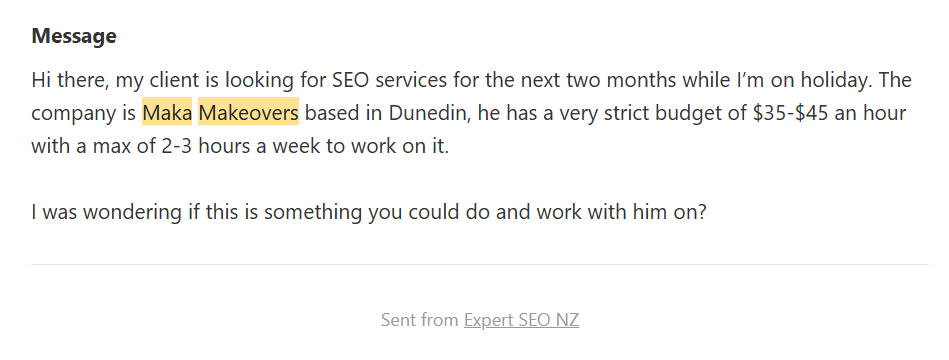
This is the whole reason I care more about customers than rankings. A ranking report is easy to fake. A calendar full of booked jobs isn’t.
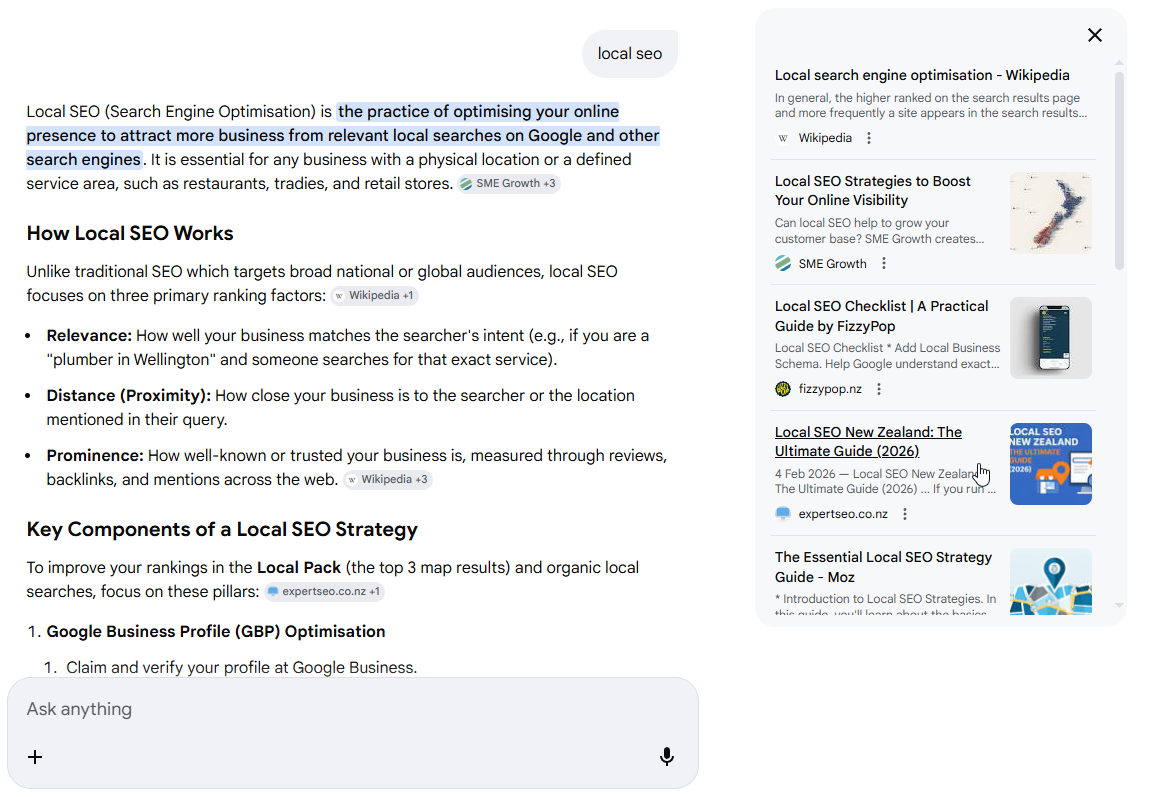
The proof this method works isn’t a position on a screen — it’s leads like that one, and my own new site already cited by Google’s AI, turning into real traffic value every month.
What’s a Good Local SEO ROI?
A good SEO ROI is often quoted at around $5 to $7 back for every $1 spent — but for a local business with a high-value service, it can be far higher.
First Page Sage’s industry data puts local SEO ROI at roughly 700%, with the investment paying for itself in six to twelve months. General SEO across all industries sits near a 748% median.
Either way, the businesses at the top of that range are the ones with high customer value — medical, cosmetic, legal, premium trades — because of the intent-times-value maths.

Here’s the honest version, though: the “average” doesn’t matter much, because your ROI depends almost entirely on two things you control — your customer value and your close rate.
Run the same $2,000-a-month spend across two businesses:
- A café where a customer is worth $15 needs a lot of foot traffic to see a return.
- A surgeon where a customer is worth $16,000 needs almost none.
Same spend. Wildly different ROI. That’s why high-value service businesses — dentists, surgeons, lawyers, premium trades — get the best returns from local SEO.
If that’s you, the ceiling is high. If you sell low-value items in high volume, the maths still works, but you’ll lean on volume to get there.
Local SEO ROI vs Google Ads
Google Ads gets you leads today. Local SEO gets you leads you own. The difference shows up in the ROI over time.
With ads, you pay for every single click, forever. Turn off the budget and the leads vanish that afternoon. It’s rented attention — fast, but you never stop paying rent.
Local SEO is slower to start, then flips the maths. Once you rank, the leads come in at a fraction of the cost, and they keep coming.
First Page Sage puts the cost of an organic lead at around $31 versus $181 for a paid one — nearly six times cheaper. Over the long run, that’s why SEO tends to return roughly 8x versus 4x for paid search: the ongoing cost is so much lower.

The honest answer for most established businesses? Run both. Use ads to buy leads now while your SEO builds.
Then, as your rankings climb, your cost per lead falls and your ROI climbs with it. Ads are the sprint. SEO is the compound interest.
The Metrics and Tools to Track Local SEO ROI
You don’t need a fancy dashboard to track local SEO ROI. You need to count leads and tie them to revenue. Here’s the simple stack.
- Google Business Profile insights — calls, direction requests, and website clicks straight from your listing. The purest local signal you’ve got.
- Call tracking — so you know which phone calls came from Google, not guesswork.
- Form tracking — every online enquiry, tagged to its source.
- Google Search Console — shows your visibility and which local searches you’re appearing for.
- A simple leads-to-sales record — even a spreadsheet. Leads in, deals closed, revenue won.
The thing to watch is the bottom of that list: qualified leads and closed revenue. Not rankings for their own sake. Not raw traffic.
Review it monthly, tie the leads back to real jobs, and you’ll know your ROI better than any calculator can tell you.
Common Local SEO ROI Mistakes
Most “local SEO didn’t work for me” stories aren’t about the SEO. They’re about how it was measured. Avoid these five and your ROI picture gets honest fast.
- Measuring rankings and traffic instead of leads and revenue. Position three means nothing if the phone isn’t ringing. Track customers, not vanity metrics.
- Not tracking phone calls. Calls are how most local customers convert. If you’re not tracking them, you’re blind to most of your return — and undercounting your ROI badly.
- Ignoring your close rate. If leads are coming in and not converting, that’s often a sales problem, not an SEO problem. Don’t blame the channel for a gap in your process.
- Judging it at month two. SEO ROI is negative early and compounds late. Calling it a failure before six months is like digging up a seed to check if it’s growing.
- Buying cheap SEO that never ranks. Spend $300 a month, get nothing, conclude “SEO doesn’t work.” The problem wasn’t SEO. It was the operator.
That last one is worth sitting with — because it’s the difference between the best ROI in your marketing and a complete waste of money.
Final Thoughts
Local SEO is one of the highest-ROI moves a business can make. I believe that after years of doing this.
When someone’s searching for what you sell, in your town, ready to buy — being the business they find is worth more than almost any ad you could run.
But it hinges on one thing: who does it.
Get a proper local SEO team — one that ranks businesses, drives real leads, and reports on customers instead of positions — and the return can be enormous, especially on a high-value service. Get a cheap one that talks rankings and delivers nothing, and it’s money set on fire. Same channel, opposite outcome.
The channel isn’t the risk. The operator is.
Choose that part carefully, and the maths in this guide will take care of the rest. If you’d rather hand it to someone who does it properly, take a look at our SEO services.