
Want a backlink without waiting weeks for someone to write a whole new article? A link insertion is the shortcut.
You find a page that already exists, already ranks, and already has a bit of authority behind it. Then you get your link added inside it.
For me, it’s one of the easiest wins in link building. Low effort, and it leans on a page that time has already done the hard work on.
This guide walks through what link insertions are, why they work, what they cost, and exactly how to do them properly in an NZ context.
Key Takeaways
- What it is: a link insertion is when your link gets added into an existing, already-published page on someone else’s website. It’s also called a niche edit or a curated link.
- It works because the page is already indexed and has aged authority and traffic, so your link often passes value faster than a link on a brand-new post.
- Expect to pay roughly USD $50–$350 per link (about NZ$85–$580), with the average sitting near USD $179.
- Done right, it’s one of the lowest-effort backlinks you can get. Done wrong — spammy site, no traffic, forced anchor — it does nothing.
- A link insertion is only as good as the page it sits on: real authority, real traffic, real topical fit.
- On its own it won’t carry your SEO. Pair it with a content marketing plan and it becomes a multiplier, not a crutch.
What Is a Link Insertion
A link insertion is adding your link into an article that’s already published on another website.
No new content gets written. The page already exists — you’re just getting your link placed inside it, worked naturally into a sentence that’s already there.
You’ll also hear it called a niche edit or a curated link. Same thing.
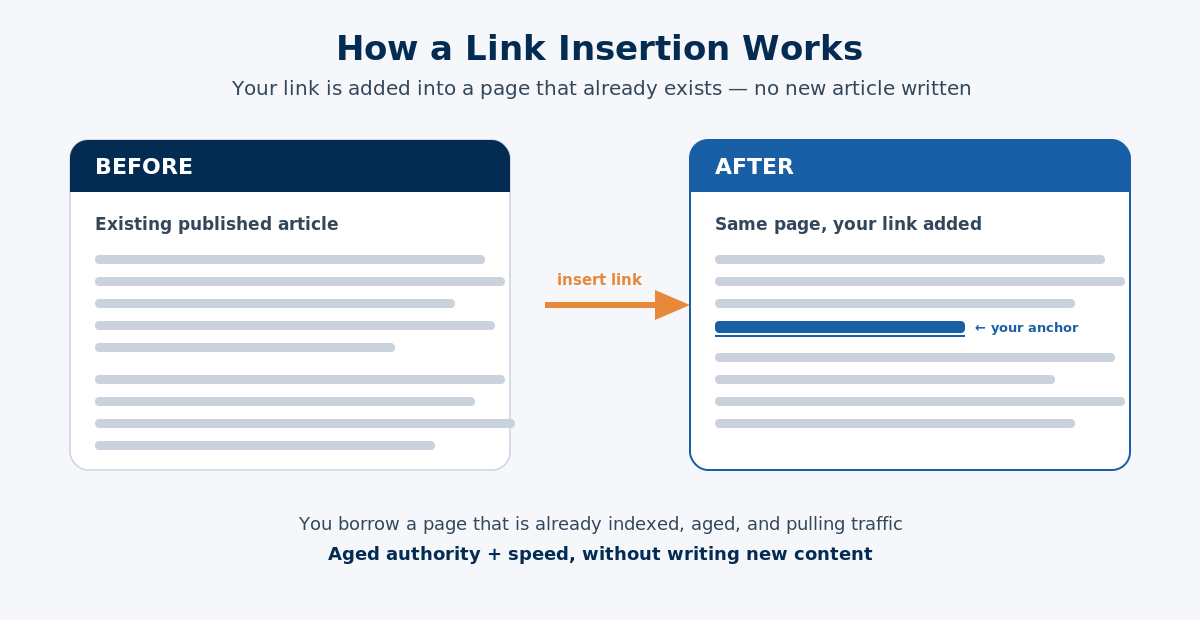
Here’s the difference that matters. With a guest post, someone writes a fresh article around your link. With a link insertion, you skip all that and slot into a page that’s been sitting there earning trust for months or years.
Say a Hamilton mortgage broker wants a backlink.
Instead of commissioning a new article, they find an existing “first home buyer tips” post on an NZ personal finance blog and get a link to their rates page added into the paragraph about getting pre-approved.
The page was already there. Already ranking. The broker just borrowed a slice of its authority.
Why Link Insertions Matter for SEO
Backlinks are still one of the strongest ranking signals Google has. In a Backlinko study of 11.8 million search results, the #1 result had 3.8x more backlinks than the pages sitting in positions two through ten.
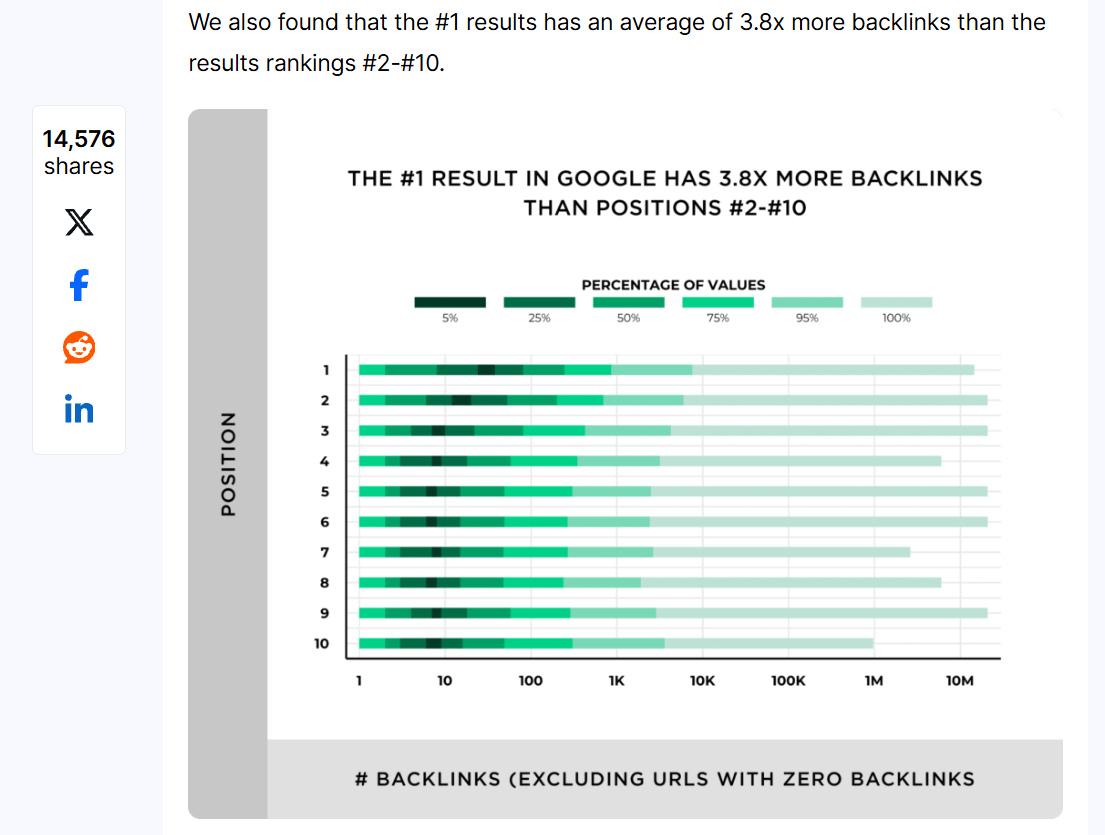
So links matter. The question is how you get them efficiently — and this is where insertions pull ahead.
A brand-new backlink on a brand-new post has to earn its stripes. The page is fresh, it’s got no authority of its own yet, and Google’s still working out whether to trust it.
A link insertion skips that waiting room. You’re placing your link on a page that’s already indexed, already ranking, and already sitting on aged authority and traffic. That means the link can pass value much faster.

Aged pages are exactly what you’re after here — Ahrefs found 72.9% of Google’s top 10 are more than three years old. The pages worth getting onto have usually been earning trust for years.
There’s a scale angle too. Roughly 66% of all web pages have zero backlinks pointing at them. Most pages are invisible. Getting placed on the small share of pages that actually have authority and traffic is how you separate from that pack.
And they’re fast. Link insertions typically go live within days, where a guest post can take weeks once you factor in writing and editorial approval.
How Much Do Link Insertions Cost
Link insertions are one of the cheaper backlink types you can buy. Most land between USD $50 and $350 per link, with the average around USD $179.
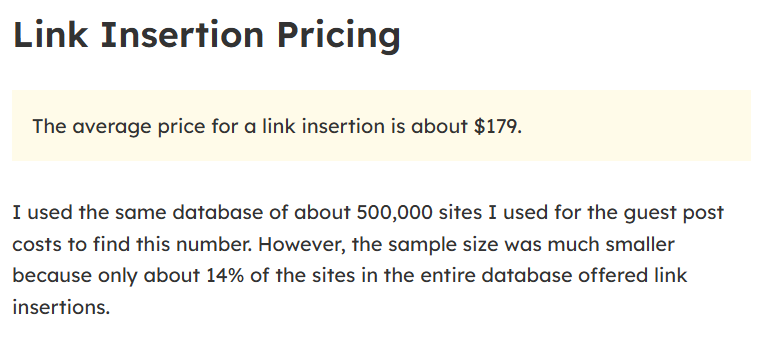
In NZ dollars that’s roughly NZ$85 to NZ$580, averaging near NZ$295. Most vendors price in USD, so budget with that in mind.
Price moves with the quality of the host page. A link inserted on a low-authority blog nobody visits sits at the bottom of that range. A link on a high-DR page with real organic traffic sits at the top — and it’s worth it.
A quick reality check before you spend: a cheap link on a dead page is more expensive than a pricier link on a page that actually ranks, because the cheap one does nothing. I get into the full breakdown of what backlinks cost in the link building pricing guide.
How to Do Link Insertions
The process is simple, but the details are where people either get a great link or waste their money. Here’s how I approach it.
Find pages that already have authority and traffic
Start by finding published pages in your niche that are already pulling their weight.
Open Ahrefs or SEMrush, drop in a topic related to your business, and look for articles that already rank and get organic traffic. In Ahrefs, Content Explorer is built for exactly this — search a phrase, then filter by Domain Rating and traffic.
Two shortcuts speed this up. First, spy on your competitors: run a rival’s domain through the backlinks tool and pull the sites that link to them but not to you.
Those publishers already link to businesses like yours, so they’re your warmest targets. Second, use Google search operators.
A search like intitle:"first home buyer tips" or inurl:mortgage-guide surfaces existing pages already covering your topic — exactly where a link would slot in naturally.
You’re hunting for two things on every page: real authority (a decent DR) and real traffic. A page with authority but zero visitors is a weaker bet than a page with both.
For an Auckland dentist, that might be an existing “how to handle a dental emergency” article on a health blog that already ranks and gets steady visits.
Check the page is a genuine fit
The link has to belong on the page. Google reads the topic around your link, so relevance is doing real work here.
Read the article. Ask a plain question: if a normal reader hit this paragraph, would your link actually help them? If yes, it fits. If you’re forcing a dentist link into a paragraph about gardening, it doesn’t — walk away.
Topical fit is what separates a link that moves the needle from one that looks bought.
Nail the anchor text
The anchor text — the clickable words your link sits on — needs to read naturally and describe where it goes.
Don’t stuff your exact money keyword every time. A mix of natural, descriptive anchors is safer and reads better. “Getting pre-approved for a home loan” is a better anchor than jamming “best mortgage broker Hamilton” into a sentence that doesn’t want it.
Match the anchor to the surrounding words. If it reads like it was always there, you’ve done it right.
Reach out to the site owner properly
Most insertions come from outreach — you email the site owner and ask them to add your link.
Keep it short and human. Tell them which page you mean, which sentence your link would strengthen, and why it genuinely helps their reader. Vague mass emails get ignored; a specific, useful pitch gets a reply. Tools like Respona and BuzzStream help you find contact details and manage the outreach at scale.
Some placements come through paid marketplaces instead, where publishers list pages you can buy a link on directly. Faster, but you still have to vet every page yourself.
Vet the site before you commit
Before any link goes live, check the host site isn’t junk.
Skip anything that reads as a spam farm — pages stuffed with unrelated outbound links, no real audience, or a link profile that looks manufactured. A link from a dodgy site can do more harm than good.
The test I use: does this site look like somewhere a real NZ business would genuinely want to be mentioned? If not, pass.
Link Insertions vs Guest Posts
Both get you a contextual backlink. The difference is speed, cost, and effort.
A guest post means new content written around your link — more work, higher cost, usually USD $100–$600+ per link. A link insertion drops you into an existing page — cheaper, faster, less work.
Guest posts give you a fresh page built for your link and a bit more control over the content. Insertions give you aged authority and speed.
I lean on insertions when there’s already a strong, relevant page I can get onto. I reach for guest posts when I want a purpose-built page or the right existing page just doesn’t exist yet.
Mistakes That Waste Your Money
The tactic is easy, so most of the wasted spend comes down to a few avoidable errors.
Buying links on pages with no traffic. Authority without visitors is a weak signal — you want both.
Forcing the anchor text. Cramming your exact keyword in every time looks manufactured and reads badly.
Ignoring relevance. A link that has nothing to do with the page’s topic gets little value and looks bought.
Chasing volume on cheap, spammy sites. Ten links on junk pages lose to one link on a genuinely good page every time.
Final Thoughts
Link insertions are my preferred low-effort form of link building, and I don’t say that lightly.
You’re borrowing a page that time has already made valuable — it’s indexed, it’s aged, it’s got traffic — and slipping in naturally. When the fit is right, few tactics give you that much return for that little work.
But here’s the part the sellers won’t tell you: insertions alone won’t build your rankings. They’re a multiplier, not an engine.
The engine is content marketing.
A real content plan builds topical authority and pulls in links naturally, and insertions then pour fuel on top of that. Skip the content and you’re just renting links into a page that has nothing behind it.
If you’d rather hand the vetting, outreach, and anchor decisions to someone who does this daily, that’s what our SEO services are for — whether you’re in Auckland, Hamilton, Wellington, or anywhere else in New Zealand.
Link Insertions: FAQ
What is a link insertion?
A link insertion is when your link is added into an article that's already published on another website. It's also called a niche edit or a curated link, because no new content is written — your link is worked into a page that already exists.
What is the difference between a link insertion and a guest post?
A guest post is a brand-new article written around your link; a link insertion places your link inside an existing, already-ranking page. Insertions are cheaper and faster because there's no content to write, while guest posts give you a purpose-built page and more control.
How much do link insertions cost?
Most link insertions cost between USD $50 and $350 per link, with the average around USD $179 (roughly NZ$85–$580, averaging near NZ$295). The price rises with the authority and real traffic of the page your link goes on.
Are link insertions good for SEO?
Yes, when they're done on relevant pages with genuine authority and traffic. You're borrowing a page that's already indexed and aged, so the link can pass value faster than one on a brand-new post — but a link on a low-quality or irrelevant page does little to nothing.
How fast do link insertions work?
Link insertions usually go live within days, since there's no article to write or wait on. The SEO benefit still builds over time as Google re-crawls the page, but the placement itself is one of the quickest backlinks to secure.
Is link building illegal?
No — link building isn't illegal, and buying a link insertion won't land you in legal trouble. The only rules in play are Google's, not the law's. Google discourages links built purely to manipulate rankings, so it comes back to quality: a relevant link on a real, trafficked page is low-risk, while bulk links on spammy sites are what invite penalties.