

The Numbers at a Glance
- 200,193 organic visitors a month at its peak (January 2017)
- 205,467 keywords ranked on Google — 2,682 of them in the top 3
- A domain with genuine age behind it — live since 31 May 2009
- Ranked across the entire fitness niche: workouts, nutrition, supplements, athletes
- Built by a team, running one consistent content system for years
Every number below is a real screenshot. No rounding up, no spin.
First — A Straight-Up Admission
This wasn’t my solo project.
This was a team effort — a full content and SEO team, working the same system month after month.
I was part of it, not the whole thing. I want that clear before we go any further, because the real story here is what a good team, a good system, and a lot of patience can build together.
And what they built was one of the biggest bodybuilding and fitness sites online: 200,193 organic visitors a month from Google at its peak. Not ads. Not social. Just people searching for something fitness-related and landing on pages the team created.
This is how it got there — and what this SEO case study proves about the way search actually works when you do it properly.
So How Big Is 200,000 Visitors a Month, Really?
Big numbers go numb fast, so let me ground it.
Most New Zealand businesses would be thrilled with a few thousand organic visitors a month. A strong local site might do 5,000 to 10,000.
This site did 200,193 — in a single month.
That’s not a good month. That’s the kind of traffic that only shows up when a site has hundreds of thousands of pages of content all pulling their weight at once.
Here’s the actual Semrush chart:
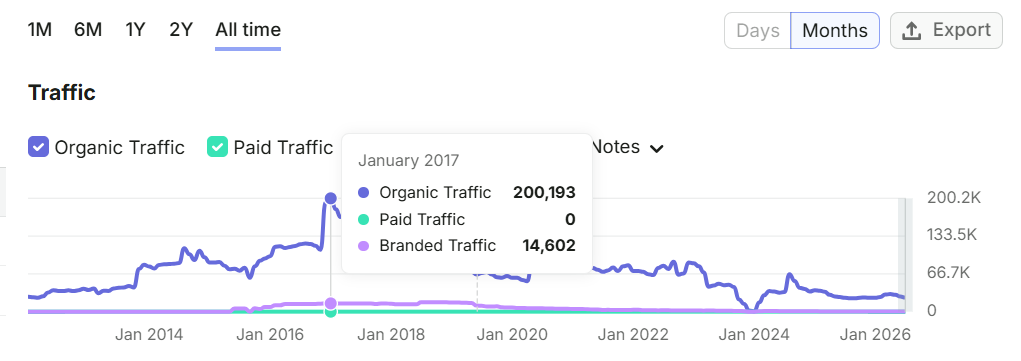
Look at the shape of that line. It didn’t spike and crash. It climbed and held — because it was built on content people were actually searching for, not tricks that stop working the moment Google updates.
205,467 Keywords — and Where They Came From
Traffic is the headline. Keywords are the engine underneath it.
At its peak, the site ranked for 205,467 keywords on Google. 2,682 of those sat in the top 3 positions — the spots that actually get the clicks.
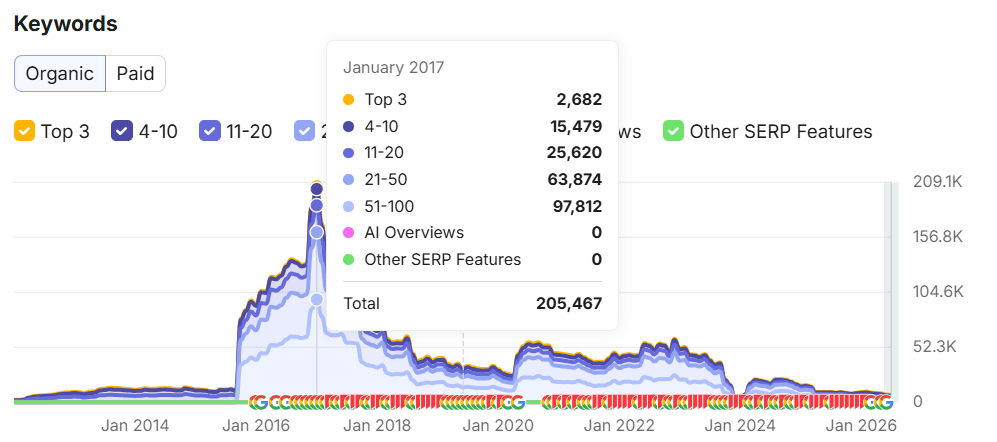
Here’s why that number matters more than the traffic figure.
Ranking for one big keyword is luck. Ranking for two hundred thousand is a system.
It means the site had genuinely useful content covering nearly every question a person could ask about getting in shape — from “how do I burn more fat” all the way to “is this supplement worth buying.”
Here are the kinds of terms it actually ranked for:
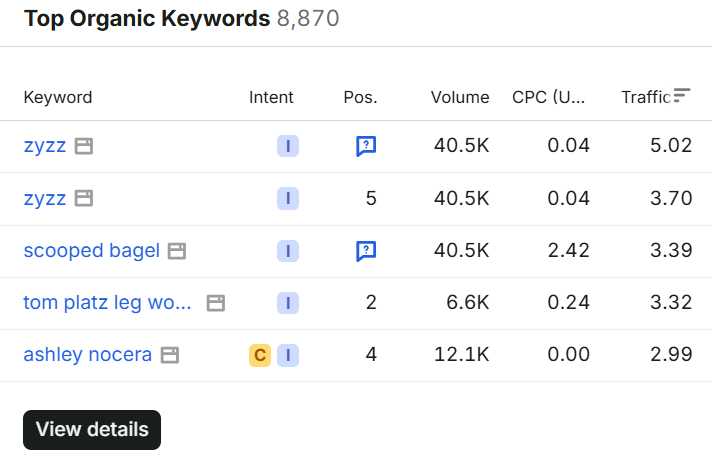
That spread is the whole point. The traffic wasn’t riding on one lucky page. It came from thousands of pages, each answering a real search, all adding up.
So What Did the Team Actually Do?
This is the part people expect me to dress up. I won’t, because the honest answer is the useful one.
Content. On everything. Done consistently, for years.
If it had anything to do with getting into shape, the site had content on it. Specifically:
- Athletes — profiles, training breakdowns, what the top competitors actually did
- Workouts — programs and routines for every goal, from fat loss to lean muscle
- Supplement reviews — honest breakdowns of what worked and what didn’t
- Nutrition — how to eat for the result you’re chasing
That’s a content team firing on every angle of one niche — and I wrote a good chunk of it myself. Here are a few of the articles I wrote for the site.
One covered how to burn more fat:

Another walked through how to use whey protein to build muscle:
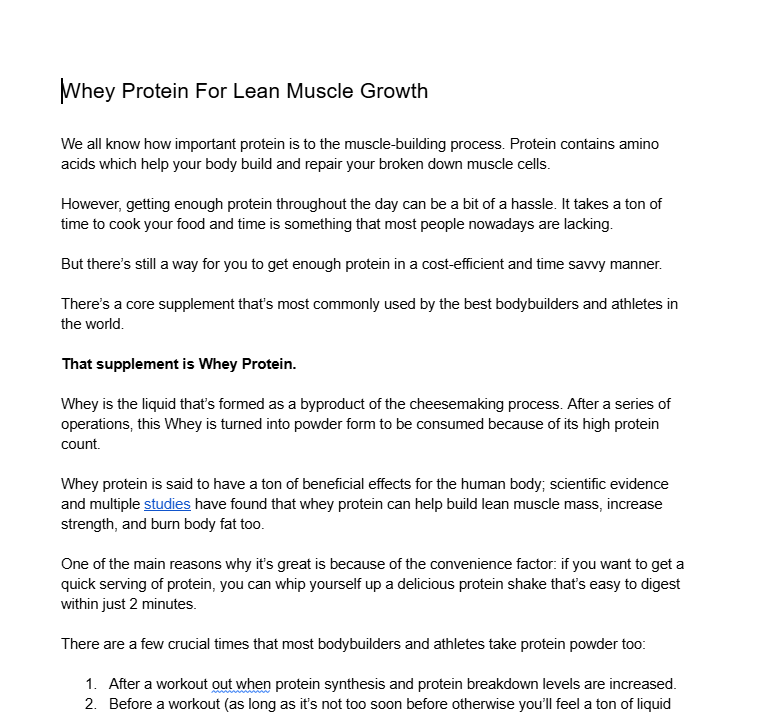
There was one on how to build lean muscle mass:
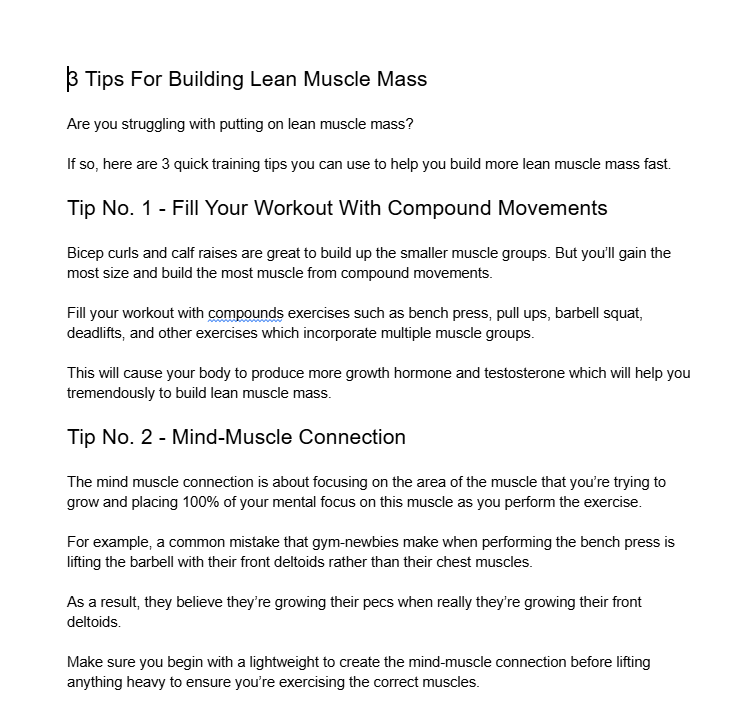
And one on nutrition tips for building muscle:
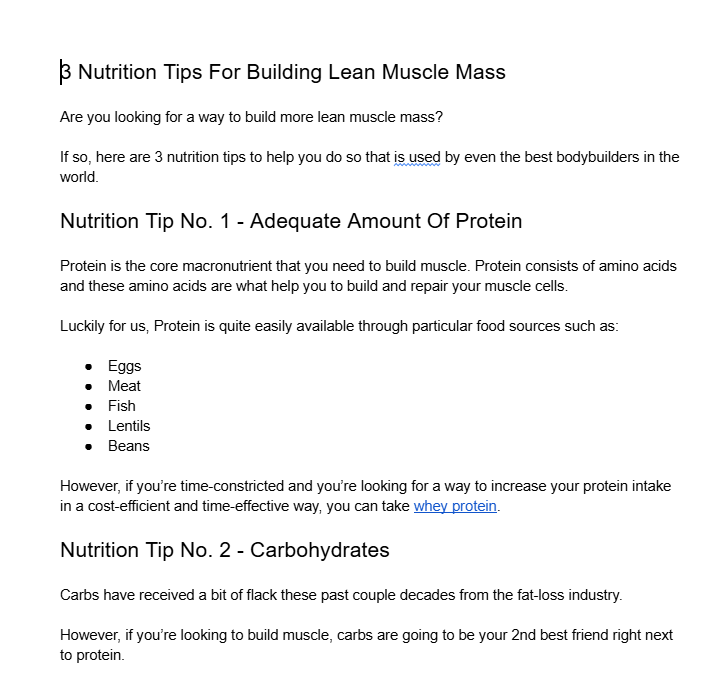
None of this is glamorous. It’s find the questions people are asking, answer them better than anyone else, publish, and repeat. Do that a few thousand times, with a team, and you get a site that ranks for two hundred thousand keywords.
The Unfair Advantage: Age
Here’s the part most people underrate.
That domain has been live since 31 May 2009.
When you’ve got a site with that much history — years of consistent, quality content, published steadily, all in one niche — it becomes very hard not to rank.
Google trusts age. Not the date on its own, but what age represents: a site that’s been publishing genuinely useful content, on the same topic, for a long time, without disappearing or going junk. That’s exactly the signal Google wants to reward.
So you had two forces stacking on top of each other. Age built the trust. Consistent quality content gave Google something worth trusting. Neither works alone. Together, they compound — and compounding is the whole game in SEO. You can copy a page. You can’t copy a decade of consistent work.
And the Links? They Built Themselves
One more thing worth understanding, because it flips how most people think about SEO.
The team didn’t spend its life chasing backlinks.
When you publish genuinely useful content, consistently, at that scale — the links start to build themselves. Other sites, writers, and forums naturally reference good content when they find it. That’s how a healthy link profile is supposed to grow: as a byproduct of being the best resource, not as a task you grind at in isolation.
Get the content engine right and the authority follows. That order matters. Most people get it backwards.
Why This Matters for Your Business
You don’t need 200,000 visitors a month. Most of that traffic would be irrelevant to a New Zealand business anyway.
But the method is identical whether you’re ranking a global fitness site or a plumber in Hamilton. Understand what your customers are searching. Build content that answers it better than anyone locally. Publish consistently. Let the trust — and the links — compound over time.
The reason I can rank a New Zealand business is that I learned this working alongside a team competing in one of the most crowded niches on the internet, and winning. After that, a local NZ market is a far easier fight.
If you’d rather hand that off to someone who’s done it at that level, that’s the SEO work I do.
Final Thoughts
Here’s the one thing to take from this.
SEO isn’t a trick you pull. It’s an asset you build — usually with a team, always over time.
This site didn’t hit 200,000 visitors a month because someone found a shortcut. It got there because a team published quality content, on everything in its niche, consistently, for years — on a domain old enough that Google already trusted it.
That’s the formula. Age plus consistency plus quality, compounded. Everything else is detail.