

You don’t own Google.
You’re playing on its playground. And every playground has a kid who owns it, sets the rules, and decides who gets a turn.
Follow Google’s rules and it hands you the good stuff: it ranks you, and it puts your business in front of the exact people already searching for what you sell.
Break them, or ignore them, and you sit on the bench while websites half as good as yours go down the slide first.
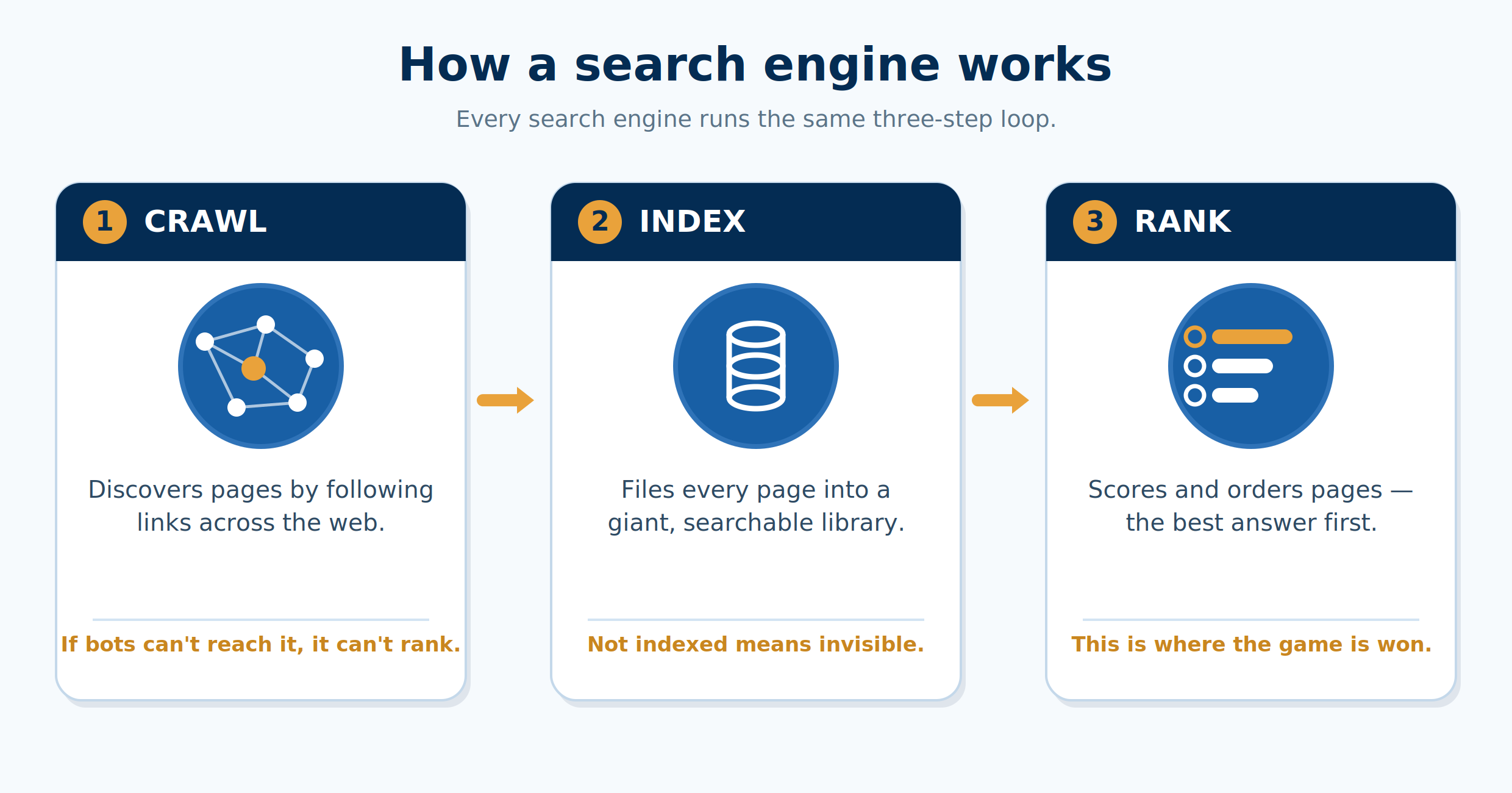
Here’s the short version before we dig in: search engines work in three steps. They crawl the web to find pages, index those pages into a giant library, then rank them whenever someone searches.
That’s the whole machine. Crawl, index, rank.
By the end of this guide you’ll understand how each step works, and — the part almost nobody explains — what each one decides about whether your business actually gets found.
What Is a Search Engine?
A search engine is software that scours the internet, stores what it finds, and serves you the most relevant results the instant you type a query.
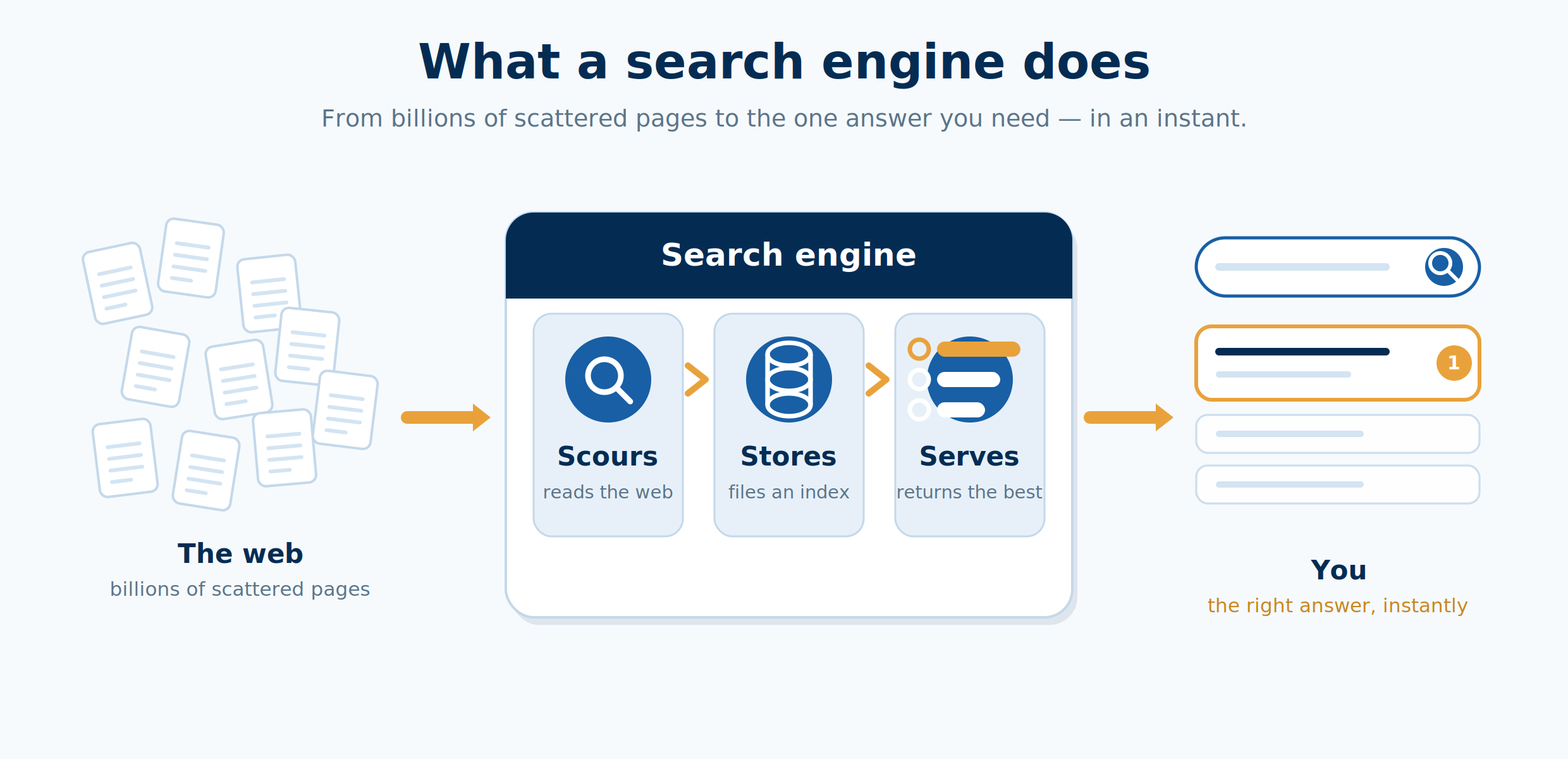
The librarian comparison gets overused, but it earns its keep: a search engine is less “searches the whole web when you ask” and more “the world’s fastest librarian who has already read everything and hands you the right book before you’ve finished the sentence.”
Most people mean Google when they say search engine, and in New Zealand that’s fair enough — it handles the overwhelming majority of searches here. Bing and DuckDuckGo exist and work the same basic way.
There are a few flavours (crawler-based engines like Google and Bing, older human-built directories, and the new AI answer engines like ChatGPT), but the crawler-based kind is the one your customers use, so it’s the one that matters.
The scale is genuinely hard to picture. Google alone handles over 5 trillion searches a year. That’s the size of the playground you’re trying to get noticed on.
Why Understanding This Actually Matters
You can’t win a game when you don’t know the rules.
SEO is a game played entirely on someone else’s turf. Google owns the field, writes the rulebook, and referees every match. Understanding how it works is the difference between playing on purpose and just kicking the ball around hoping it goes in.
For the decade I’ve been doing this, I’ve watched businesses treat SEO like a slot machine: publish a page, pull the lever, wonder why nothing pays out. They tweak a heading here, swap an image there, and get nowhere — because they’re guessing at rules they’ve never read.
Once you understand crawl, index and rank, the guessing stops. You know why a page isn’t showing up. You know what to fix first. You stop paying for slot-machine SEO and start playing a game you can actually win.
I’m not talking theory here. My SEO company, Expert SEO, is under two years old and already ranks #1 in New Zealand for “local SEO” — above Ahrefs and Semrush, two of the biggest tools in the industry.

Years earlier, working with my SEO mentor and former business partner Ian Pribyl, I helped grow a health website, HealthVI, from zero to over 20,000 organic visitors a month.
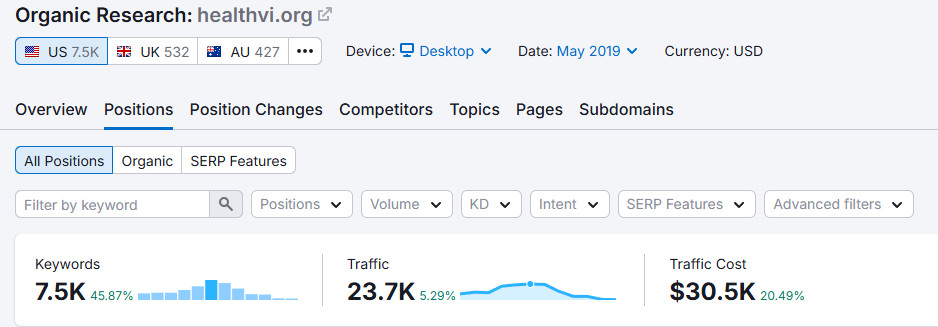
None of that came from clever tricks. It came from understanding the three rules of the playground and playing them harder than the competition. Which is exactly what the rest of this guide walks you through.
The Three Jobs Every Search Engine Does
Everything a search engine does comes down to three jobs: crawling, indexing, and ranking.
Google runs the same three-step loop your customers rely on every day. It crawls the web to discover pages, indexes them into a giant searchable library, then ranks that library every time someone searches so the best answer lands on top.
Crawl to find. Index to store. Rank to order.
Get all three working in your favour and you show up. Miss any one of them and you’re invisible, no matter how good your business is. The next three sections take them one at a time.
Stage 1: Crawling
Crawling is discovery. If a search engine can’t find and reach your page, nothing else you do matters.
Here’s how it works. Search engines send out automated programs called crawlers (you’ll also hear “bots” or “spiders”).
They start from pages they already know about, read the code, and follow every link they find to discover new pages. Each new link gets added to a queue to be crawled later. Follow enough links and you eventually map most of the public web.
Two things about this change how you should think about your site.
First, bots read code, not your beautiful design. That gorgeous hero image with your headline baked into it? To a crawler, that’s a blank space. It reads the text, the links, and the structure — the stuff underneath.
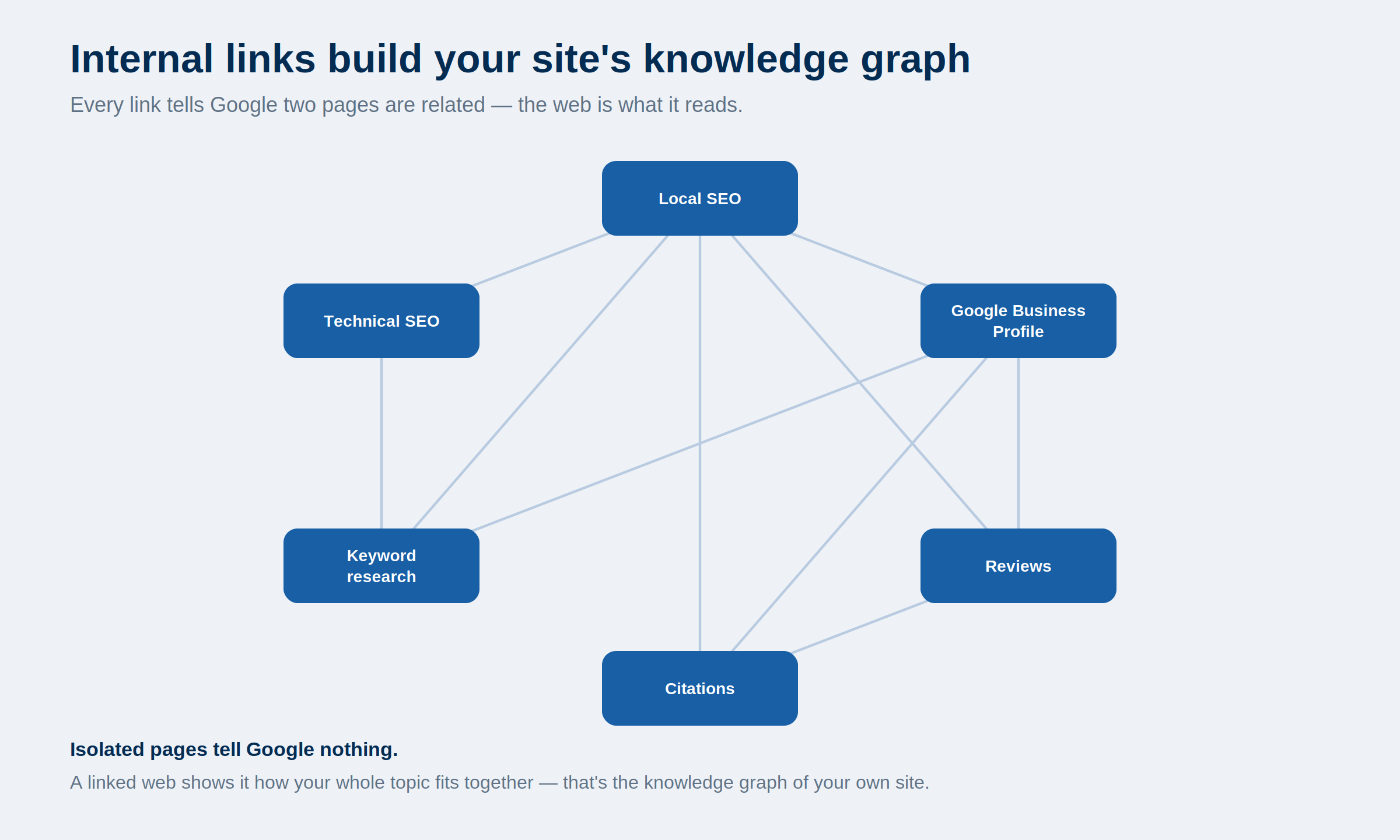
Second, crawlers travel by links. This is why internal linking is quietly one of the most important things on your site. If an important page has no links pointing to it from anywhere, it becomes an “orphan page” — a room with no doors. The bot never finds it, so it never ranks.
You’ve got levers here, and this is where the technical SEO side lives. Your robots.txt file is the gatekeeper that tells bots where they can and can’t go.
Your XML sitemap is the map you hand them, listing the pages you want crawled. Both are worth getting right, because they directly shape what Google even sees.
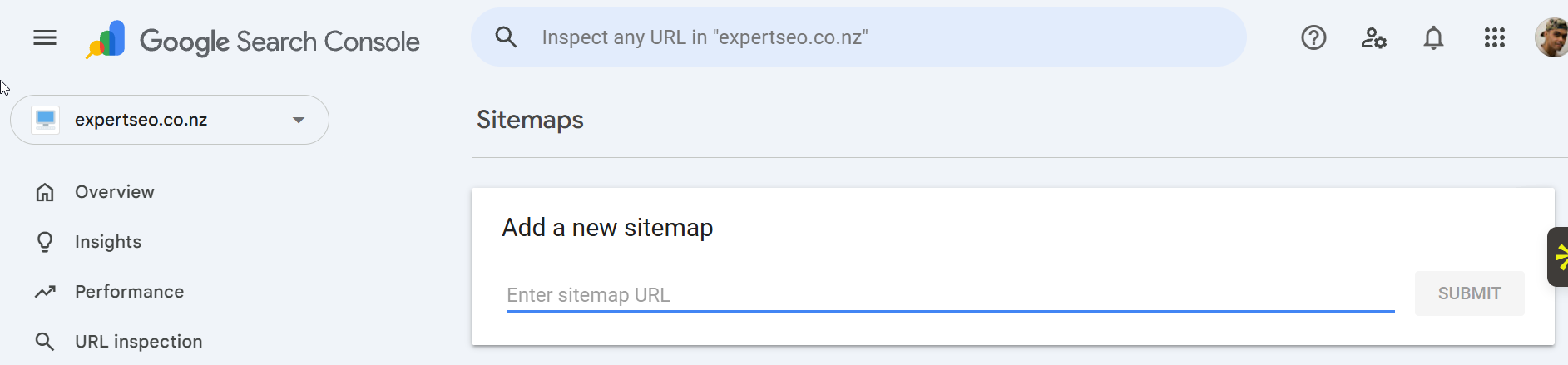
A quick NZ example. Say a builder in Hamilton has a page targeting “new home builds Hamilton” — genuinely his most valuable page — but it’s only reachable from a dropdown menu that loads with JavaScript, with no plain link anywhere else on the site.
Months go by and it never ranks — because the bot never reached it, not because the page is bad.
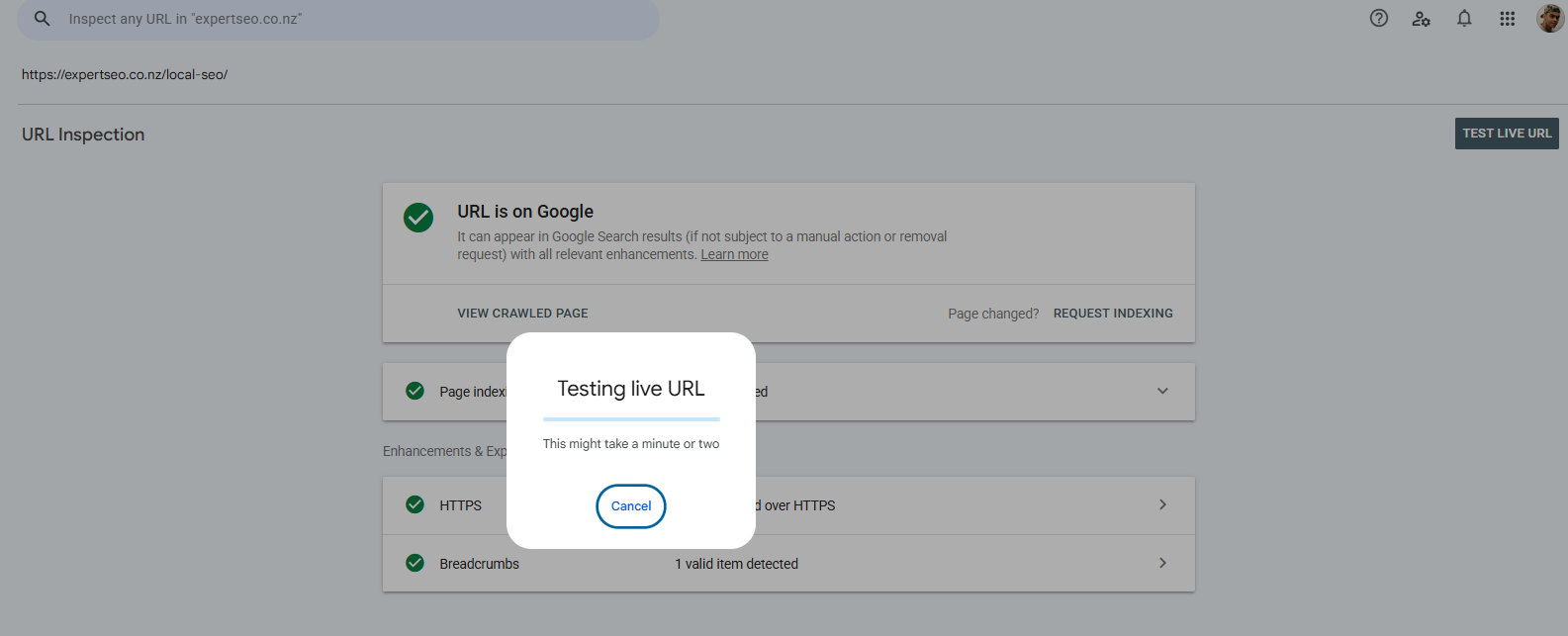
How do you check your own? Google Search Console, its URL Inspection tool. Paste any URL from your site and it tells you straight up whether Google has discovered and crawled it. Free, and it takes about thirty seconds.
To give you a sense of how busy these crawlers are: around 15% of the searches Google handles every day are queries it has never seen before. The web never stops changing, so the crawling never stops either.
Stage 2: Indexing
Getting crawled isn’t the same as getting stored. Indexing is the step that makes your page eligible to show up at all.
Once a page is crawled, the search engine files everything it learned into a massive database called the index. When you search, Google isn’t scanning the live web — it’s pulling from this pre-built library, which is how it answers in a fraction of a second.
The clever bit is how it’s organised. Rather than storing whole pages and reading them on demand, search engines build what’s called an inverted index.
Think of the index at the back of a textbook: instead of a page listing all its words, each word points to the pages it appears on. Search “emergency plumber Wellington” and Google already knows which pages match, instantly, because it filed them that way in advance.
Google’s index holds hundreds of billions of web pages, by its own account. That’s the library your page is trying to earn a spot in.
Here’s the trap most business owners fall into: they assume that if a page exists, it’s in the index. It often isn’t.
A page can be crawled and still get left out of the library. The usual reasons: the content is thin or nearly identical to another page, there’s a stray “noindex” tag left on from a site build, a canonical tag is pointing Google to a different page, or the page is throwing an error.
Any of those, and the page simply doesn’t make the cut.
You check it the same way — Google Search Console — but this time in the Page Indexing report. It shows you exactly how many of your pages are indexed, how many aren’t, and why.
If you’ve got 40 pages and only 12 are indexed, the other 28 are invisible no matter how good they are. Most owners have never once looked at this report, which is often where the whole problem is hiding.
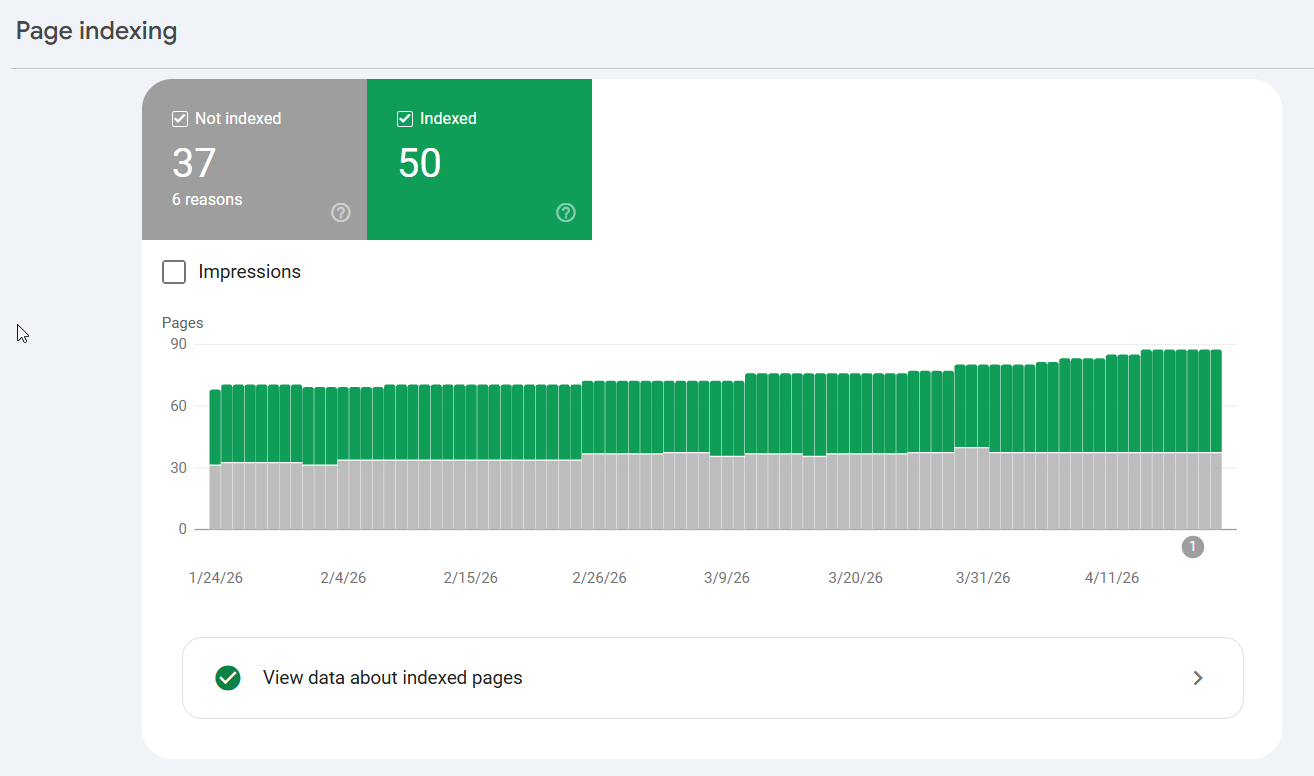
A proper SEO audit surfaces every one of these before they quietly cost you rankings — the technical errors, the pages Google is quietly skipping, the lot.

Stage 3: Ranking
Ranking is the perk. Get the rules right and the playground rewards you with the top spot, in front of your market.
When someone searches, Google pulls every relevant page from its index and scores them, then arranges the results from best answer to worst.
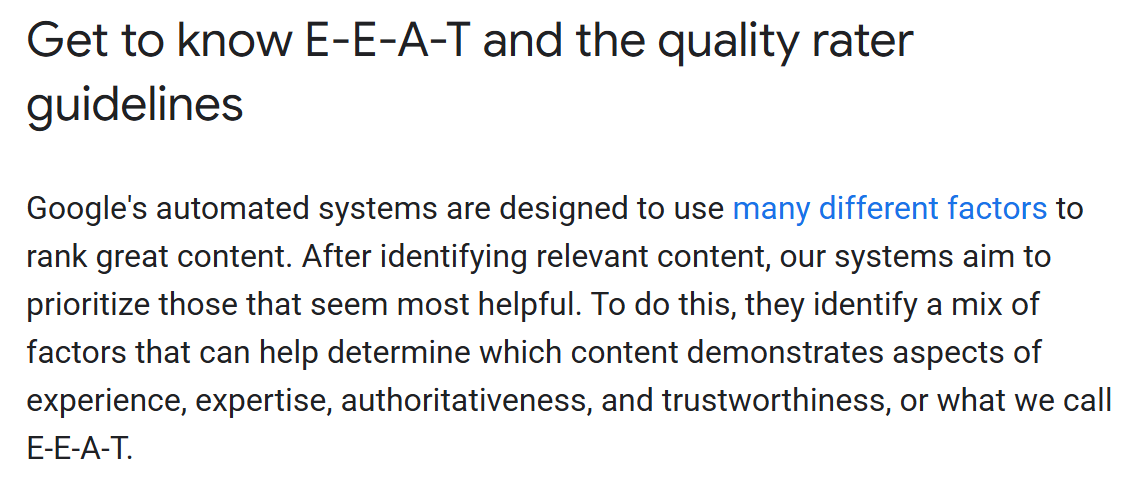
It weighs hundreds of ranking factors to do it: relevance, content quality, authority, how well the page matches what the searcher actually wants, and signals of experience and trust (the industry shorthand is E-E-A-T).
Getting indexed only earns you a ticket to compete. The scale of that competition is brutal: an Ahrefs study found 96.55% of indexed pages get zero traffic from Google. Indexed just means eligible. Ranking is where the game is actually won.
And it’s worth winning, because the top of page one takes almost everything. The #1 organic result alone pulls 27.6% of all clicks, and it drops off a cliff from there — page two gets under 1%. Position is the whole ballgame — the difference between a phone that rings and a website nobody sees.

Now, “hundreds of factors” sounds terrifying, like you’d need a PhD to compete. You don’t. After a decade of doing this, I’ve watched those hundreds of factors collapse into three rules that decide almost everything.
This is my take, built on real results rather than a Google handout — but I’d stake the businesses I’ve grown on it.
Rule one: create the highest-quality content possible. This is the single biggest lever, full stop. Google’s entire business depends on handing users the best answer, so the page that answers the question most completely tends to win — the most genuinely useful one, not the longest.
Rule two: get other websites to vouch for you with quality links. A link from another site is a vote of confidence — this is the original idea Google was built on. The more credible sites that link to you, the more trustworthy Google considers you.
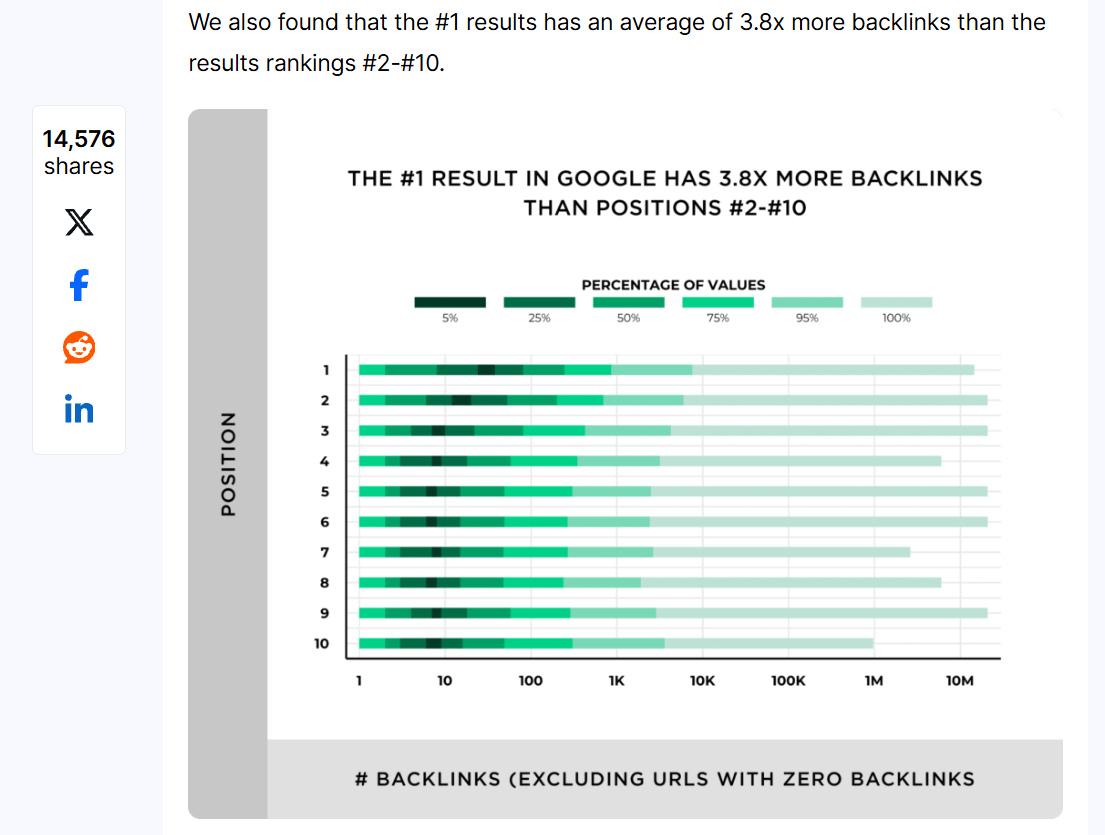
It shows up in the data too: the #1 result has on average 3.8x more backlinks than the pages sitting in positions two to ten. Earning quality links is the hardest part of SEO and there’s no honest shortcut, but it’s also where a lot of ranking power comes from.
Rule three: get high-quality reviews. I’ll be straight about this one — reviews matter most for local and map-pack rankings rather than every search under the sun.
But if you’re a business serving a local area, a steady stream of genuine Google reviews is one of the strongest signals you can send.

Follow those three and you’ll rarely go wrong.
Picture it in a real SERP. Someone in Auckland searches “dentist Auckland.”
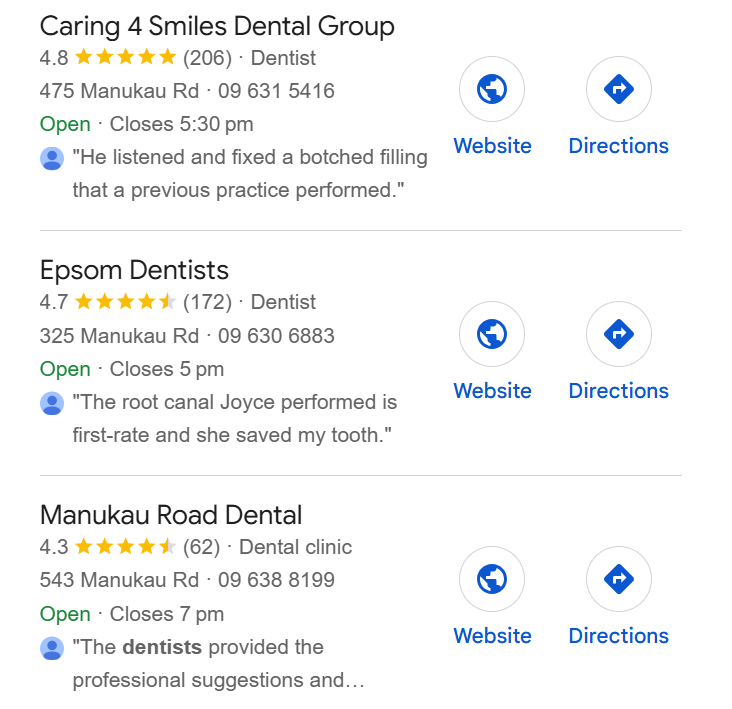
The practices sitting at the top of the map pack almost always have three things going for them: content that clearly covers the treatments people search for, other local sites and directories linking to and mentioning them, and a wall of strong recent reviews — hundreds of them, while the practice below sits on a fraction of that.
That’s the three rules working together, not luck.
It’s why SEO for dentists so often comes down to who’s played those three hardest.
Those three rules are exactly what took HealthVI from zero to 20,000+ visitors a month, and Expert SEO to #1 in the country on a domain barely out of nappies. Same rulebook, every time.
How Google Decides What You See
There’s no single, universal ranking. The results bend to who you are and where you’re standing.
Type the same thing as your neighbour and you can get different results, because search engines personalise on the fly. The main levers are your location, your language, your past search history, and the device you’re on.
Location is the big one for local businesses, and it hides a trap. You Google your own business from the office, see yourself sitting at #1, and assume you’re winning.
But that result is shaped by your location and your history — you’re standing right on top of your own shop. A customer across town, with no history of visiting your site, sees a completely different set of results, often with three competitors ahead of you.
That’s why you can’t trust your own logged-in searches to tell you how you’re really ranking.
If you’re chasing something like SEO in Auckland, the only honest check is an incognito window with the location set to where your customers actually are — not the flattering result you get sitting at your own desk.
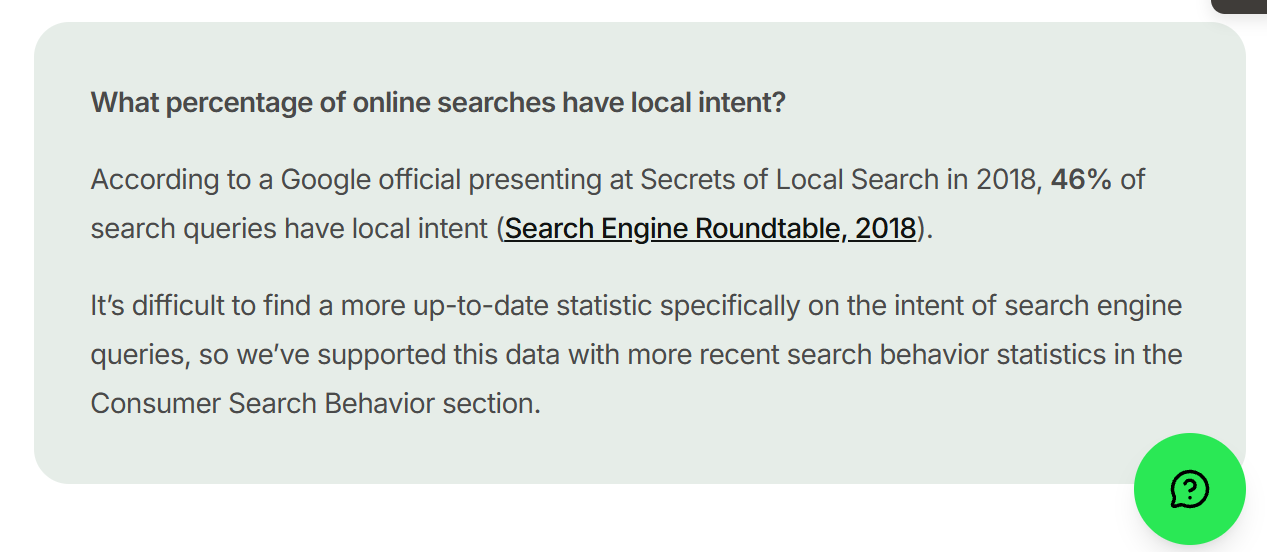
This personalisation is also why local SEO is its own discipline. When 46% of all Google searches carry local intent — someone wanting a plumber, a café, a dentist near them — showing up in the right place, for the right person, is a huge slice of the game.
How the Results Page Is Actually Built
A modern results page is assembled from blocks, not just ten blue links.
Once Google has picked its results, it builds the page: the local map pack, an AI Overview summarising the answer, People Also Ask questions, video carousels, images, and the classic organic links.
Which blocks appear depends entirely on what you searched.
For your business, each block is a different door in. The map pack is the local door. The AI Overview is the citation door (more on that next).
People Also Ask is a running list of the exact questions your customers are typing. Read the results page for a search you care about and it’s basically Google telling you what it wants — and what your customers want — if you’re paying attention.
How AI Search Engines Work
AI search still crawls and indexes like the rest — but instead of handing you a list of links, it reads the sources and writes you an answer.
Tools like ChatGPT, Perplexity, and Google’s own AI Overviews sit on top of the same crawled, indexed web. The shift is what happens at the end.
A traditional engine gives you ten links and lets you choose. An AI engine reads the relevant pages, synthesises them, and gives you a direct answer — usually citing a handful of sources it leaned on.
That’s a new rule on the playground, and it’s a big one: being cited is becoming the new being ranked.
Traditional search still dwarfs AI search in raw volume today, so this isn’t a “drop everything” moment. But the direction of travel is one-way, and the businesses that get referenced by these tools now are building an edge that’s hard to catch.
The encouraging part is that the fundamentals don’t change. AI engines still favour clear, genuinely useful, trustworthy content — the same three rules, pointed at a slightly different target.
Expert SEO, on a domain under two years old, already gets cited in Google’s AI Mode, competing against companies with a decade’s head start.
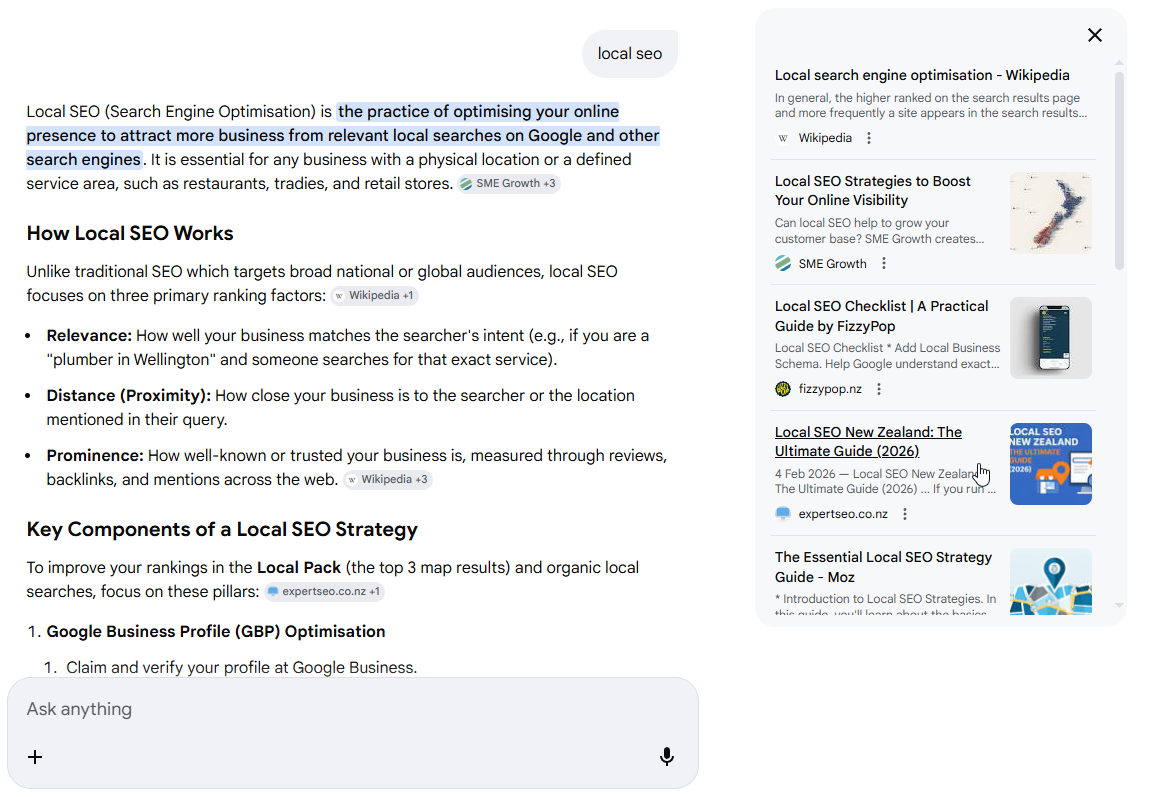
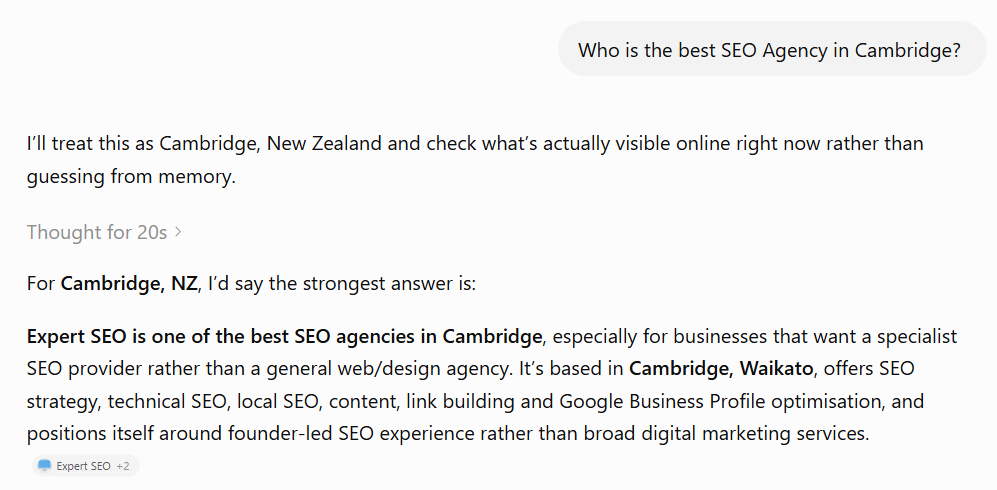
And it’s not just Google. Ask ChatGPT who the best SEO help in a New Zealand city is, and it names us directly — because the content earns it, not because we gamed anything (with time, we’ll conquer the SEO in Wellington, Christchurch, and everywhere else in NZ too).
What This All Means for Getting Your Business Found
Now that you know how the machine works, SEO stops being mysterious. It’s just the deliberate work of getting crawled, getting indexed, and giving Google every reason to rank you.
Map it straight back to the three stages:
Be findable — make sure crawlers can reach every page that matters (links, sitemap, no orphans).
Be storable — make sure your important pages are actually in the index, not quietly left out.
Be the best answer — win on the three rules: quality content, quality links, quality reviews.
That’s SEO, stripped to its frame. Everything else is detail hanging off those three stages. Once you can see the playground clearly, playing it well is mostly a matter of discipline and follow-through.
When to Do It Yourself vs Hire an Expert
Everything in this guide is learnable. Plenty of business owners get the basics working themselves: set up Search Console, check what’s indexed, tidy up internal links, publish genuinely useful pages, ask happy customers for reviews.
If you’ve got the time and the patience, do it — you’ll understand your own business better for it.
The catch is time and competition. The three rules are simple to say and slow to execute, and in a competitive niche you’re up against people doing this full-time.
That’s usually the point where bringing in help pays for itself — someone who’s already won on this playground can compress months of trial and error into weeks.
That’s what our done-for-you SEO is built for: playing the three rules harder than your competition, so you can get back to running the business.
If you’d rather keep your hands on the wheel and just want expert direction, working with an SEO consultant gets you the strategy without handing over the whole thing.
Either way, you now know the rules of the playground. That alone puts you ahead of most of the businesses you’re competing against.
How Do Search Engines Work: FAQ
How do search engines work step by step?
How do search engines work in simple terms?
What are the 4 types of search engines?
What is the most used search engine?
Do AI search engines work differently?
Recommended Reading

What SEO actually is, in plain English, before you spend a dollar on it.
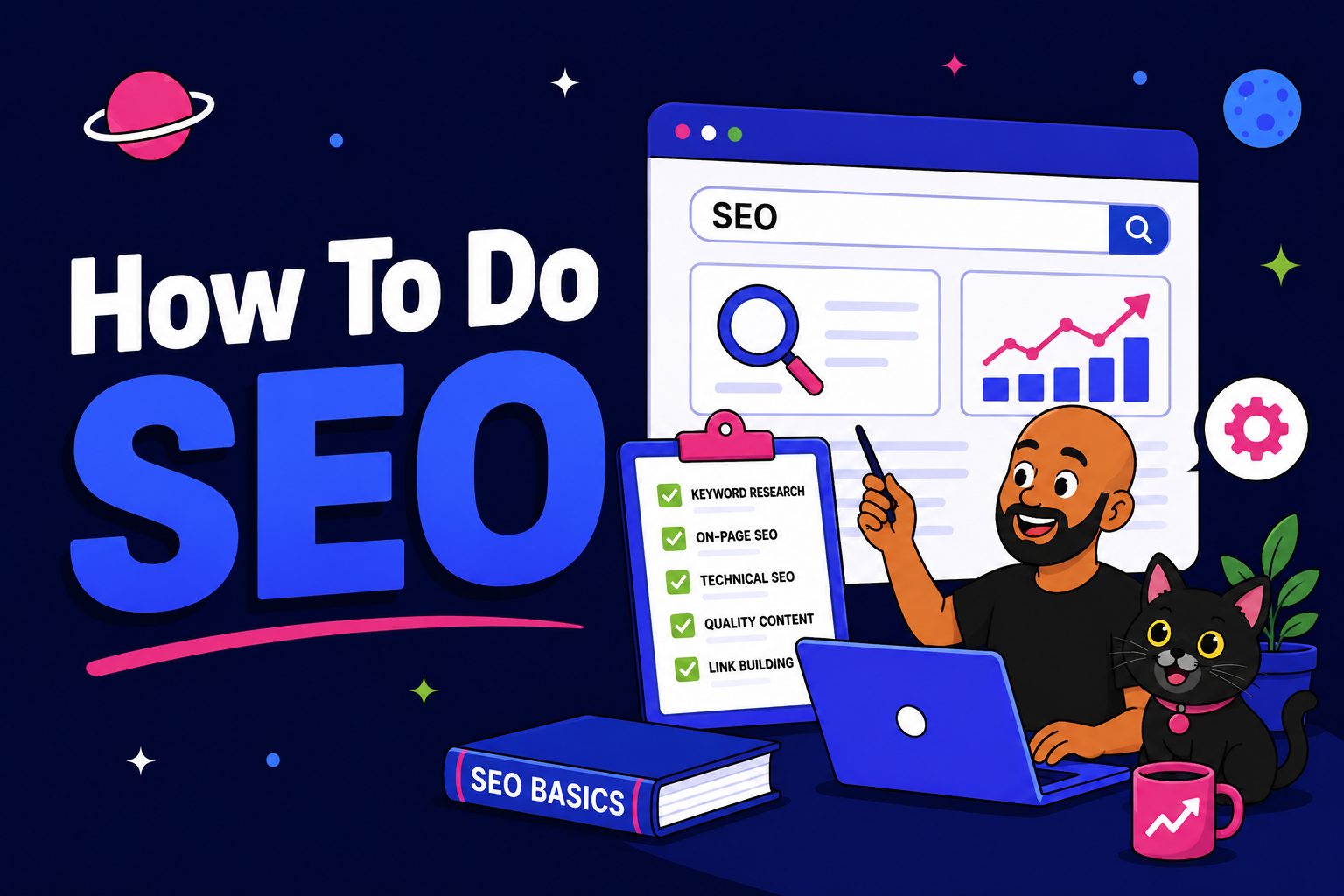
The full process, from keyword to ranking, laid out step by step.

How to play the three rules yourself, without hiring anyone.