
Link Building Strategies That Actually Work for NZ Businesses (2026)

Some of my competitors link to my website.
Not because I asked. Because a piece of my content was good enough that referencing it made their own article better. That’s link building working the way it’s supposed to, and almost nobody explains it that way.

Most guides hand you a list of 50 “strategies” and leave you to drown.
You don’t need 50. You need the handful that actually move rankings, you need to know which ones to start with, and you need to know what’s a waste of your time.
That’s what this guide does.
I’ll walk you through the link building strategies that work right now in 2026, in order of what I’d do first, with real examples from running an SEO business here in New Zealand.
What Is a Link Building Strategy?
A link building strategy is a deliberate plan for getting other websites to link to yours, so search engines and AI tools see your site as more trustworthy and rank it higher.

A backlink is a vote. The more relevant, trusted sites that vote for you, the more authority you build.
A strategy just means you’re doing it on purpose with a repeatable method, instead of begging for links one at a time and hoping.
Building links is one of the biggest ranking factors in SEO, and it sits inside the wider world of off-page SEO — everything that happens off your own site to lift your rankings.
Do Backlinks Still Matter in 2026?
Yes. Backlinks are still one of the top three ranking factors, and they now influence whether AI tools cite you too.
Backlinks remain one of Google’s strongest signals, and the gap between linked and unlinked pages is brutal.
The number one result on Google has 3.8 times more backlinks than the pages sitting in positions two through ten.
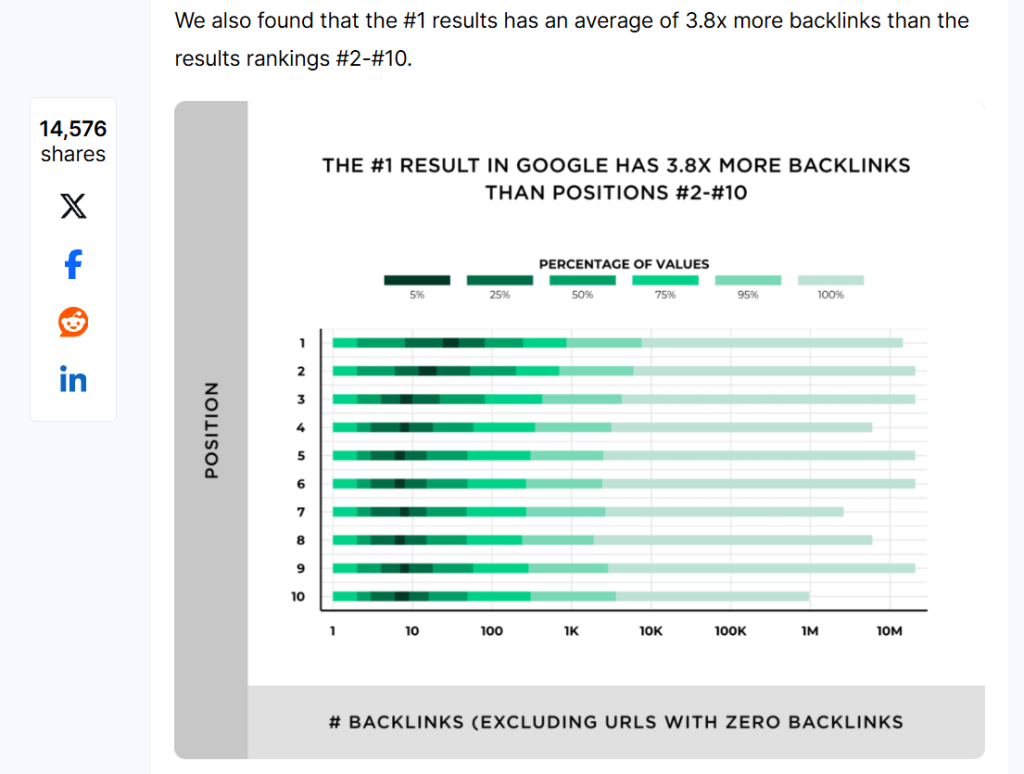
Worse, around 90% of pages with no backlinks get zero traffic from Google at all. No links, no traffic. It’s that direct.
AI search hasn’t killed any of this. It’s leaned into it. Roughly 74% of SEO professionals now say backlinks influence whether a brand shows up in AI answers like ChatGPT and Google AI Overviews.
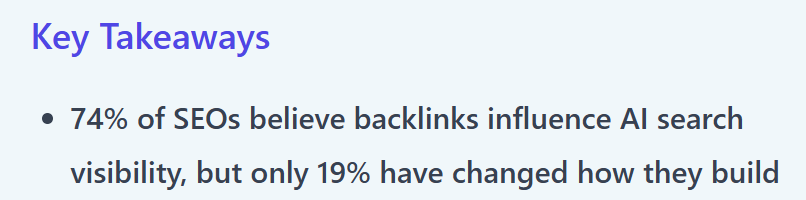
AI models pull from patterns of trust across the web, and links are a huge part of how that trust gets measured.
Here’s the part that should make you sit up. About 94% of all online content earns zero external links.

Almost nobody is doing this properly. That’s not bad news. For a NZ business willing to put in the work, it’s the opportunity.
What Makes a Good Backlink (Quality Beats Quantity Every Time)
A good backlink comes from a relevant, trusted website, and sits naturally inside real content. A bad one is the opposite, and bad ones can actively hurt you.
This matters because the old game of racking up hundreds of cheap links is dead.
More than nine in ten link builders now prioritise quality and topical relevance over volume, and for good reason. One link from a relevant, respected site beats fifty from random directories.
Three things separate a good link from a worthless one:
Relevance. A link from a site in or near your industry carries far more weight than one from somewhere unrelated. If you’re an Auckland plumber, a link from a NZ home renovation blog is gold. A link from a random overseas gambling site is a red flag.
Authority. Links from established, trusted sites pass more value. You can get a rough sense of a site’s strength with a free domain authority checker in Ahrefs or SEMrush. Higher isn’t everything, but a relevant site with real authority is the dream.
Placement. A link worked naturally into the body of a useful article is worth more than one buried in a footer or a spammy list. Search engines read the context around a link, so where it sits genuinely matters.
If a link ticks all three, chase it. If it ticks none, walk away. Most paid “100 backlinks for $50” offers tick none.
The Link Building Strategies That Actually Work
I’ve ordered these the way I’d actually do them, starting with the ones that have worked best for me and finishing with the more advanced tactics.
You don’t need all of them. Pick the first two, get good at those, then expand.
Learning how to get backlinks is less about knowing 50 tricks and more about doing two or three of them consistently.
1. Create Content Worth Linking To
The single best link building strategy is to publish content so useful that people link to it without being asked.
This is my number one, and it’s the one most NZ businesses skip because it’s slow.
But it compounds like nothing else.
When something is the clearest, most complete answer on a topic, other writers reference it to back up their own points. You stop chasing links and start attracting them.
The data backs this up hard. Long-form, in-depth content earns about 77% more backlinks than thin, short articles. Depth wins.
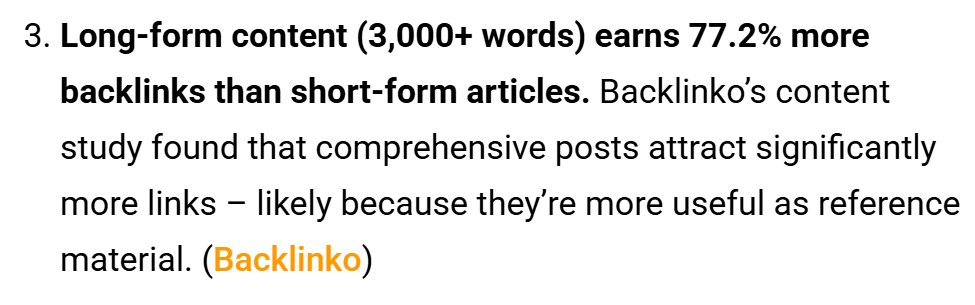
So what earns links?
- Original data or research. A simple NZ survey or a “we analysed X” piece becomes a reference point other people cite.
- Free tools or calculators. A mortgage calculator, a GST calculator, a quote estimator. People link to tools constantly.
- Genuinely complete guides. The kind where the reader doesn’t need to open another tab.
- Strong local resources. “The best brunch spots in Auckland CBD” gets linked by anyone writing about the area.
This is where good content marketing and SEO meet.
If you’re already publishing content that ranks, you’re halfway there. Make it the best resource on the topic and the links follow.
2. Guest Posting
Guest posting is writing an article for another website in your niche in exchange for a link back to yours. Done well, it’s still one of the most reliable ways to earn strong links.
This is the other strategy that’s worked best for me.
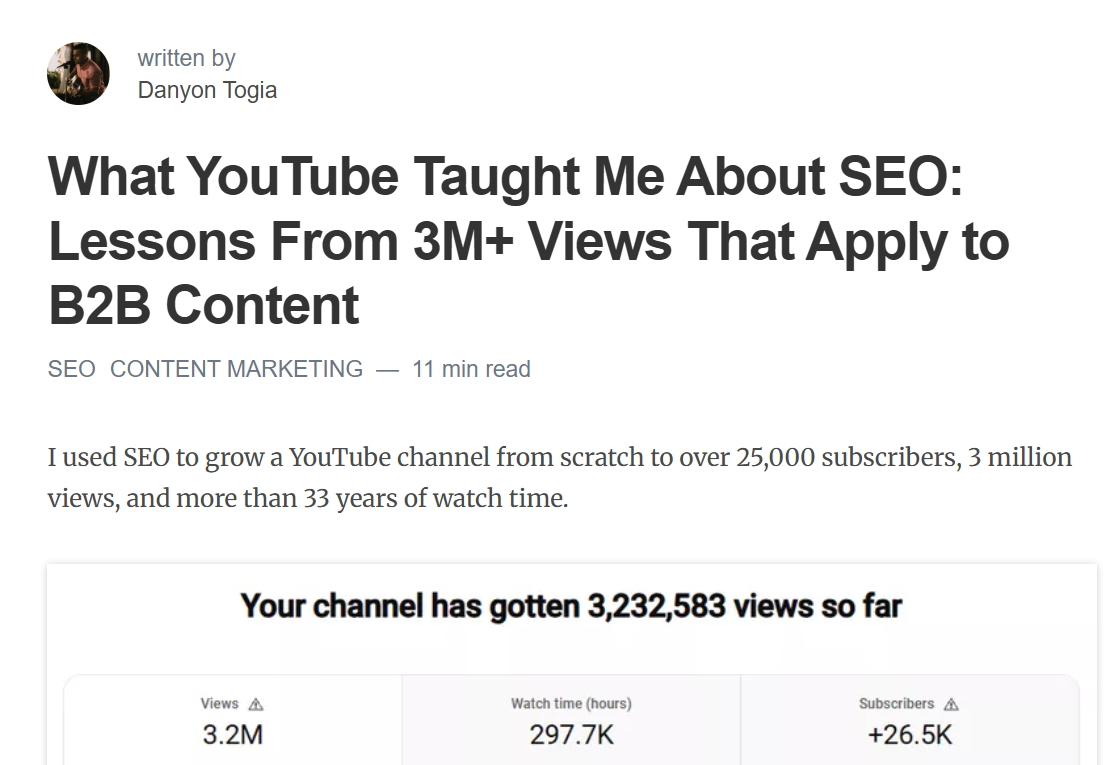
I’ve earned links through guest posting from sites with a domain authority over 70 and more than 50,000 monthly visitors — StoryChief being one example.
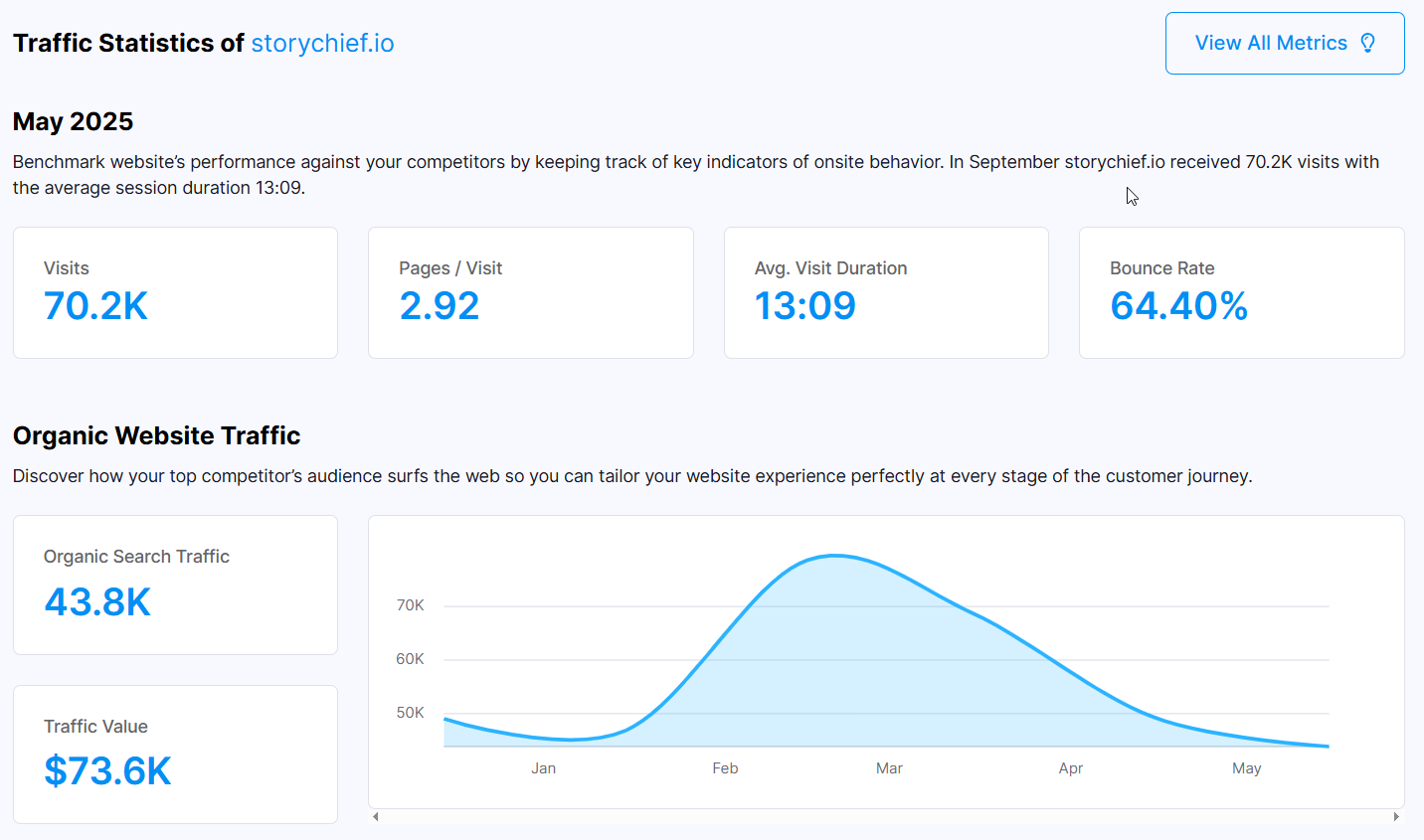
That kind of link doesn’t happen by accident. You pitch a real idea, you write something genuinely good, and the link comes as part of the deal.
Guest posting is still the most widely used link building tactic going, used by roughly two-thirds of link builders.
It works because it’s a fair trade: the host site gets quality content, you get a relevant link and exposure to a new audience.
Here’s how to do it:
- Find relevant sites. Search for blogs in your industry that accept contributors. Try “[your niche] write for us” or “[your niche] guest post.” For a NZ angle, look for local industry blogs, marketing sites, and business publications.
- Check they’re worth it. Run the site through Ahrefs. You want real authority and real traffic, not a link farm.
- Pitch something specific. Don’t email “can I write for you?” Pitch an actual topic with a hook. Editors say yes to ideas, not to requests.
- Write your best work. The article on their site is your audition. Make it good enough that they want you back.
- Place the link naturally. Link to a relevant page of yours where it genuinely helps the reader, not jammed into your author bio as an afterthought.
3. Digital PR (Become a Source Journalists Quote)
Digital PR means getting your business mentioned and linked by news sites and publications, usually by offering expert commentary or original data.
This is the strategy with the most momentum right now. Across the 2026 industry surveys, digital PR is now rated the single most effective link building tactic, pushing past guest posting.
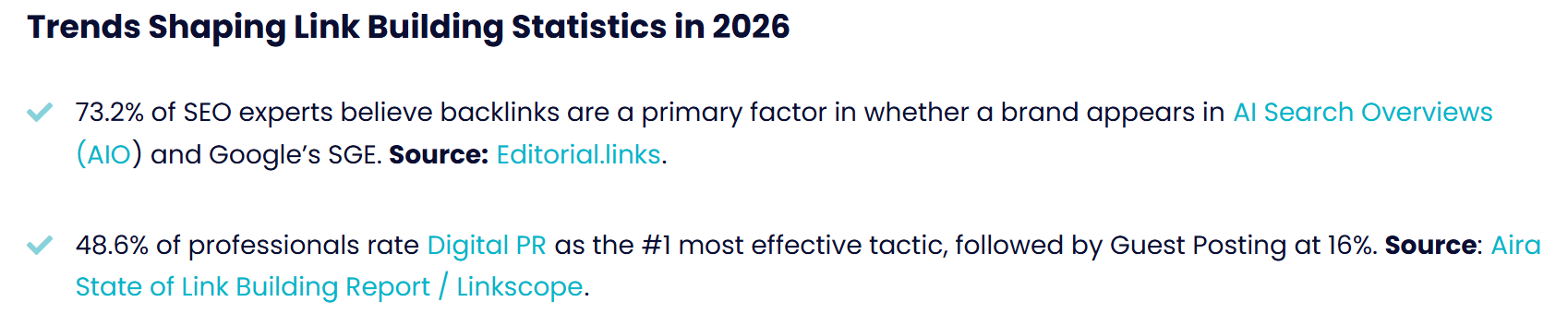
The reason is simple: a link from a real news outlet carries serious trust, and you usually pick up a brand mention at the same time.
You don’t need a PR agency to start. Sign up to journalist request platforms like SourceBottle or Featured, where reporters post asking for expert quotes.
When a request fits your expertise, reply fast with a clear, genuinely useful answer. If they use it, you get a link from a publication you’d never reach with cold outreach.
For a NZ business, this is underused. Local journalists and industry publications need expert sources constantly. Be the helpful expert who replies quickly and you’ll earn links most of your competitors never will.
4. Broken Link Building
Broken link building is finding dead links on other websites, then offering your content as the replacement.
It works because you’re solving a problem for the site owner, not asking for a favour.
It’s one of the more reliable outreach methods because the pitch makes sense to the person on the other end. Nobody wants broken links on their site. Here’s the process:
- Find a relevant page with links. A resource page or roundup in your industry is ideal.
- Scan it for dead links. Use a free tool like Check My Links (a Chrome extension) or Ahrefs’ broken link checker. Dead links show up in red.
- Make sure you have a fit. You need a page of your own that genuinely replaces the dead one. If you don’t have it, this is a reason to create it.
- Reach out helpfully. Email the site owner, point out the broken link (they’ll appreciate it), and mention you’ve got a resource that would slot in nicely.
Keep your expectations sensible here. Outreach is a numbers game, and only about 8.5% of cold outreach emails actually land a link.

Broken link building beats generic outreach because you’re offering value first, but you’ll still need to send a batch to land a few.
5. Steal Your Competitors’ Backlinks
If a website links to your competitor, there’s a good chance it’ll link to you too. This strategy finds those sites and goes after the same links.
It’s efficient because the hard part is already done for you. Someone has already proven they’ll link to a business like yours. Here’s how:
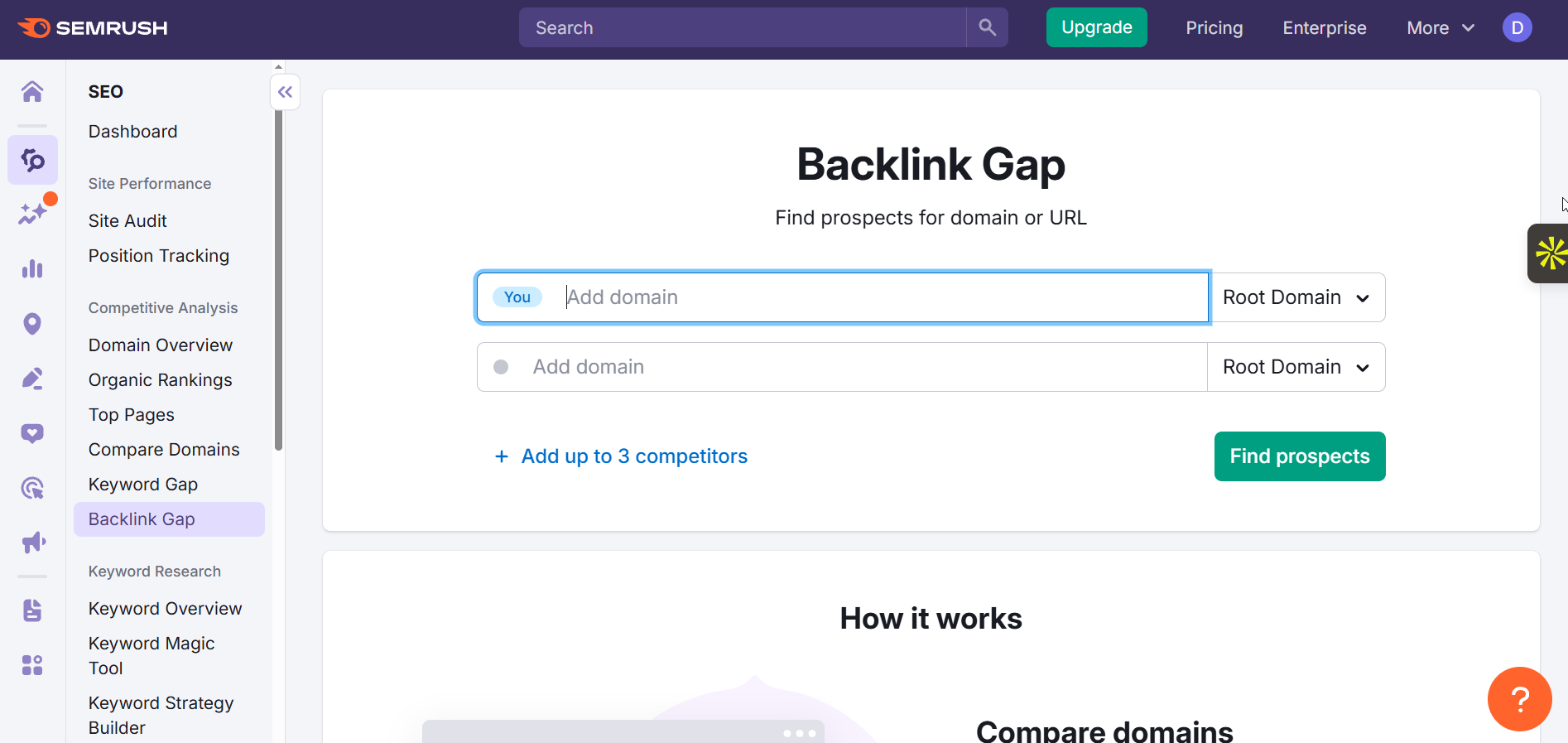
- Drop two or three competitors into Ahrefs or SEMrush and open the Backlink Gap (or Link Intersect) tool.
- It shows you every site linking to them but not to you. Those are warm prospects.
- Work through the list. Some are directories you can join, some are roundups you can pitch, some are guest post opportunities.
For a local business, this is doubly useful.
If a NZ competitor has a link from a local directory, an industry association, or a regional news site, those are all places you can realistically get listed too.
6. Reclaim Unlinked Brand Mentions
An unlinked mention is when a website talks about your business by name but doesn’t link to you. You ask them to turn that mention into a link. It’s one of the easiest links you’ll ever get.
The work is basically done — someone already decided you were worth mentioning. They just didn’t add the link.
- Search Google for your business name, excluding your own site:
"Your Business" -site:yourdomain.co.nz. Tools like Ahrefs Alerts can also flag new mentions automatically. - Find mentions that don’t link to you.
- Send a friendly email. Thank them for the mention and ask if they’d mind making your name a clickable link.
Most people say yes, because it’s a tiny, reasonable ask. The bigger your brand gets, the more of these appear, which is another reason building a real reputation pays off.
7. Local NZ Link Building (Directories, Sponsorships and Partnerships)
Local link building means earning links from within your own community and region. For a NZ business, this is often the fastest, most realistic place to start.
International guides barely mention this, which is exactly why it’s an edge. Here’s where the local links live:
- NZ business directories. Get listed on legit local and industry directories. Keep your name, address and phone number consistent everywhere. These won’t transform your rankings, but they build a solid base of trust signals.
- Local sponsorships. Sponsor a junior sports team, a local event, or a community group. There’s almost always a link from their website that comes with it.
- Local partnerships. Suppliers, complementary businesses, and people you already work with. A café could swap mentions with a nearby roaster. A builder could get listed by the architects they work with.
- Regional media and blogs. A local angle or a community story can earn a link from a regional publication far more easily than a national one.
If you serve a specific area, this ties straight into your local SEO. The same trust signals that help you rank in your region also strengthen your whole site.
8. Resource Page Link Building
Resource pages are curated lists of helpful links on a topic. Getting added to relevant ones is a clean, low-effort way to earn links.
These pages exist specifically to link out, so you’re pushing on an open door.
- Search for them: “[your topic] resources,” “[your topic] useful links,” or “[your industry] helpful resources.”
- Check the page is relevant and actually maintained.
- Email the owner suggesting your page as a worthy addition — but only if it genuinely belongs. You need a resource good enough to deserve the spot, which loops right back to Strategy 1.
Link Building Strategies to Avoid
The fastest way to waste money — or get penalised — is buying cheap links or chasing volume. Avoid anything that tries to shortcut trust.
I’m flagging these because beginners get burned by them constantly, often by an agency promising the world for a low monthly fee. Steer clear of:
- Buying cheap bulk links. The “500 backlinks for $30” offers. These come from spammy, irrelevant sites and can drag your rankings down, not up.
- Private blog networks (PBNs). Networks of fake sites built only to link to clients. Google has spent years hunting these, and getting caught is ugly.
- Irrelevant link exchanges at scale. “Link to me and I’ll link to you” across unrelated sites is an obvious pattern to Google.
- Comment and forum spam. Dropping your link in random blog comments does nothing except make you look desperate.
- Exact-match anchor text everywhere. If every link to you uses the same keyword-stuffed phrase, it looks manufactured. Natural links use varied, natural wording.
The thread tying these together is that they try to fake trust instead of earning it. Modern search is built to catch exactly that. Real links take longer, but they don’t blow up in your face.
How Many Backlinks Do You Need, and How Long Does It Take?
There’s no magic number. You need enough relevant, quality links to match or beat whoever’s ranking for your target keyword — and in NZ that’s often fewer than you’d think.
The honest answer to “how many links” is: look at what’s ranking.
Run the top few results through Ahrefs and check their referring domains. That’s your benchmark.
For a competitive national term you’ll need a lot. For a local keyword like “plumber Lower Hutt,” you might need surprisingly few, because most local competitors have barely any links at all.
On timing, link building is slow and it compounds.
The natural, content-led links from Strategy 1 can take months to start appearing. Guest posting and outreach are faster but still measured in weeks per link.
Realistically, expect a few months of consistent effort before you see the needle move on rankings, and the best results stacking up over six to twelve months.
The businesses that win are the ones that don’t quit at month two.
It’s worth knowing the going rate too, so you don’t get ripped off. Globally, SEO professionals consider around US$500 — roughly NZ$850 — a fair price for a single high-quality link.

If someone’s offering you fifty links for a hundred bucks, you now know exactly what you’re getting
Stick with it and the effect compounds.
Every quality link makes the next ranking easier, which brings more traffic, which earns more natural links. That’s how you steadily grow your traffic over time.
Should You Do Link Building Yourself or Hire an Expert?
You can absolutely do this yourself. Start with content worth linking to and guest posting, add local links, and stay consistent. The only real costs are time and patience.
But link building is the slowest, most relationship-heavy part of SEO, and it’s where a lot of business owners stall. If you’d rather have it handled — strategy, outreach, and the ongoing grind of earning quality links — that’s where our SEO services come in.
We help businesses across New Zealand build authority the right way, and our own results show it works:
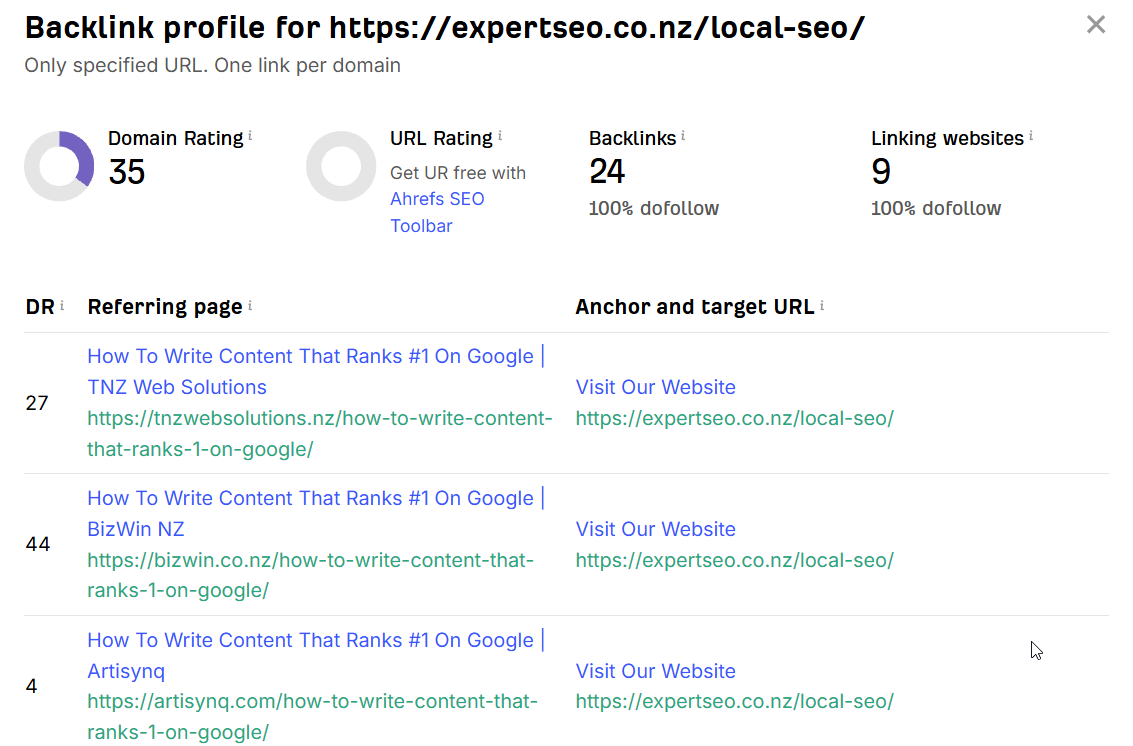
Expert SEO is barely six months old, competing against sites with a decade’s head start, and already getting cited in AI answers and pulling in traffic.
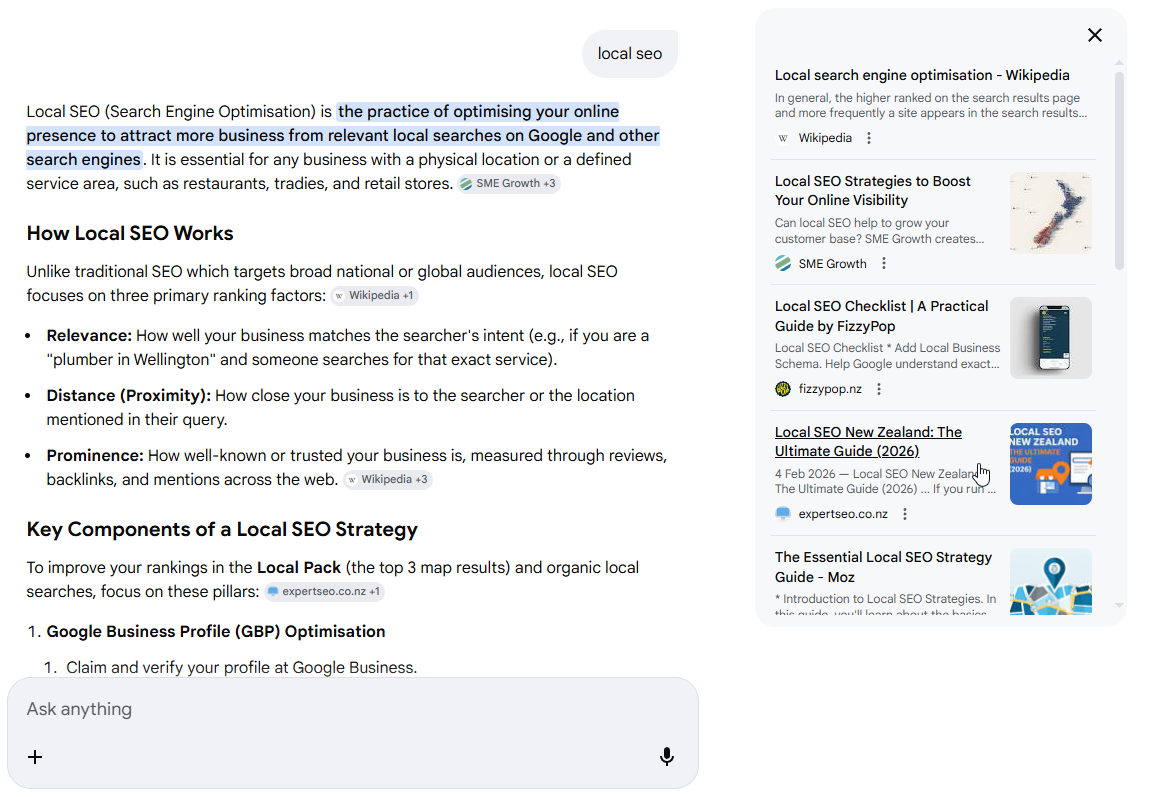
We’ve done the same for clients, including growing HealthVI from zero to over 1,000 daily visitors.
If you want it done properly and faster, our NZ SEO team handles link building across the country, including:
DIY it with the strategies above, or hand it to people who do this every day.
Either way, the principles don’t change — earn real links from relevant, trusted sites, and don’t take shortcuts.
Link Building Strategies: FAQ
What are the top 3 link building strategies?
The three that deliver most reliably are creating content worth linking to, guest posting on relevant sites, and digital PR (getting quoted by publications). If you only do these three well, you’ll be ahead of most of your competition.
What is a link building strategy?
It’s a deliberate, repeatable plan for getting other websites to link to yours, so search engines and AI tools treat your site as more trustworthy and rank it higher. The goal is to earn quality links on purpose, not chase them randomly.
What are the different types of link building?
Broadly: earned links (content people link to naturally), outreach links (guest posts, broken link building, digital PR), local links (directories, sponsorships, partnerships), and self-made links (your own profiles and listings). Earned and outreach links carry the most weight.
Are link building strategies different in 2026?
The tactics that work are the same, but the emphasis has shifted. Quality and relevance matter more than ever, volume matters less, digital PR has overtaken guest posting as the top tactic, and links now also influence whether AI tools cite your brand.
How long does link building take to work?
Expect a few months of consistent effort before rankings move, with the strongest results building over six to twelve months. Natural, content-led links are the slowest to appear but the most valuable once they do.