

Someone opens ChatGPT and asks, “who’s the best mortgage broker in Hamilton?” or “how much does a dentist charge for a checkup in NZ?”
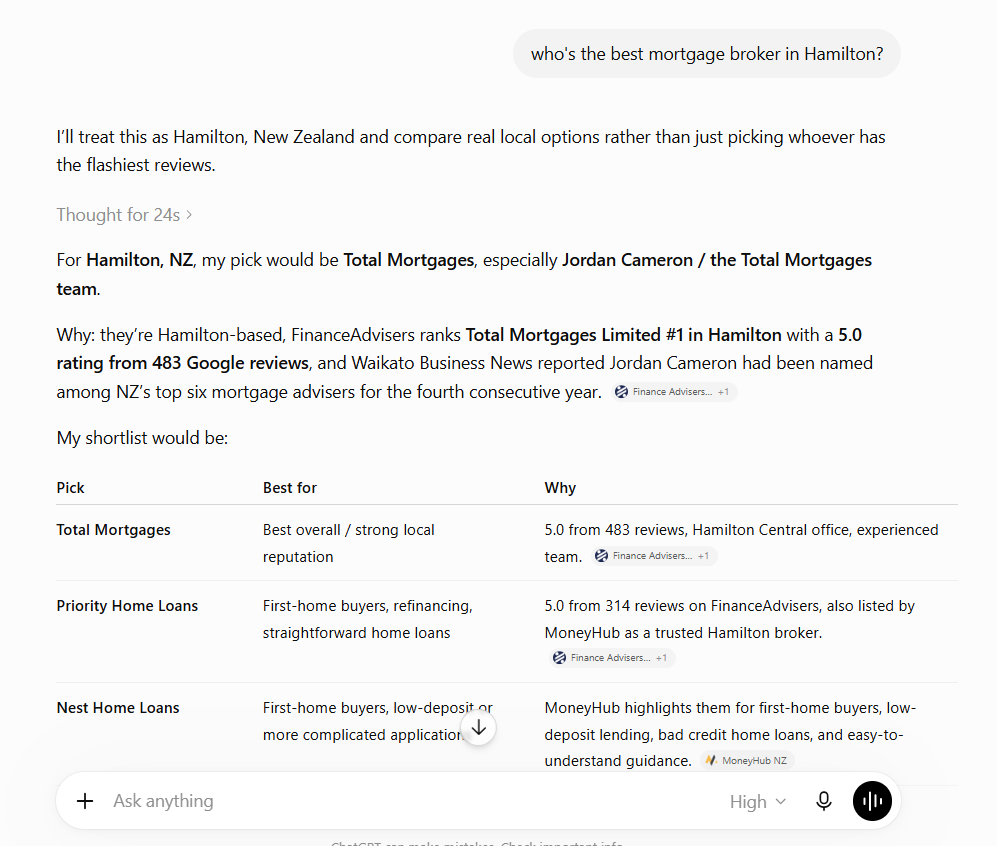
They get one clean answer. Maybe three named sources.
They never scroll a page of blue links, because there is no page of blue links.
In that world you’re either the answer, or you’re nowhere.
And here’s the part that catches people out: you can be sitting pretty at #1 on Google and still be completely invisible inside that answer. Same website, different game entirely.
That game is answer engine optimisation.
This guide covers what it is, how it’s different from the GEO and AI-SEO acronym soup, why it matters for a New Zealand business right now, and the exact steps to get your own content pulled into AI answers.
What Is Answer Engine Optimisation?
Answer engine optimisation (AEO) is the practice of structuring your content so AI answer engines — ChatGPT, Gemini, Google’s AI Overviews, Perplexity — can find it, understand it, and cite it as the direct answer to someone’s question.
That’s the whole shift in one line: traditional SEO gets you ranked in the list, AEO gets you quoted in the reply the person actually reads.
Why does that distinction matter? Because the reply is where the attention now goes.
When an answer engine writes a paragraph and names a couple of sources, being one of those named sources is the new front-page result. Everyone below the fold may as well not exist.
Say you run a mortgage broking business in Hamilton. Someone asks Gemini, “do I need a 20% deposit to buy a first home in New Zealand?”
Gemini writes a tidy answer and cites two or three websites it trusted enough to build that answer from. AEO is the work that makes your page one of those cited sources — so a first-home buyer hears your business named before they’ve typed your name into anything.
AEO sits under the broader AI SEO umbrella. Same family, narrower job: AI SEO is optimising for AI search generally, AEO is the specific craft of becoming the cited answer.
AEO vs SEO vs GEO vs AI SEO: How They Actually Fit Together
These aren’t four rival strategies fighting over your marketing budget. They’re layers built on the same foundation. And no, SEO isn’t dead.
Let me lay them out cleanly, because the internet has turned this into needless confusion:
| Term | What it optimises for | The metric that matters |
|---|---|---|
| SEO (Search Engine Optimisation) | Ranking your pages in Google’s results | Rankings, traffic, clicks |
| AEO (Answer Engine Optimisation) | Being cited as the direct answer in AI and featured snippets | Mentions, citations |
| GEO (Generative Engine Optimisation) | The same idea, aimed at generative tools like ChatGPT and Gemini | Citations in generated answers |
| AI SEO | The umbrella over all of it — SEO for AI-driven search | Visibility across AI platforms |
SEO gets you found. AEO gets you chosen. Same foundation, different finish line.
The pile of acronyms exists because the industry hasn’t agreed on terms yet (marketers collecting acronyms like Pokémon cards is a tale as old as time). GEO, AEO, AI SEO, LLMO — half of them describe the same underlying work with a different label slapped on.
Even Google’s own Danny Sullivan has said there isn’t really a separate thing called “AI SEO” or “GEO” — it’s still just search engine optimisation, done properly.

Answer engines crawl the web to build their answers. If Google can’t rank you, the AI can’t cite you. The foundation didn’t disappear; a new floor got built on top of it.
Why AEO Matters for NZ Businesses Right Now
More than half of Google searches now end without a click — and AI answers are quietly eating the rest.
That’s the reality behind AEO. You can be ranking fine and still be losing visibility, because a growing share of people get their answer on the results page or inside a chatbot and never visit a single website.
The numbers back it up. Nearly 60% of Google queries end in zero clicks, and where an AI Overview shows up, it cuts the click-through rate for the top organic result by as much as 58%.

Around 800 million people use ChatGPT or its related products every week, and Google now shows AI Overviews on a large and growing share of searches.
And AI search is no longer a fringe behaviour: around half of consumers now use it intentionally, and one forecast has US$750 billion in US revenue flowing through it by 2028.

Now here’s why this hits NZ businesses harder — and why that’s actually good news for you.
New Zealand is a small market, and the AI-search competition here is soft compared to the US or UK, where every enterprise brand with a nine-figure budget has already piled in.
That means the window to become the cited NZ answer in your niche is wide open right now, and it won’t stay that way.
Most SEO agencies in NZ have nowhere near the experience that (humbly) I’ve gathered competing in the United States — and that gap is exactly the head start a Kiwi business can grab while the field is still empty.
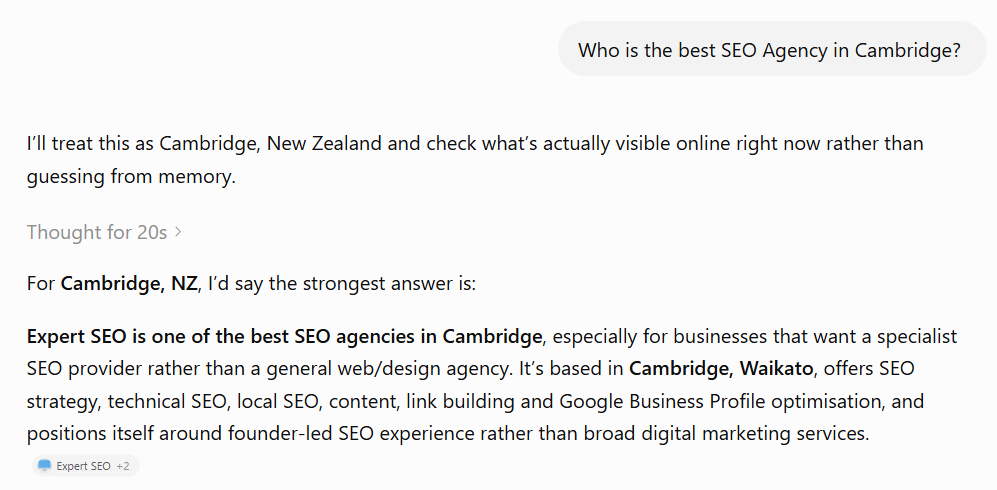
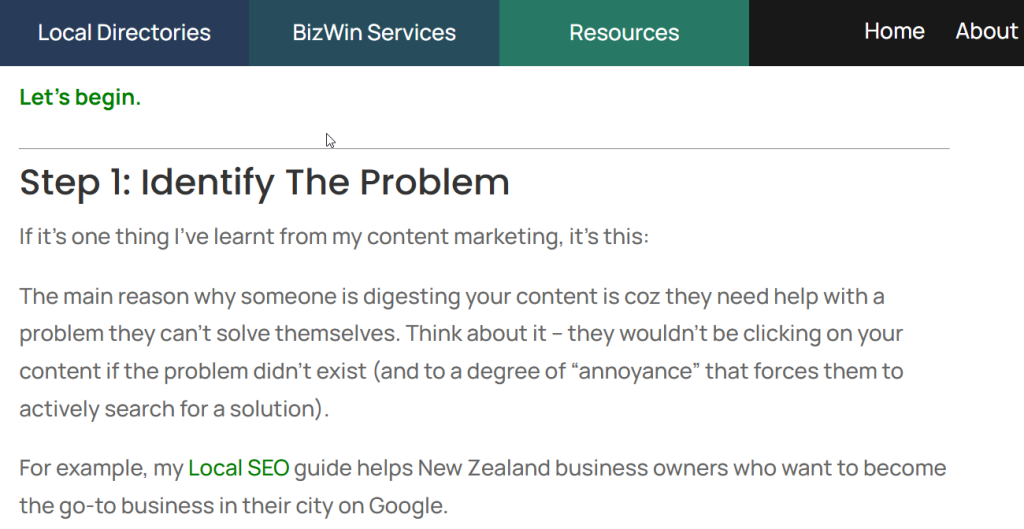
This isn’t theory for me. When you searched “local SEO” in New Zealand, Expert SEO‘s guide ranked #1 — above Ahrefs and Semrush, two of the biggest SEO tools on the planet — on a domain that’s about a year old.

Ranking is only half of it, though. That same guide gets pulled into the answers themselves — which is where AEO stops being a buzzword and starts being the thing quietly winning you customers.
How Answer Engines Decide What to Cite
Answer engines don’t simply reward whoever ranks highest. They reward the clearest, most trustworthy, most extractable answer.
Understand the three gates a piece of content has to pass, and the how-to writes itself. I call it Reach → Read → Trust — it’s the exact path my own content took to get cited.
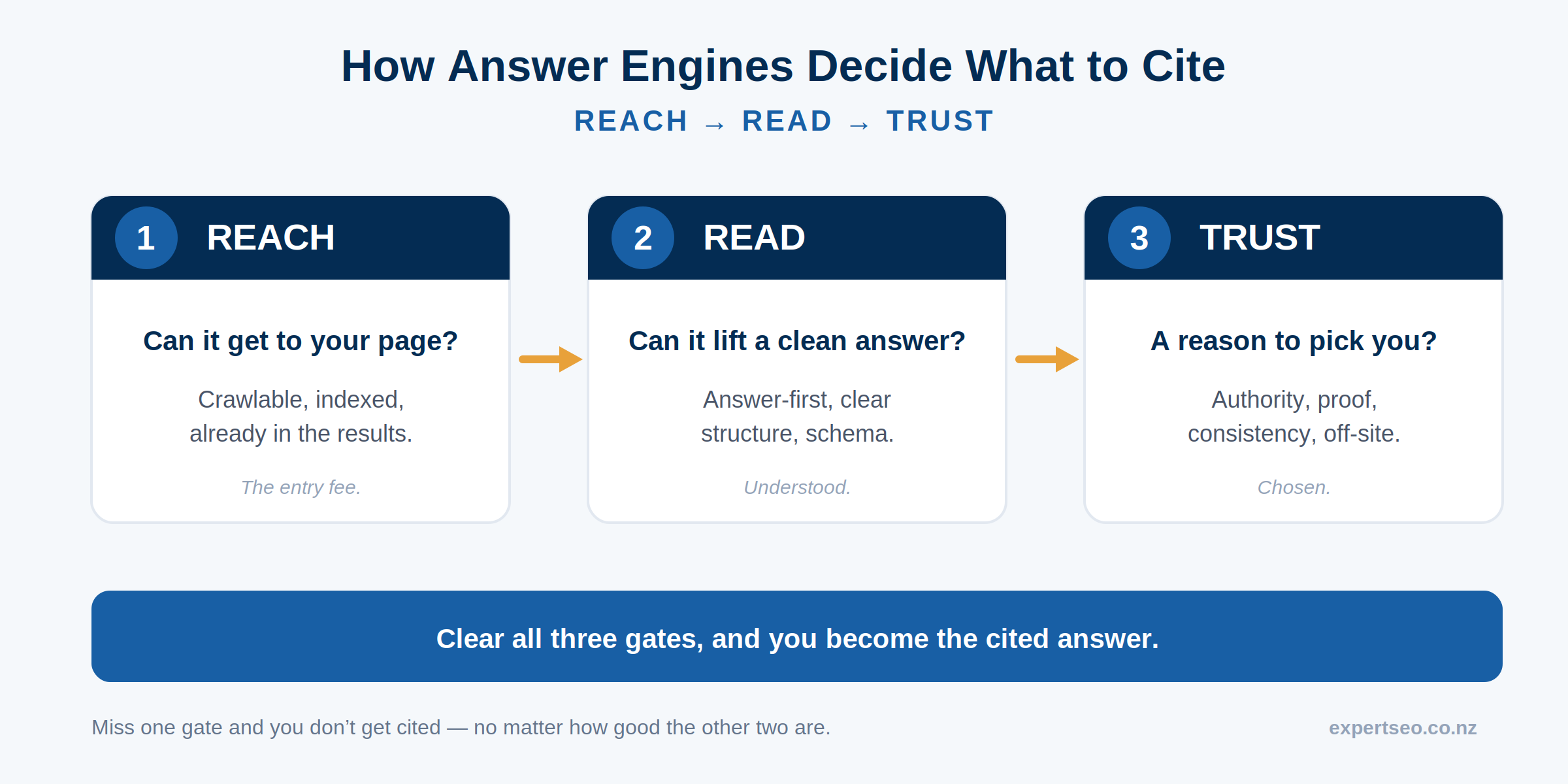
Reach. Can the engine even get to your page? If Google can’t crawl and index it, no AI is pulling from it. Reach is the entry fee — it’s your technical SEO doing its job so your page is in the running at all.
Read. Can the engine actually extract a clean answer? Answer engines lift passages, not whole articles. If your answer is buried three paragraphs deep under a wall of throat-clearing, it gets skipped for a competitor who put the answer right up front.
Trust. Does the engine have a reason to pick you? AI leans hard on consensus and authority. It wants sources that back their claims, stay consistent, and show up credibly across the wider web — not just on their own site.
Reach gets you in the room. Read gets you understood. Trust gets you chosen.
Miss any one of them and you don’t get cited, no matter how good the other two are.
How to Do Answer Engine Optimisation (Step by Step)
You make your content citable by walking it through those same three gates. Here’s exactly how to do each one.
Reach: Make Sure the Engine Can Get to Your Page
AEO can’t work on a page Google can’t reach. This is unglamorous plumbing, and it’s where a surprising number of NZ sites quietly lose before they’ve started.
Start with Google Search Console. Go to search.google.com/search-console, add your site, verify it, and submit your sitemap (usually at /sitemap.xml or /sitemap_index.xml).
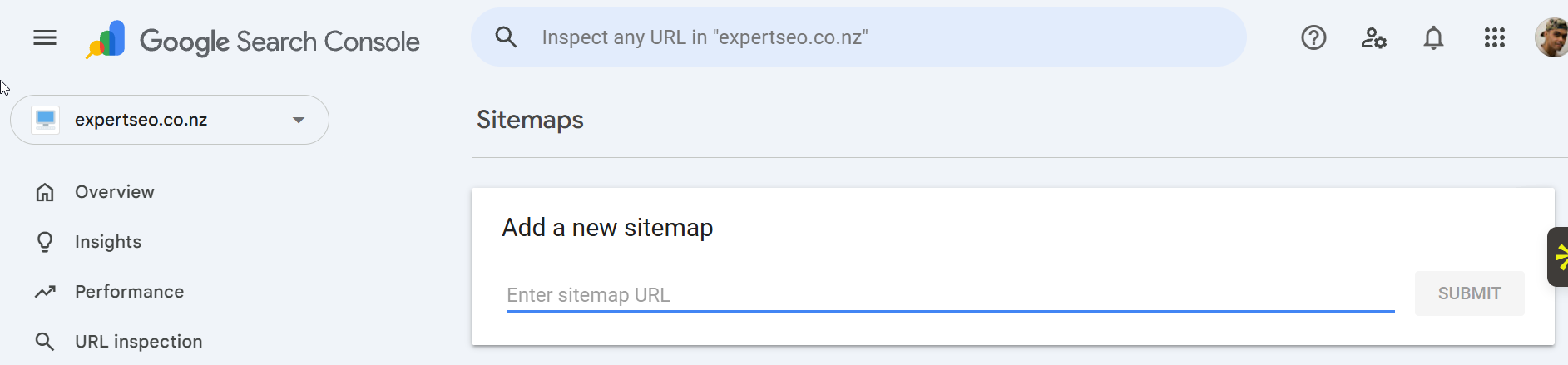
Then open the Pages report and check what’s actually indexed.
The common culprit: a page accidentally left on “noindex” after a site build, or the WordPress setting under Settings → Reading that hides the whole site from search engines.
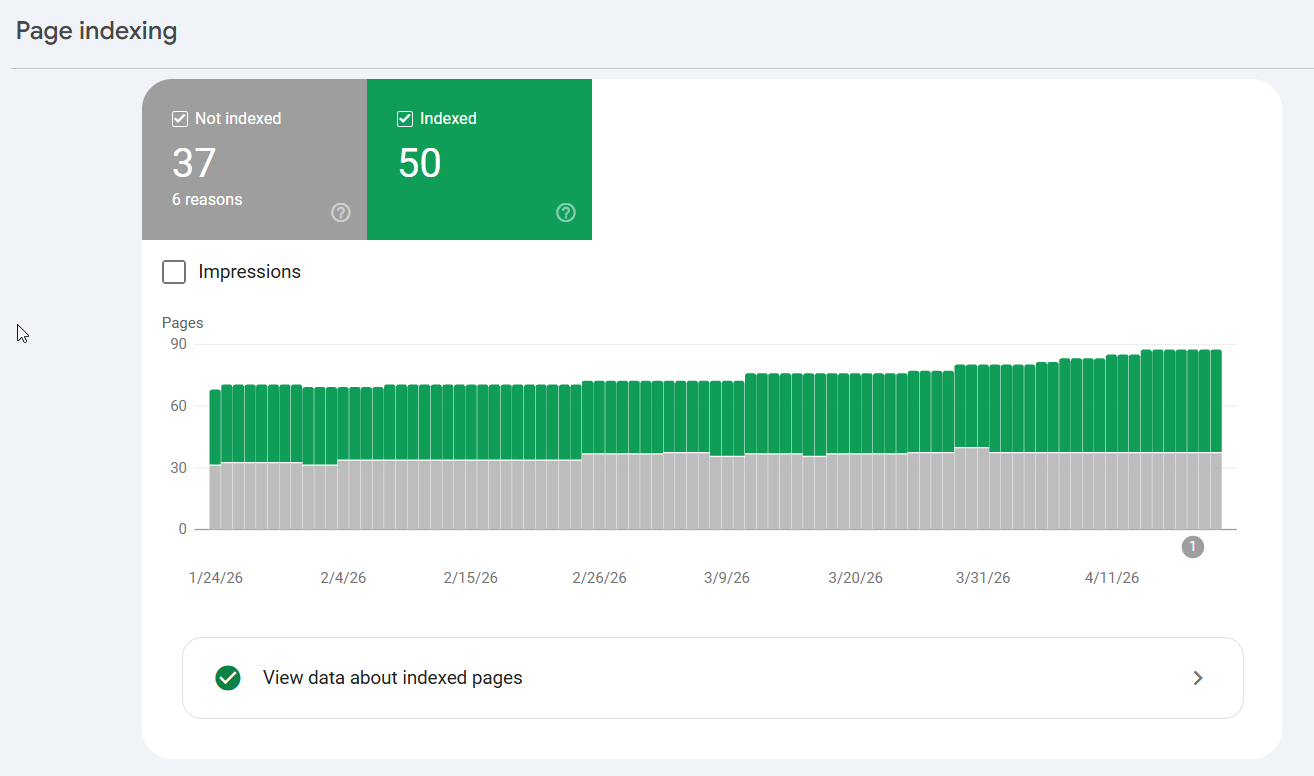
If a page is blocked, no AI will ever see it — this is the same foundation-first order I walk through in the guide to improving your website’s SEO.
The tools here are simple. Google Search Console shows you exactly what’s indexed and what’s blocked. Rank Math generates and keeps your sitemap updated automatically, so you’re not maintaining it by hand.
Read: Write the Answer They Can Lift
This is where most of the work — and most of the wins — live.
- Lead with the answer. Under each question, put a direct, self-contained answer in the first 40 to 60 words, then expand. If someone asks “what is a LIM report,” the first sentence should tell them, not warm them up for three paragraphs — that opening chunk is what the engine lifts.
- Use question-based headings. Match how people actually prompt AI. Not “Deposit Requirements” but “How much deposit do I need to buy a first home in NZ?” People ask AI in full questions, so your headings should mirror the question to get matched to it.
- Make every section stand on its own. Answer engines extract individual passages, so a section that only makes sense after you’ve read the three above it won’t travel well.
- Favour scannable formats. Bullets, numbered steps, and tables get pulled into answers far more often than dense paragraphs, because they’re already structured the way an answer wants to be.
- Add schema. In WordPress with Rank Math, open the post, click the Rank Math icon, go to the Schema tab, and add FAQ, Article, or HowTo schema depending on the page. Schema is a machine-readable label that tells the engine “this block is a question and this is its answer” — it does the extraction work for them.
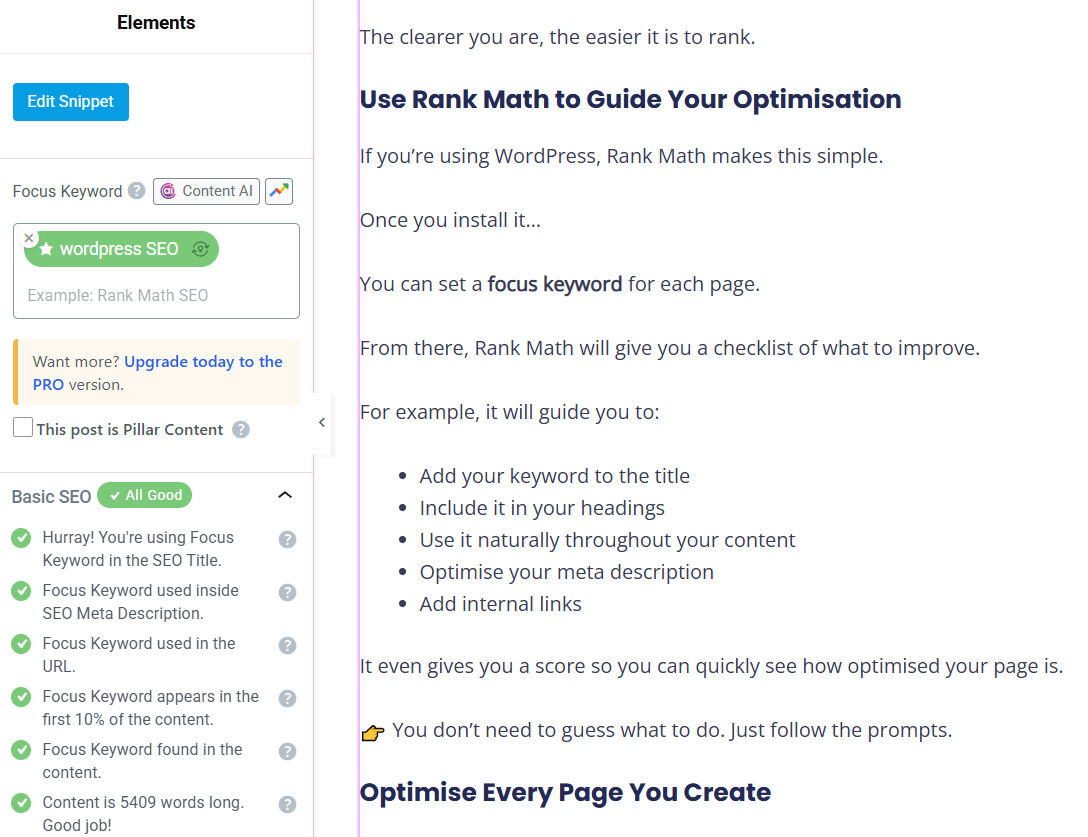
Here’s the standard to aim for: every section of my local SEO guide opens with a one-sentence answer before it explains anything.
That’s not a stylistic quirk — it’s the single biggest reason the engines can quote it cleanly. Write for the human reading it and the machine that might cite it later, and you don’t have to choose between the two.
Trust: Give the Engine a Reason to Pick You
Reach and Read get you eligible. Trust is what makes the engine choose your answer over the ten other pages that answered the same question.
Back your claims with something real. Original data, a first-hand result, a genuine example — AI systems favour content that demonstrates it actually knows the thing, not content that read three other blogs and reworded them.
This is why a real NZ number (“a Hamilton dentist with 519 reviews”) beats a generic claim every time.
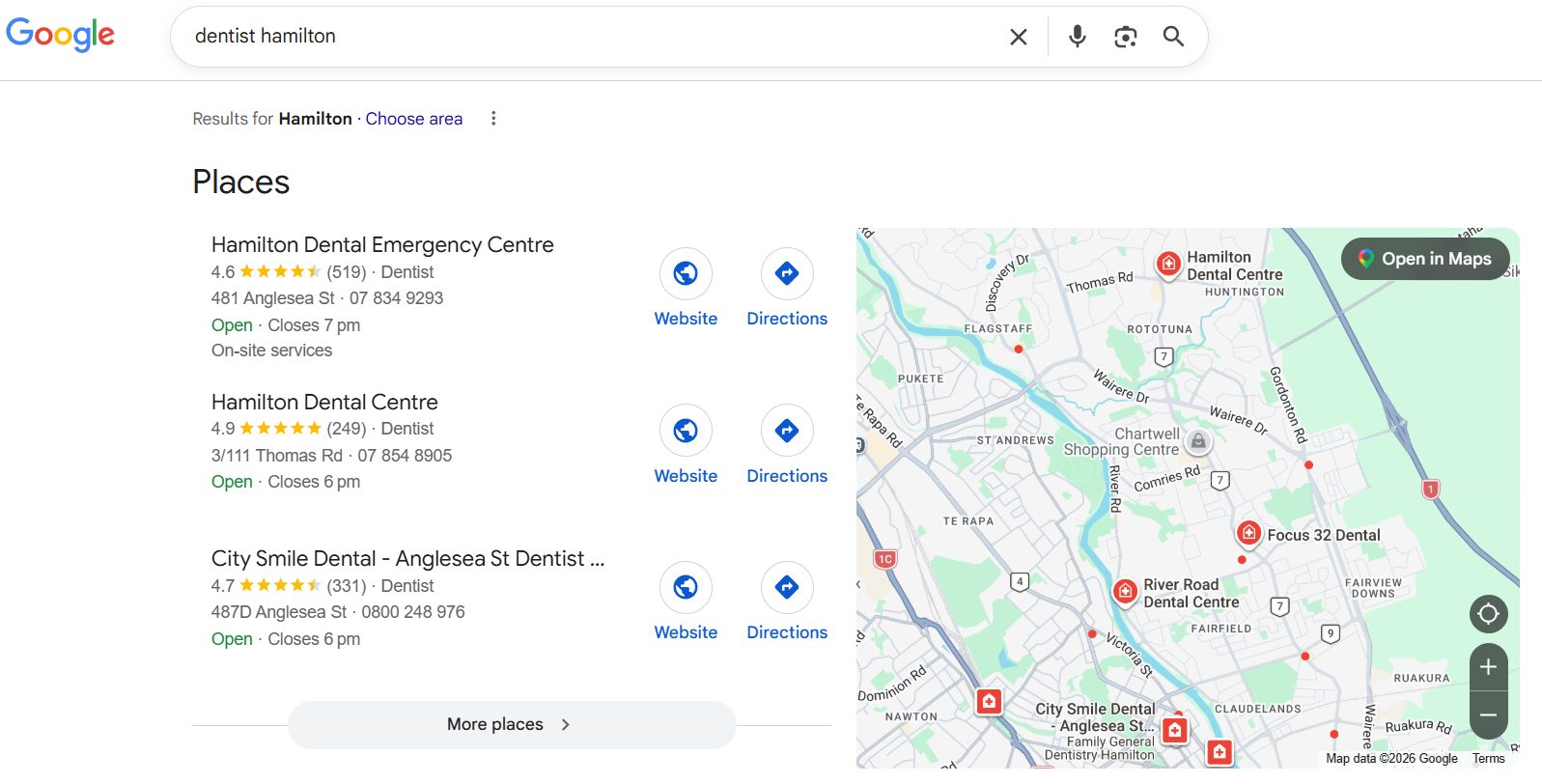
Keep your business details consistent everywhere. Same name, address, and phone number across your site, your Google Business Profile, and every directory.
Inconsistent details make an engine less confident it’s talking about the same business — and confidence is exactly what it’s grading.
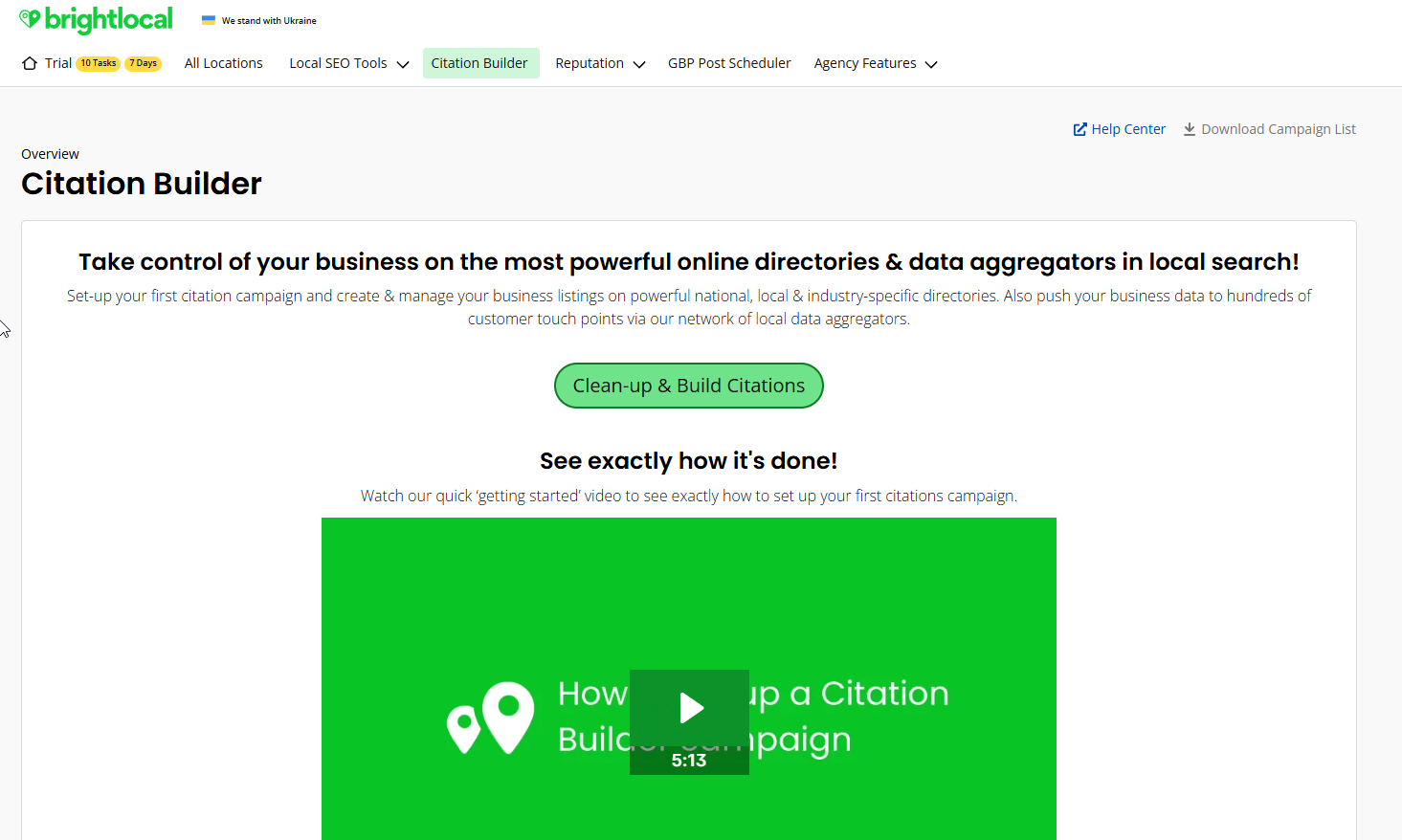
Build presence beyond your own website. Answer engines synthesise from across the whole web — Reddit, LinkedIn, YouTube, review sites, industry directories.
The AI Overview for “answer engine optimisation” itself tells you to go beyond your own site. When your business shows up consistently across those places, the engine reads it as consensus, and consensus is what gets cited.
Answer Engine Optimisation Examples
The fastest way to understand AEO is to see it working. So here’s mine.
My local SEO guide doesn’t just rank #1 in New Zealand — it gets cited directly inside Google’s AI Mode, and pulled into ChatGPT and Gemini answers, on a one-year-old domain competing against agencies with a decade’s head start.
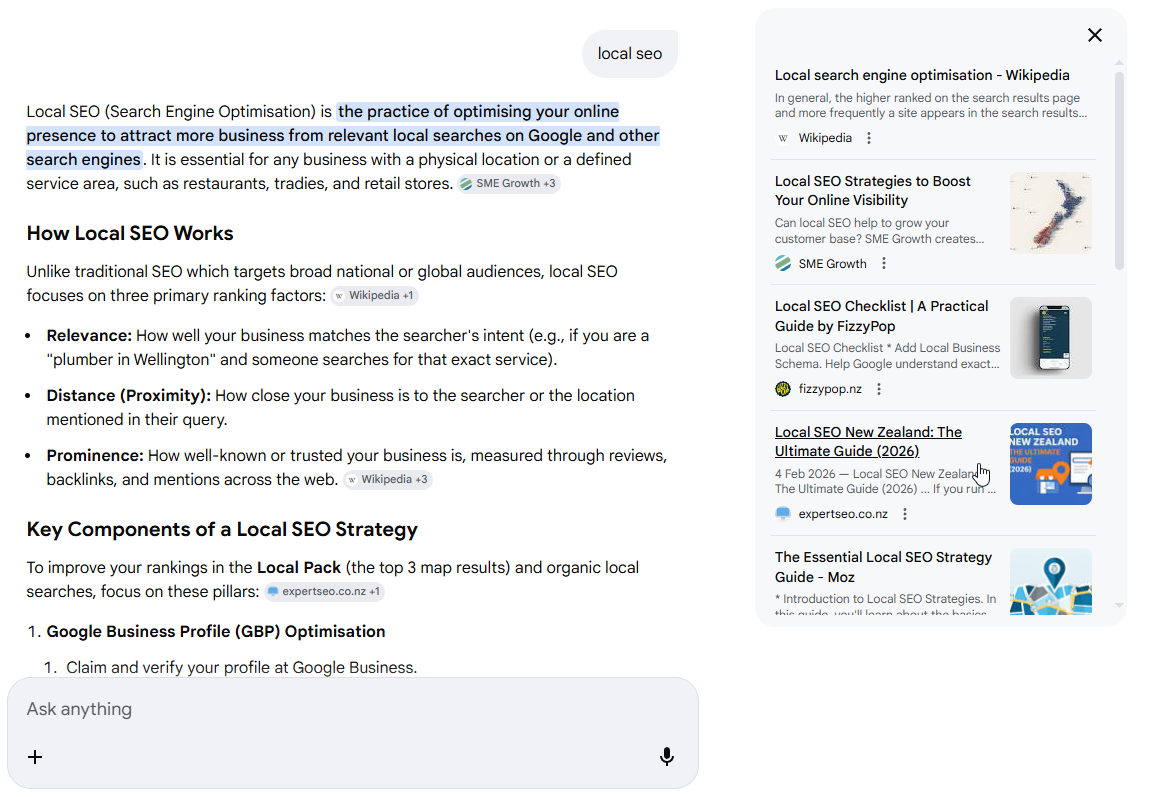
That’s AEO, live and in the wild. And it maps exactly onto Reach → Read → Trust.
Reach: the guide was already indexed and ranking, so it was in the running.
Read: every section opens with a clean, direct answer the engine could lift without hunting for it.
Trust: it’s backed by real NZ examples, real numbers, and a business whose name shows up consistently across the web.
Three gates, cleared — and the citation is the reward.
Now picture it for a normal NZ business. Say you’re a lawyer in Auckland, and someone asks ChatGPT, “how much does a consultation cost in Auckland?”
If you’ve published a clear page that answers that exact question — a direct figure up top, a short breakdown underneath, proper schema behind it — you become the source ChatGPT names.
The person hasn’t visited your site yet, but they’ve already heard your practice recommended as the authority. That’s a warmer lead than any ad, and you’re paying nothing per click for it.
The businesses winning at this in NZ aren’t the ones with the biggest budgets. They’re the ones who answered the real question first, and answered it clearly.
The Best Tools for Answer Engine Optimisation
You don’t need a bloated AEO stack. A small handful covers the job, and half of it is just doing SEO properly.
- Rank Math (or Yoast) handles your schema and sitemap inside WordPress without you writing code. This is your Read and Reach workhorse.
- The answer engines themselves are your best free tool. Open ChatGPT, Gemini, and Google’s AI Mode, and ask them the exact questions your customers ask. See who gets named — if it’s a competitor, that’s your gap list written for you.
- A brand-monitoring or AI-visibility check tells you how often you’re being mentioned across AI platforms over time, once you want to track it properly rather than spot-check by hand.
Rank Math earns its place on any list of SEO tools worth paying for — but for AEO, most of your checking can be done free by asking the engines directly.
How to Tell If Your AEO Is Actually Working
Measuring AEO isn’t about rankings. It’s about mentions and citations — and you can check most of it by hand, no enterprise software required.
Start by asking. Open each engine and type in the questions your customers ask (“best accountant for tradies in Wellington,” “how much does X cost in NZ”).
Note whether you get named, and who’s getting named instead. Do it monthly and you’ll see the trend move.
Watch your referral traffic. In Google Analytics, keep an eye on referrals from chatgpt.com, perplexity.ai, and similar — that’s real people arriving from an AI answer that mentioned you.
Track your brand mentions across the web too. More consistent mentions on the sites answer engines trust means more raw material for them to cite you from.
Early on, “working” looks like a few citations you didn’t have before, the odd referral from an AI platform, and your name starting to appear when you ask the engines your own customers’ questions.
It’s a trickle before it’s a stream — which is exactly how SEO has always compounded. The businesses that start now build a lead that gets expensive for competitors to catch later.
When to Do AEO Yourself vs Hire an Expert
Here’s the honest line: a lot of AEO is genuinely DIY-able, because it’s mostly SEO done properly.
If you’ve got the time and you’re willing to learn, you can absolutely handle the fundamentals yourself.
Set up Search Console, lead your pages with clear answers, add schema in Rank Math, keep your business details consistent, and ask the engines each month whether you’re getting named.
That alone puts you ahead of most NZ businesses, who haven’t started.
When is it worth bringing in help? When the fundamentals aren’t sticking, when you’re in a competitive niche where being cited is worth real money, or when you’d simply rather it be handled properly while you run your business.
Getting a one-year-old site cited by AI Mode, ChatGPT and Gemini — against competitors with ten years of authority — didn’t happen by accident, and that’s the kind of result our SEO services are built to reproduce for you.
Either way, the move is the same: start now, while the NZ field is still wide open and the answer to your customers’ questions is still up for grabs.
Be the answer before someone else is.
Answer Engine Optimisation: FAQ
What is the difference between AEO and GEO?
AEO (answer engine optimisation) is about getting cited as the direct answer across AI answer engines and featured snippets. GEO (generative engine optimisation) is the same idea aimed specifically at generative tools like ChatGPT and Gemini. In practice they describe the same work, and both sit on a foundation of solid SEO.
Are AEO and GEO the same thing?
Close enough that the difference rarely matters day to day. Both are about getting your content picked as the answer by AI. The industry just hasn't settled on one term yet, so treat them as the same job wearing different labels.
Is SEO dead in 2026?
No. Search behaviour is changing, but SEO isn't dead — it's the foundation answer engines pull from. If Google can't find and rank your page, no AI can cite it. The work expands; it doesn't disappear.
Can ChatGPT do SEO?
ChatGPT can help with SEO tasks like keyword ideas, outlines, and first drafts, but it can't run your strategy or replace the fundamentals. Treat it as a fast assistant, not an autopilot — the judgement still has to come from you.
How do I start with answer engine optimisation?
Start by leading each page with a direct answer, using question-based headings, adding FAQ or Article schema, and keeping your business details consistent everywhere. Then ask ChatGPT, Gemini and Google's AI Mode your customers' questions to see whether you're being named.
What are the best AEO tools?
You don't need many. Rank Math (or Yoast) handles schema and sitemaps, the answer engines themselves let you check who's getting cited, and a brand-monitoring tool helps if you want to track mentions over time. Half of AEO is just doing SEO properly.
Recommended Reading
Is SEO Dead in 2026?
The honest answer, with real NZ proof that search — and getting cited — is very much alive.
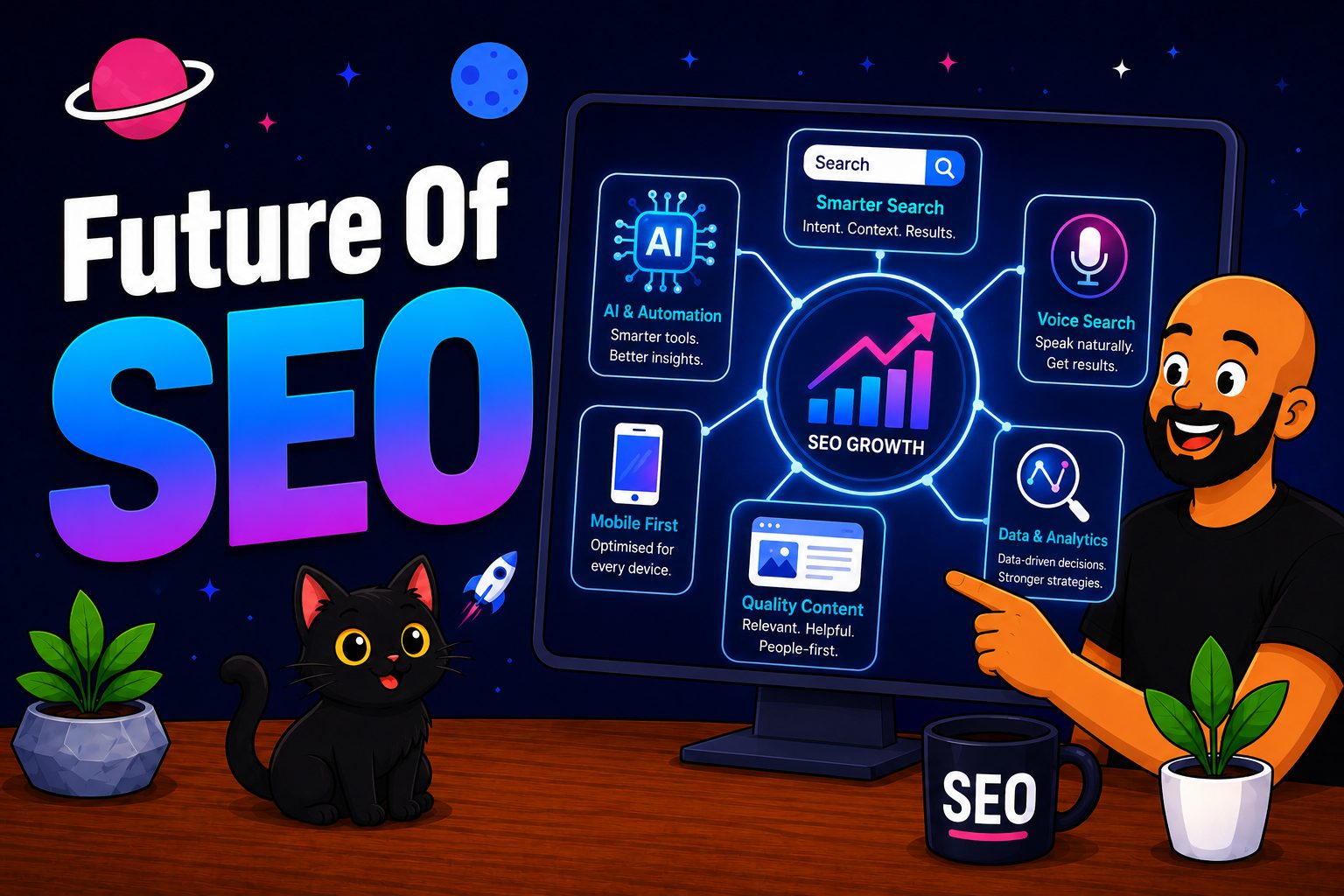
The Future of SEO
Where search is heading in the AI era, and how to win in every stage of it.
SEO Statistics 2026
50+ verified stats on how people really search now, including the shift to AI answers.