

You’ve probably been told you need to “do SEO.”
So you publish a page. Tweak a title. Maybe start a blog you abandon three weeks later.
Then nothing happens. No rankings. No traffic. No leads.
Nine times out of ten, SEO wasn’t the thing that failed. There was just never a real campaign behind it: a plan, in order, with a goal at the end.
I’ve run SEO campaigns that took websites from zero to tens of thousands of visitors a month, in markets far tougher than New Zealand. This guide walks you through exactly how one works, step by step, in an order you can actually follow.
We’ll start one step earlier than nearly every other guide out there. Because the first move in a real campaign isn’t keyword research. It’s something almost nobody tells you.
What Is an SEO Campaign?
An SEO campaign is a planned, coordinated effort to grow your organic search traffic toward a specific goal.
You research the keywords your customers type in, create and optimise pages that match them, fix the technical side of your site, earn links, and track the results. All of it pulling in one direction.
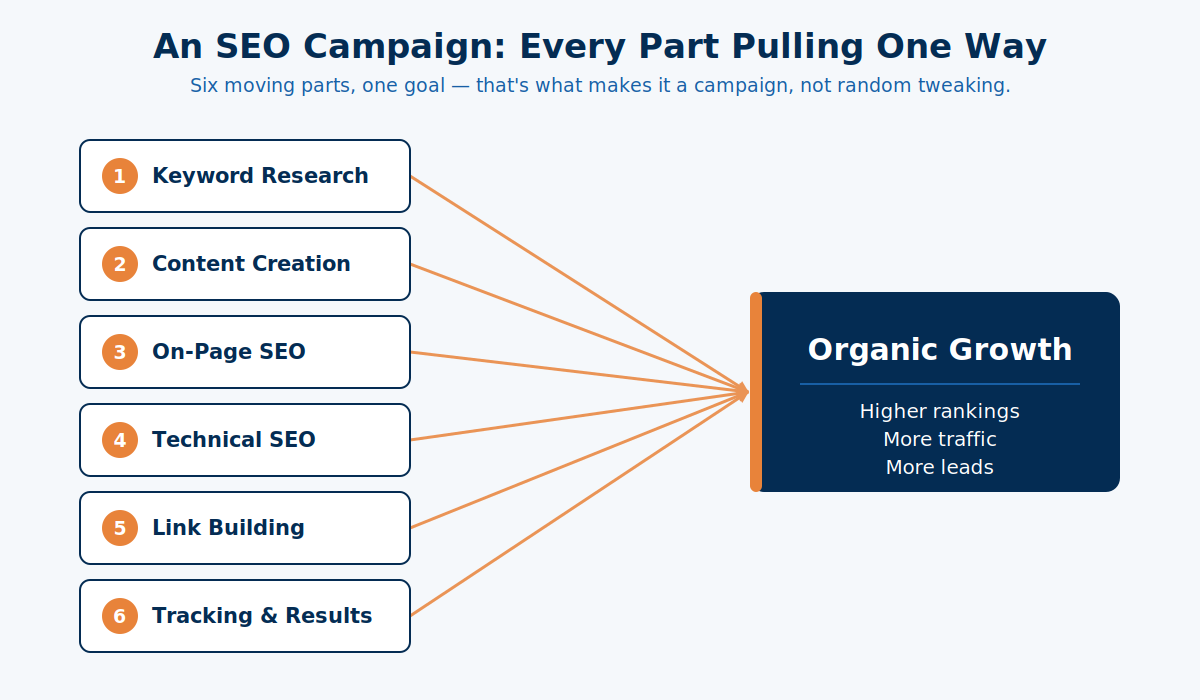
Here’s the distinction that matters: a one-off tweak is a task. A campaign is the whole plan those tasks live inside. It has a starting point, an order, and a finish line you’re aiming for.
That’s why random tweaking never works.
It’s like turning up to the gym and doing one different exercise each visit, then wondering why nothing changed. The results come from the programme, not the single set.
Why Run an SEO Campaign
A campaign gives you a roadmap. Do the right things in the right order, and you build an asset that keeps paying out.
That’s the part most business owners miss. Get SEO right once, and it can feed your business with leads for the rest of your career.
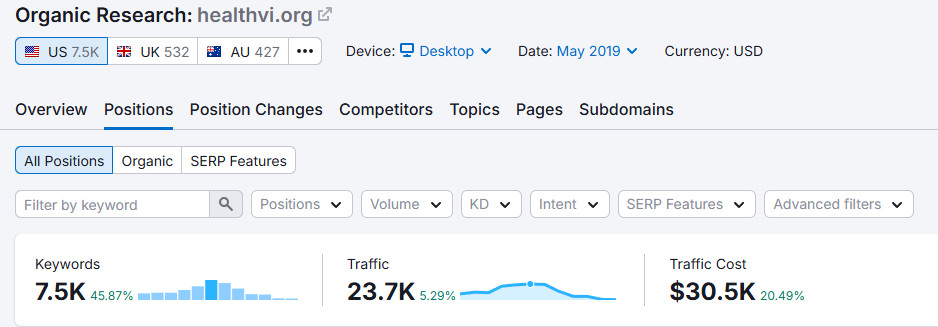
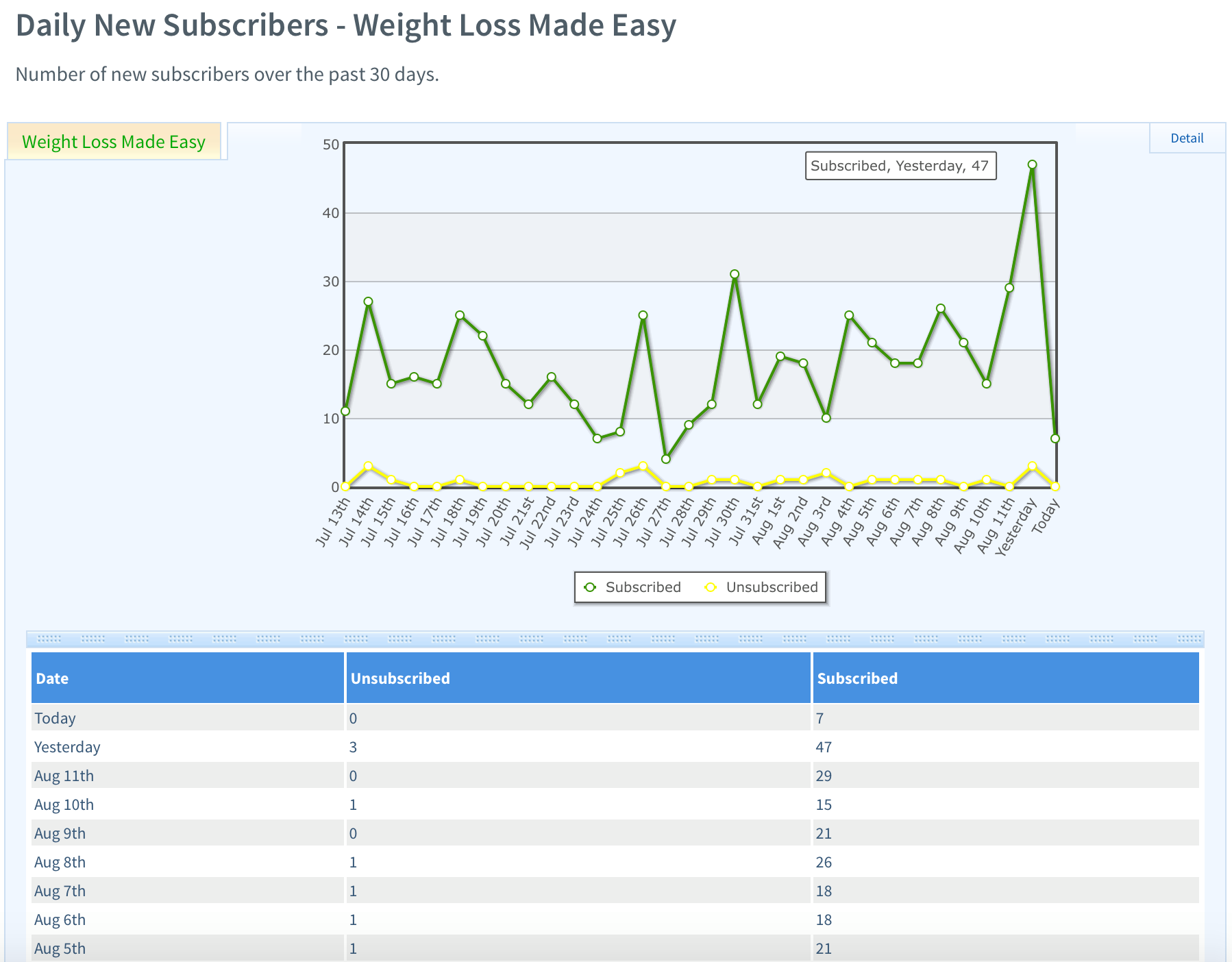
Take HealthVI again. At its peak, tens (sometimes hundreds) of people were signing up to our email newsletter every single day.
Every one of those signups was a chance to build a relationship and sell to them down the track. And all of it traced back to SEO: people found us on Google, liked what they read, and put their hand up.
With ads, you rent attention and it stops the second you stop paying. With SEO, you build a machine that brings customers in while you sleep, without paying for every click.
The numbers back it up. The #1 organic result on Google pulls 27.6% of all clicks, and organic search is still one of the biggest traffic channels on the web.

Win that spot for the terms your customers search, and the long-term return SEO delivers leaves paid ads in the dust.
Now here’s the part that should get you excited if you’re in New Zealand.
Most Kiwi businesses have no idea how to do SEO properly. I see it every day: thin pages, no strategy, a “set and forget” mindset.
That’s your opening.
When your competitors are barely trying, a real campaign doesn’t just get you ranking. It lets you dominate whatever market you choose.
In New Zealand, where the bar is this low, the same approach hits even faster.
So let’s get into it.
Here’s how to run an SEO campaign from scratch.
Step 1: Clarify Your Message
Before a single keyword, get crystal clear on one thing: why should anyone choose you over every other option?
This is the step everyone skips, and it’s why so many campaigns stall. Google ranks pages that searchers actually pick and stay on.
If you’re just another interchangeable option, there’s nothing there worth ranking, no matter how many keywords you stuff in.
It’s the answer to a question that quietly frustrates a lot of business owners: why do competitors with worse websites still outrank me?
Often it’s because they’ve made themselves the obvious choice, and you’ve blended into the wallpaper. The top three results take more than half of all clicks, so being forgettable is expensive.
So how do you become the obvious choice? You find the thing that separates you from the market.
It can be almost anything real:
- The story of how you started
- A unique process you bring to the work
- The years of experience behind you
- An offer or guarantee nobody else makes
Say you’re a plumber in Auckland. There are hundreds of you. So what makes a customer pick you?
Maybe you’re a second-generation family business. Maybe you turn up in two hours flat or the call-out’s free. Maybe you’ve got a fixed-price promise so nobody gets stung by a surprise invoice.
Whatever it is, state it plainly: the problem you solve, and why you’re the one to solve it.
Let me show you what this looks like with my own business.
One thing that makes Expert SEO different is that we’ve competed and won in international markets, including the United States, which is about the hardest SEO arena on earth.
We ranked #2 for “fat loss” (a monster keyword) and hit #1 for a stack of terms pulling thousands of searches a month.
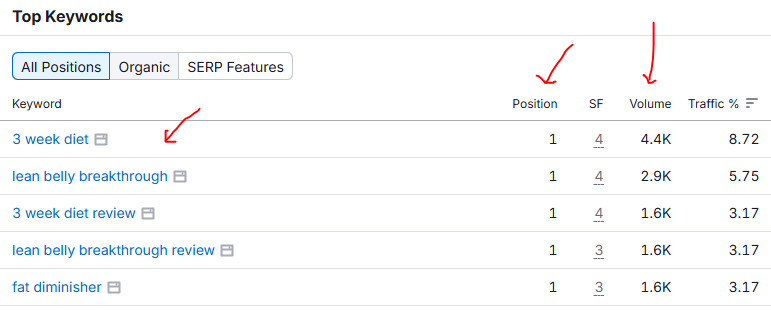
We took that experience, sharpened in a brutal market, and brought it home to New Zealand.
Put us up against any other NZ agency and we’ll beat them. That’s not a boast for its own sake: it’s the exact message that makes us the obvious choice, and it’s woven through everything we publish.
You can bring the same clarity to a different service too. Take our website design work.
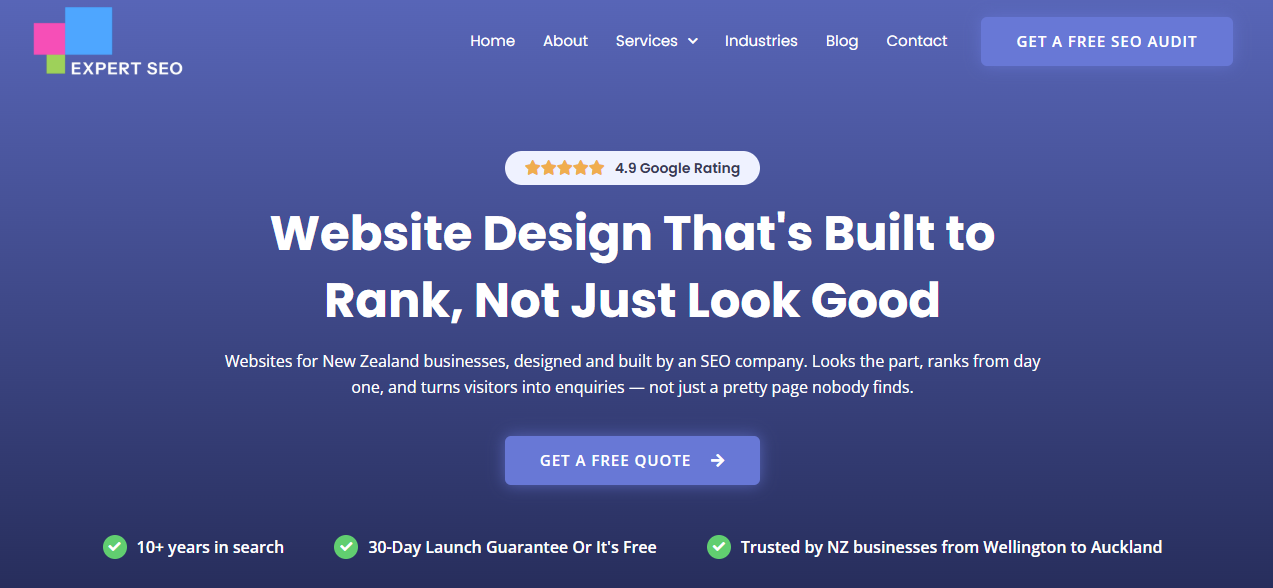
Our wedge there is simple: we build the SEO foundation in from day one.
Plenty of design agencies claim they do, but from where I sit, most don’t touch it. That’s a real disservice to the client, because they end up with a pretty site nobody can find.
So we offer both halves: a website that looks sharp and converts visitors into customers, and the groundwork that gets you found in the first place.
That’s the whole point of Step 1. Nail your message, and every page you build afterward has something worth ranking behind it.
Step 2: Do Your Keyword Research
Now for the keywords. Your job here is to build two lists: commercial and informational.
Commercial keywords are the ones people search when they’re ready to buy. “Emergency plumber Auckland.” “Family lawyer Auckland.” These are your money terms, and they point at your service and location pages.
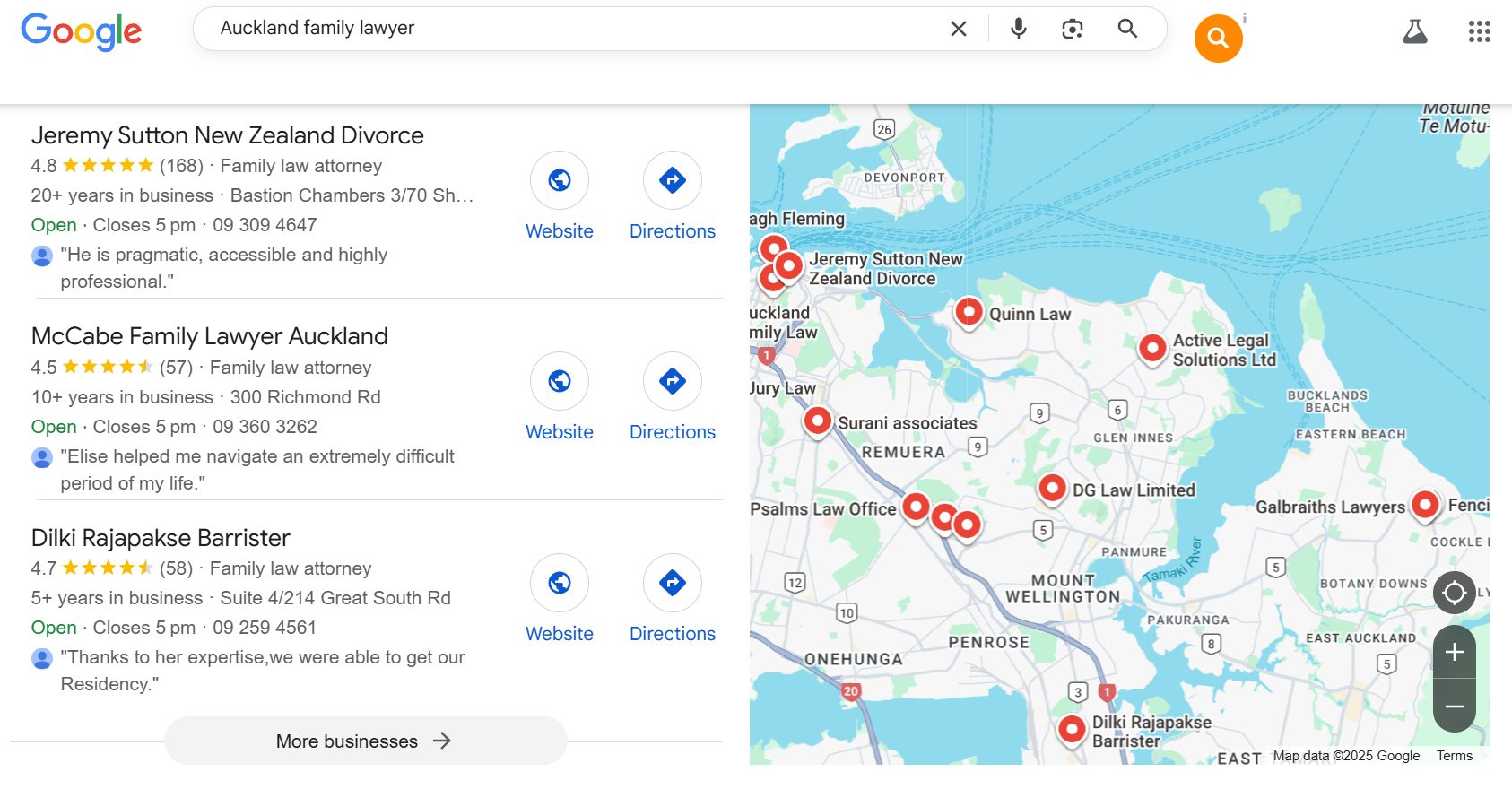
Informational keywords are the questions people ask on the way to buying. “Why is my hot water not working?” “How much does a leak repair cost?”
These feed your blog. They build authority and pull people into your world before they’re ready to spend.

Here’s why you need both. The commercial pages make you money now. The informational content builds trust and gets people into your funnel, so when they’re finally ready to buy, they already know you. You’ve built the rapport before the sale.
To find them, start in Google Keyword Planner (free inside Google Ads). Type in a seed term like “plumber Auckland” and it hands you a list of related searches with rough volumes.
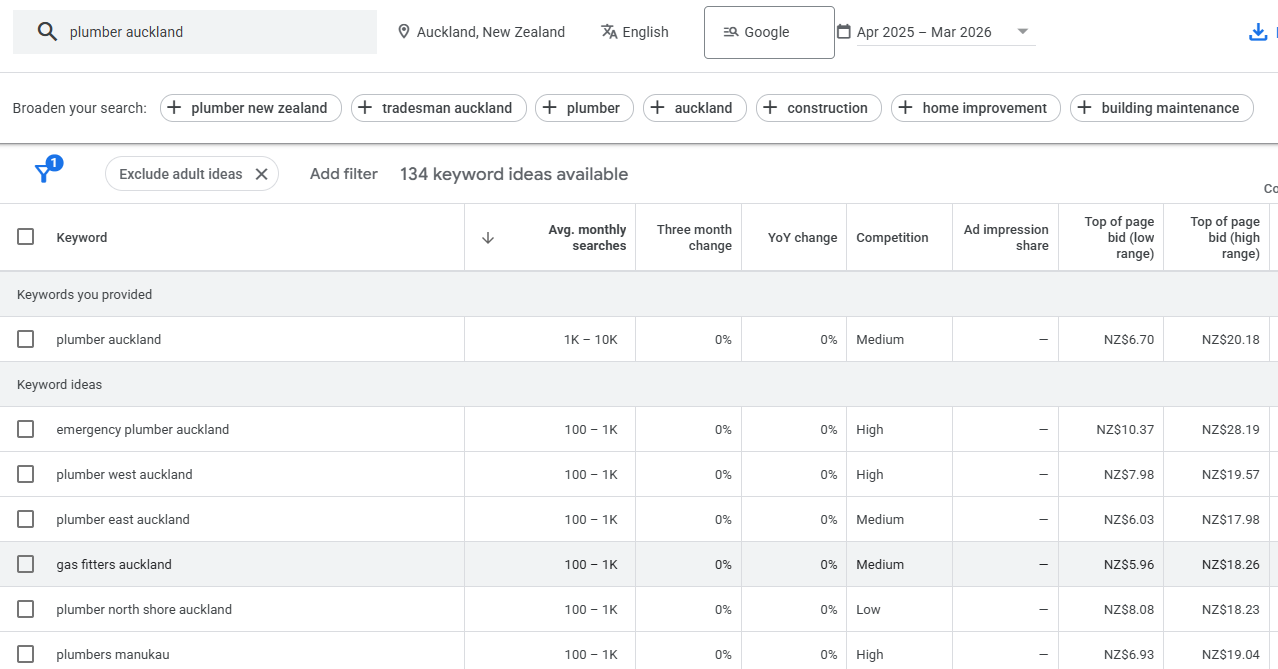
Tools like Ahrefs or Semrush go deeper, showing difficulty scores so you know what you can realistically rank for.
Say you run a dental practice. Your commercial list might be “dentist Auckland” and “emergency dentist Auckland,” each getting its own page.
Your informational list might be “how much do dental implants cost in NZ” and “does teeth whitening hurt,” each becoming a blog post that warms up future patients.

That split is the backbone of a good campaign. If you’d rather have this done for you, SEO for dentists is one of the areas we work in most.
Step 3: Create Content That Matches Each Keyword
Once you’ve got your keywords, you build a page for each one, matched to what the searcher actually wants.
This is where a lot of people go wrong. They write a blog post targeting a commercial keyword, or a sales page for an informational one, and it never ranks. Google can tell when the page doesn’t fit the intent behind the search.
The fix is to match the page type to the intent:
- Informational keyword (“how does root canal work”) gets a blog post
- Commercial keyword (“root canal Auckland”) gets a service page
- Transactional keyword (“book dentist Auckland”) gets a booking or landing page
The trick is to map each keyword to a single page before you write a word. One page, one primary keyword, one clear job.
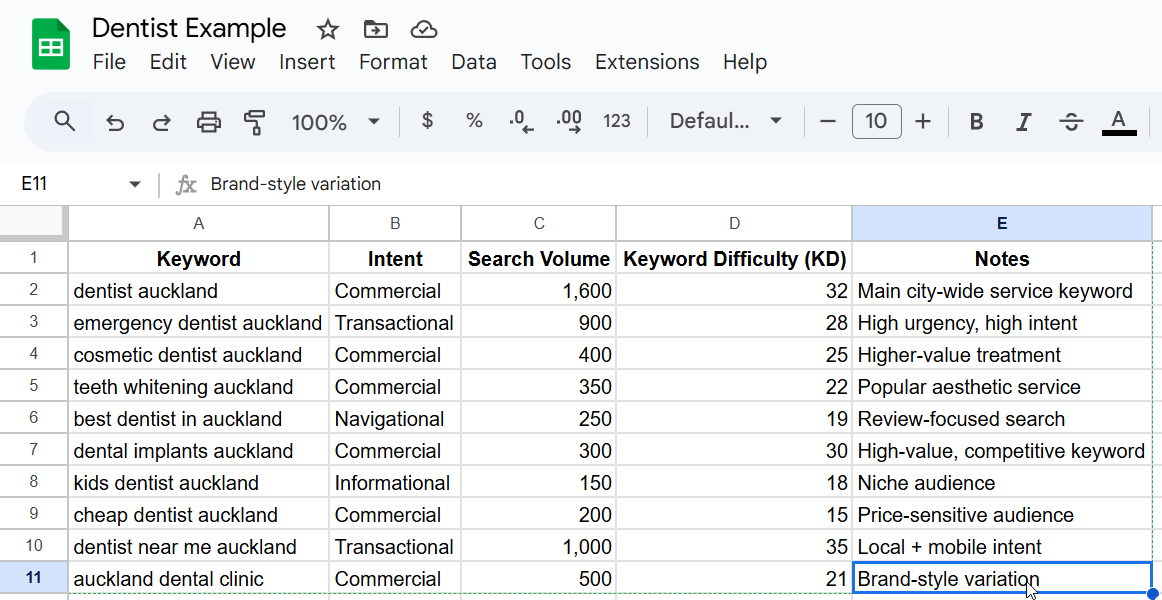
Do this properly and you avoid two pages fighting each other for the same term, which is a mistake I see on Kiwi sites constantly.
To actually get each page written, ChatGPT can take a lot of the grunt work off your plate. Give it a clear brief: “I’m creating a piece of content targeting the keyword ‘how does root canal work’ — help me outline and draft it.”
Then go along with its advice, shaping the output with your own experience and real NZ detail.
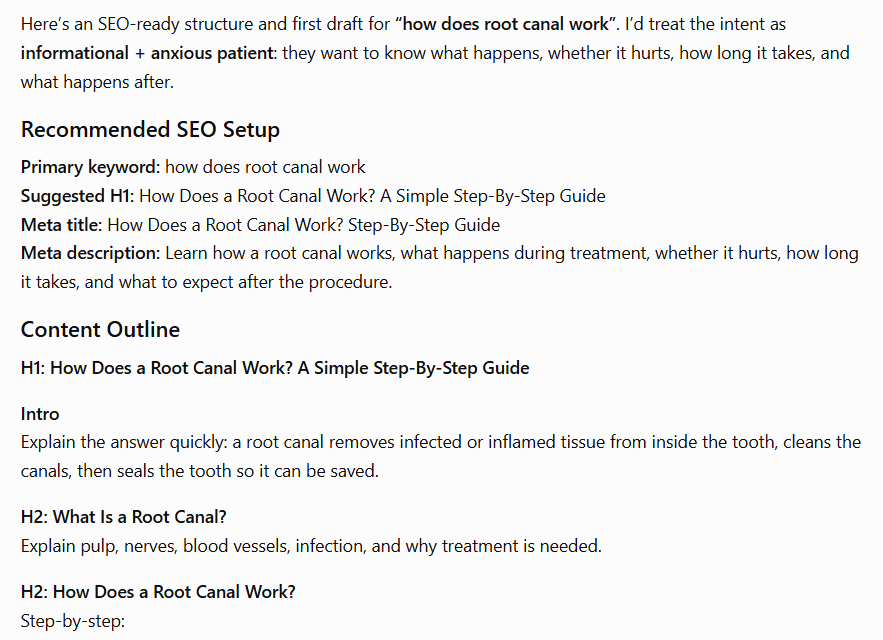
Then make the content genuinely the best answer out there. Not a thin 400-word skim: the complete, useful, this-is-all-I-need resource. That’s what earns rankings and, increasingly, gets you cited by AI. Pages quoted inside Google’s AI Overviews pull around 120% more organic clicks than pages that aren’t, so depth pays twice.

Step 4: On-Page SEO
Now you give Google clear signals about what each page is for. That’s on-page SEO.
Even a great page needs the right labels. On-page SEO covers your title tag, your headings, your meta description, your URL, and the way you link between pages. It helps Google understand the topic and nudges more people to click your result.
Here’s the fast way to handle the fiddly bits. Open ChatGPT and ask it to write your title tags and meta descriptions.
Something like: “Write five title tags under 60 characters and a 155-character meta description for a page targeting ‘electrician Christchurch’.” You’ll have solid options in seconds instead of staring at a blank box.
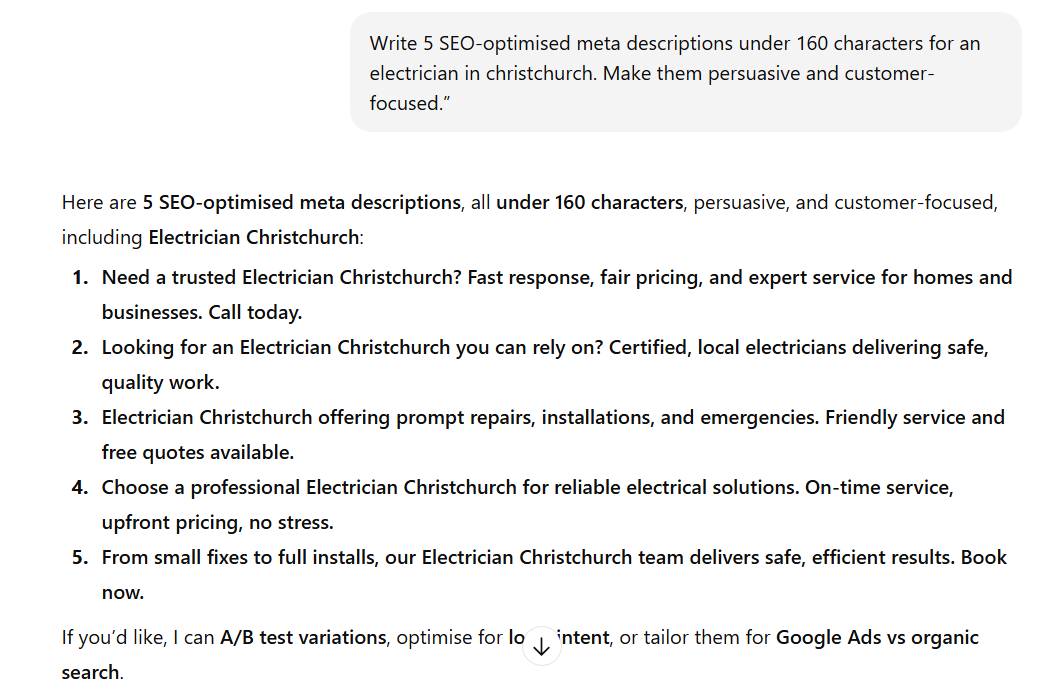
From there, work the basics into the page: keyword near the front of the title, one clear H1, descriptive H2s, and a handful of internal links to related pages. Twenty minutes a page, and Google finally understands what you’re offering.
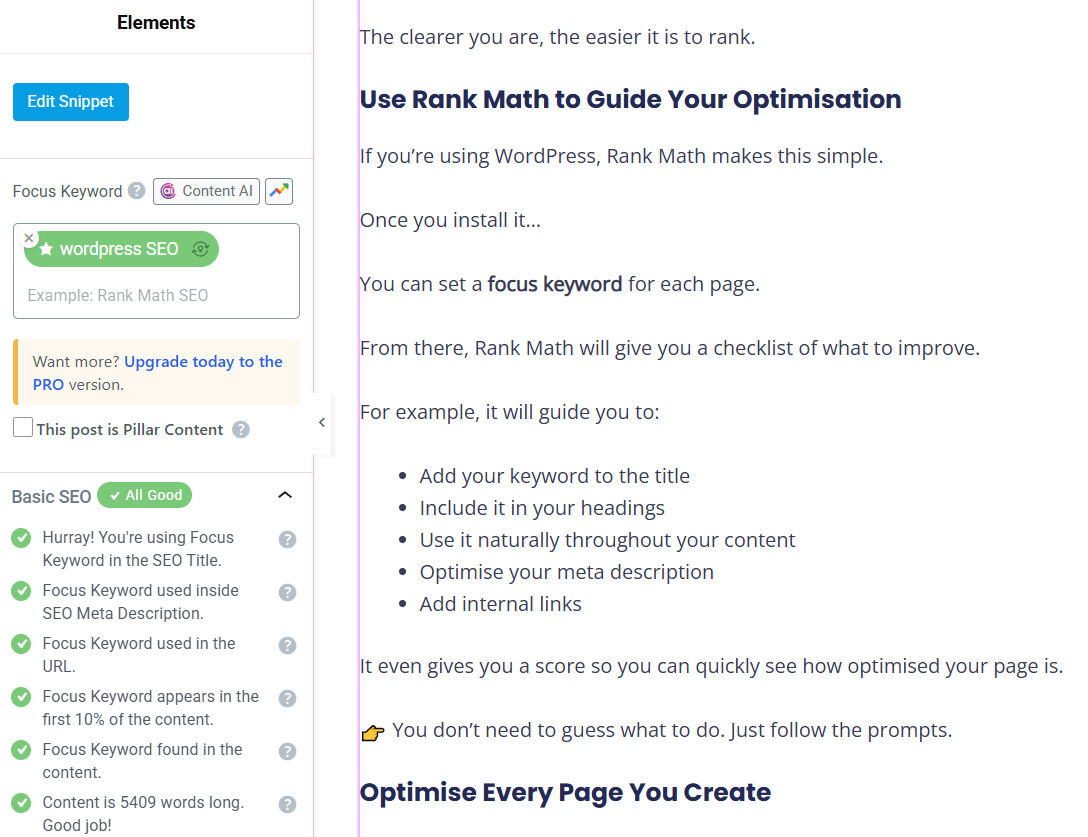
If your site’s on WordPress, install Rank Math. It’s a free plugin I recommend to nearly every client: it grades your on-page SEO live as you write, with a running checklist telling you whether the keyword’s in your title, your URL, your first paragraph and your image alt tags. Tick the boxes and you’ve nailed the on-page basics without memorising a thing.
Step 5: Fix the Technical Foundations
Next, make sure Google can actually crawl, read and load your site. This is technical SEO, and it’s the plumbing behind the walls: invisible when it works, a disaster when it doesn’t.
If your pages load slowly, block crawlers by accident, or aren’t mobile-friendly, everything else you’ve done gets throttled.
You can have the best content in your city and still go nowhere because the foundations are cracked.
The quickest way to find the problems is to run a site audit. Fire up a Semrush site audit, point it at your domain, and it crawls the whole thing, flagging broken links, slow pages, missing tags and indexing issues in one list.
With New Zealand sites especially, I almost always find a pile of errors that need ironing out first.

Work through what it surfaces, starting with anything that stops pages being indexed (if Google can’t see a page, nothing else matters). If you’d rather someone hand you the full list of what’s holding your site back, that’s exactly what an SEO audit is for.
Step 6: Add Local SEO (If You Serve a Local Area)
If you serve a specific town or city, you layer in local SEO. This is how you show up in the map pack and “near me” searches.
For a local business, this is where the fastest wins live. When someone searches “plumber near me” or “cafe Ponsonby,” Google leans on a different set of signals: your Google Business Profile, your reviews, and how consistently your business details appear across the web.
Start with your Google Business Profile. Claim it, then fill in everything: exact business name, address, phone, hours, and the right primary category (this one matters, because it tells Google what you actually do).

Add real photos and start asking happy customers for reviews.
Then sort your citations, which are mentions of your business name, address and phone number on other sites and directories. The catch is consistency: they all have to match exactly.
A tool like BrightLocal’s Citation Builder pushes one clean, consistent listing out to the main NZ directories for you, instead of you doing it by hand across twenty sites.
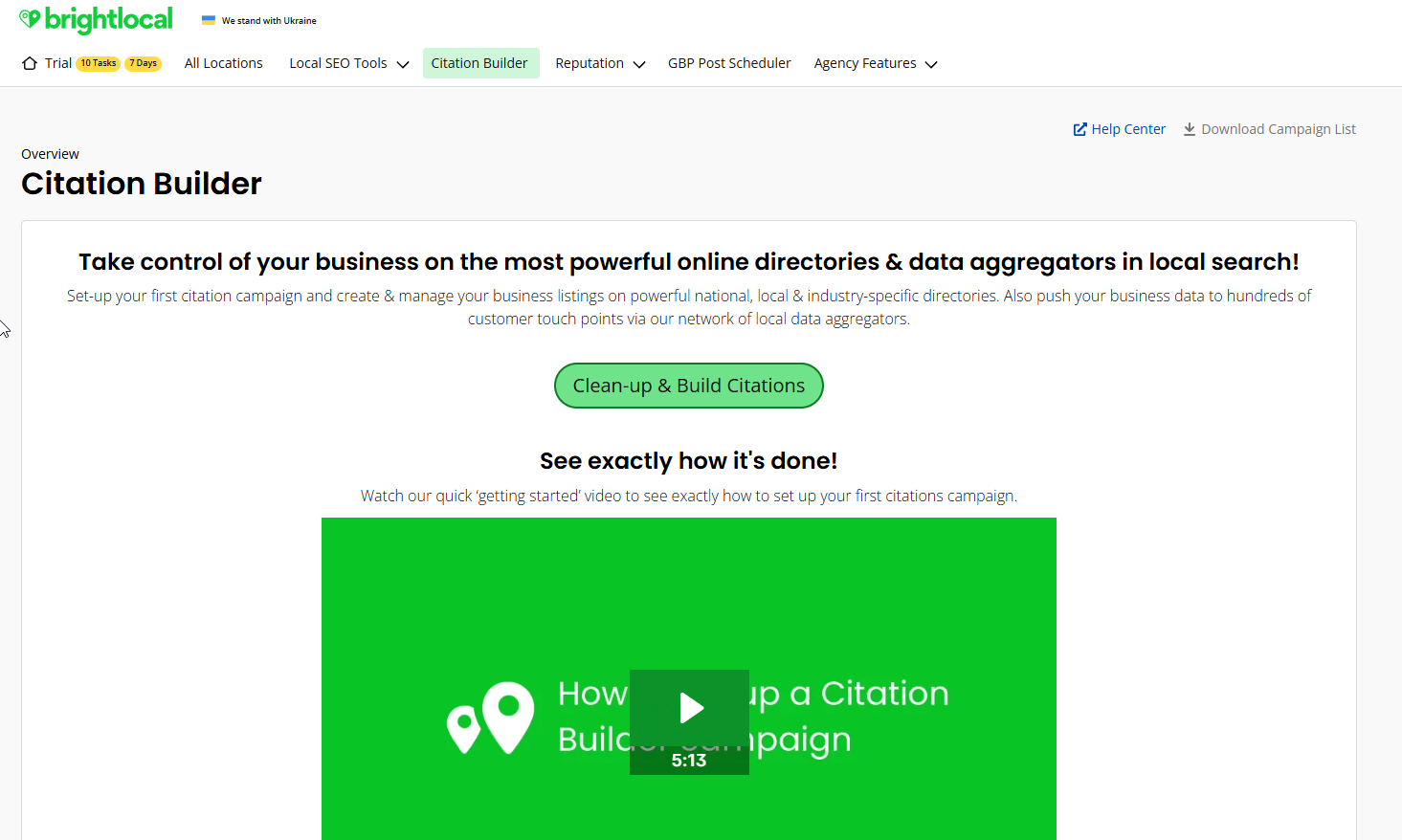
Get this right and you can outrank far bigger competitors in your area. It’s the single biggest lever in local SEO, and it’s what wins SEO in Auckland and every other NZ city where the map pack is the whole game.
Step 7: Build Links and Authority
Now you earn links from other websites. This is what tells Google you’re credible enough to trust near the top.
A link from another site is basically a vote. When a respected website links to yours, some of that trust flows across, and Google reads it as a signal that you’re worth ranking. It’s one of the heaviest factors there is.
I know link building feels like a dark art. Plenty of beginners tell me it’s the one part they can’t get their head around.
So here’s the plain version: you’re just getting other real websites to mention and link to yours, and you do it by giving them a reason to.
The clean ways to earn them:
- Create something genuinely link-worthy, like original data, a proper guide, or a free tool, then tell people it exists
- Write guest posts on relevant NZ sites in your industry
- Get listed in the directories and local publications your customers actually read
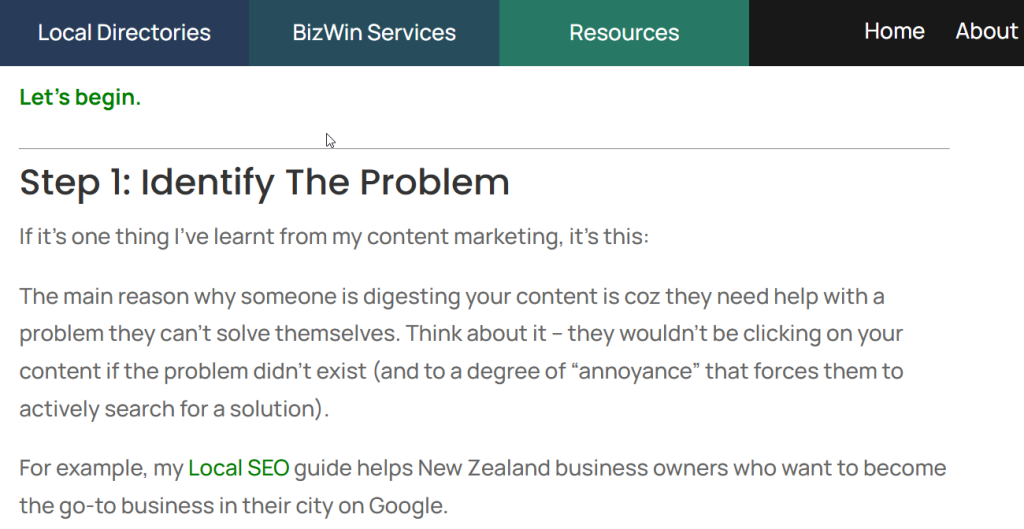
Here’s a real one from this very site.
To earn a link back to Expert SEO, I wrote a guest post for BizWin (run by Leo Zeldenrust), which linked back to my local SEO guide. That’s guest posting in action: useful content on someone else’s site, with a link home.
One warning, because it costs people real money: don’t buy cheap bulk links off some seller promising “500 backlinks for $50.” Google spots them, and they can tank a site that was doing fine.
Fewer good links beat a pile of junk every time. That’s the whole game with link building: a handful of real, relevant votes will always outweigh a warehouse of fakes.
Step 8: Track Your Results
Finally, you measure what’s happening, so you know the campaign’s working and where to push next.
You don’t need a wall of dashboards. Three things tell you almost everything: your keyword rankings, your organic traffic, and your conversions (the calls, forms and sales that actually pay the bills).
Set up Google Search Console and Google Analytics 4, both free. Search Console shows you which keywords you’re ranking for and whether your traffic’s climbing.
Analytics shows you what people do once they land. Check them monthly, not daily, because SEO moves in weeks and months, not hours.
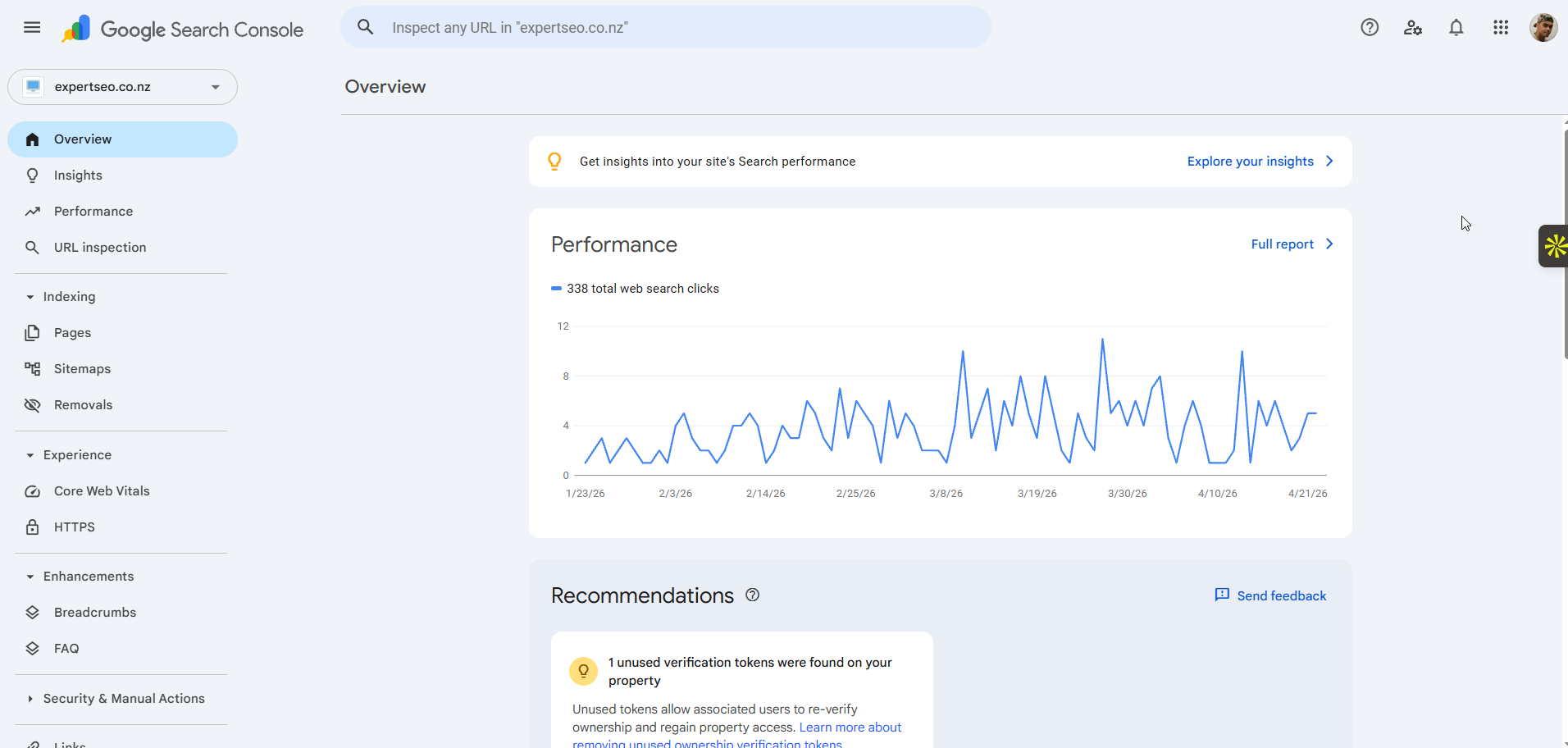
The point of tracking is simple: if a page is climbing, do more of what got it there. If something’s stuck, you know exactly where to aim your next round of work.
That feedback loop is what turns a one-off push into a campaign that compounds.
What an SEO Campaign Costs in New Zealand
Fair warning: the honest answer is “it depends.” But here’s a real sense of the numbers.
You’ve got three routes. Do it yourself, and the cost is mostly your time plus some tool subscriptions (Ahrefs or Semrush run a few hundred dollars a month).
Hire a freelancer, and you’re often looking at a project fee or a smaller monthly rate. Bring on an agency, and you’re into an ongoing retainer.
For context, 74% of small businesses invest in SEO, with average monthly spend sitting around the low hundreds internationally.

In New Zealand, serious agency retainers typically run higher than that, because good local SEO talent is genuinely thin on the ground here.
The real question isn’t the sticker price. It’s the opportunity cost. A campaign that brings in even a handful of extra jobs a month usually pays for itself many times over, which is why it’s worth weighing the spend against what a new customer is actually worth to you.
If you want a straight answer for your situation, that’s the kind of thing an SEO consultant can map out with you.
What to Expect: Month 1, Month 3, Month 6
SEO is a slow burn before it’s a bonfire. Knowing the shape of it stops you quitting right before it pays off.
Month one usually looks like nothing is happening. You’re auditing, fixing, publishing, setting foundations. No fireworks yet, and that’s normal.
By month three, you start seeing movement: pages creeping up the rankings, a trickle of new traffic, the odd enquiry. Most focused campaigns run 8 to 12 weeks of execution before the early results show, so this is right on schedule.
By month six, the compounding kicks in. The content you published in month one has matured, links have landed, and traffic that felt like a trickle turns into a steady flow. This is exactly how HealthVI went: quiet at first, then it snowballed to 20,000-plus visitors a month.
The people who win at SEO are simply the ones who don’t quit in month two.
Common SEO Campaign Mistakes
A few avoidable slip-ups sink most campaigns before they get going.
Skipping the message. Jumping straight to keywords without nailing why anyone should choose you, so you rank for nothing worth ranking.
Buying cheap links. The fast track to a Google penalty, as covered above.
Chasing volume over intent. Targeting big, vague keywords that never convert instead of the specific ones your buyers actually type.
Quitting too early. Pulling the plug in month two, right before the work starts to pay. This is the big one. SEO rewards patience more than almost anything else in marketing.
When to Run It Yourself vs Hire an Expert
So, DIY or hire someone? Here’s the honest cut.
Do it yourself if you’ve got the time, the patience, and the appetite to learn. Everything in this guide is doable solo. Plenty of business owners have taught themselves SEO and done well with it, and if you’re hands-on and not time-poor, there’s no reason you can’t be one of them.
Hire an expert when the opportunity cost of your own time is too high, or when you’d rather have it done right the first time instead of learning on your own site.
A good campaign is worth real money, and the months you’d spend figuring it out are months a professional could have you ranking.
If that’s where you’re landing, our SEO services are built to run this whole process for you: the message, the keywords, the content, the technical work, the links, the tracking.
We’ve competed and won in tougher markets than this one, and we bring that same edge to Kiwi businesses ready to dominate their space. That’s where we come in.
SEO Campaign: FAQ
What are the 4 stages of SEO?
The four stages of SEO are research and planning, on-page optimisation, off-page authority building (links), and tracking. A campaign runs through all four in order: you research keywords, create and optimise content, earn links, then measure the results.
How long does an SEO campaign take to work?
Most SEO campaigns show early movement around three months and stronger results by six. It's a slow burn: foundations first, then compounding growth as your content matures and links land. The businesses that win are the ones that don't quit at month two.
How much does an SEO campaign cost in NZ?
It depends whether you go DIY, freelancer, or agency. DIY costs mainly your time plus tool subscriptions (a few hundred dollars a month), while serious NZ agency retainers run higher. The better question is the opportunity cost versus what a single new customer is worth to you.
What's the difference between an SEO campaign and an SEO strategy?
An SEO campaign is a focused, time-bound push toward a specific goal. An SEO strategy is the long-term plan that campaign sits inside. Think of the strategy as the map and the campaign as one journey along it.
Can I run an SEO campaign myself?
Yes. Everything in this guide is doable solo if you've got the time, patience, and willingness to learn. Hiring an expert makes sense when your time is better spent elsewhere, or when you'd rather have it done right the first time.
Is SEO dead in 2026?
No. SEO has changed — AI Overviews and AI search now shape the results page — but organic search is still one of the biggest traffic channels on the web. Getting cited by AI systems like Google's AI Overviews and ChatGPT is now its own growing opportunity on top of traditional rankings.
Recommended Reading
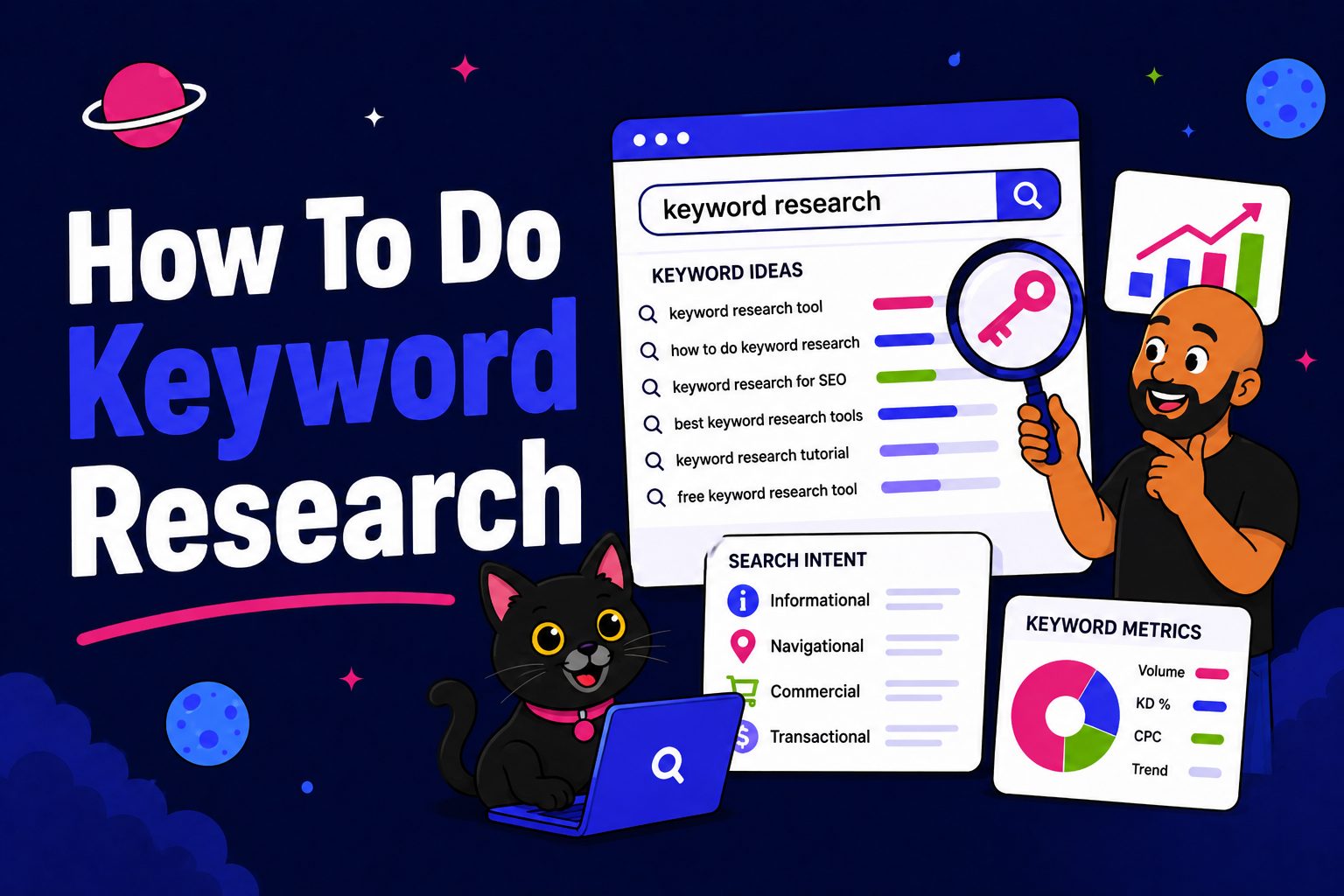
How to Do Keyword Research in New Zealand
Find the exact terms your customers search — the foundation every campaign is built on.
SEO Writing: How to Write Content That Ranks
Turn those keywords into pages that actually rank and read like a human wrote them.
Technical SEO: The Ultimate Guide for NZ Businesses
Fix the behind-the-scenes issues quietly capping your rankings.